Spices
Vegeta (Vegetable Seasoning)
Savory dried vegetable and salt seasoning popular across the Balkans for soups and stews.
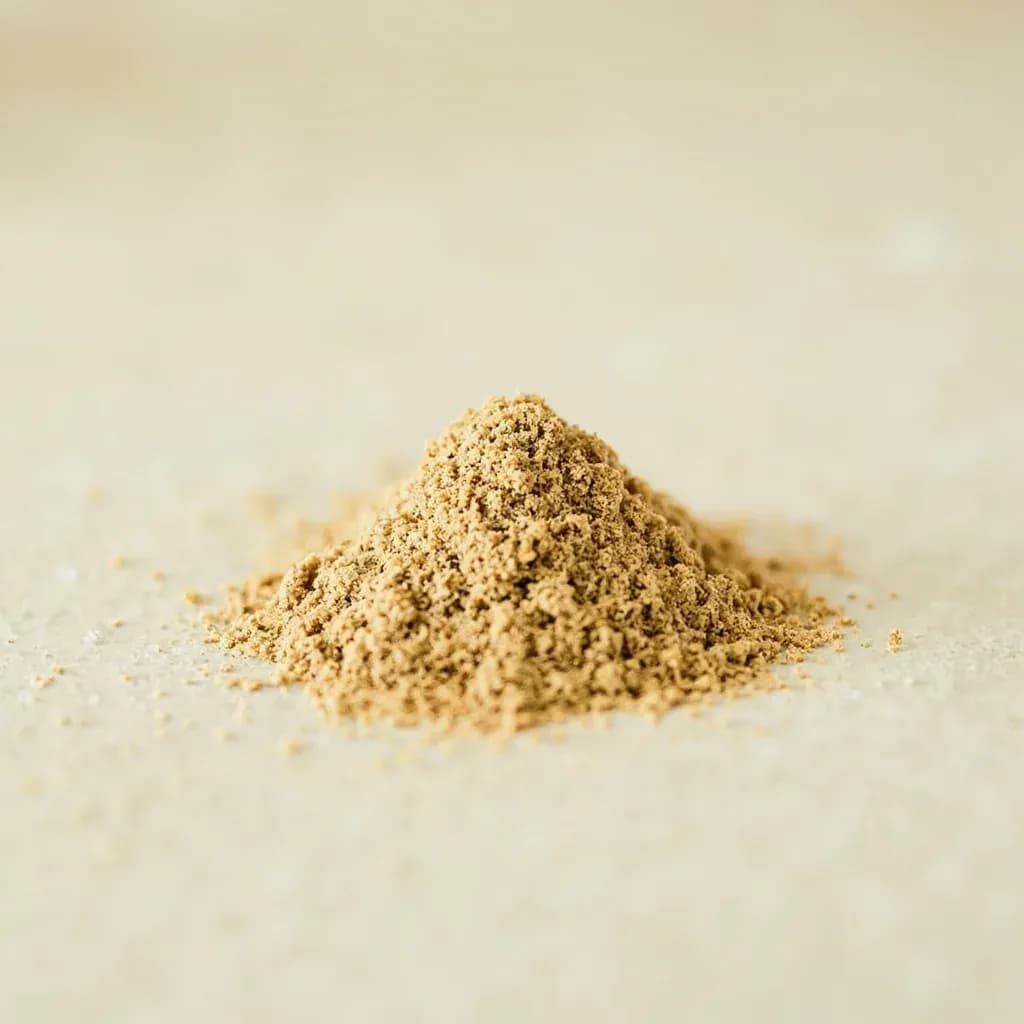
Vegeta is a powdered seasoning blend of dried vegetables, salt and spices, hugely popular across the Balkans and Eastern Europe. It is stirred into soups, stews, sauces, rice and meat dishes as an all-purpose savory booster. Treat it partly as a salt substitute, since it is heavily salted.
Vegeta is a dried vegetable and herb seasoning blend created by the Podravka food company in Croatia in the 1950s, and it has since become an essential pantry staple across the Balkans and beyond. Unlike simple seasoned salts, Vegeta is a carefully balanced seasoning where salt serves as a carrier for rehydrated vegetable flavors and savory herbs—primarily dried carrots, parsley, celery, and onion, along with lovage, basil, oregano, and thyme. The inclusion of MSG is intentional and functional: it provides the clean umami backbone that distinguishes Vegeta from plain herb‑salt mixtures, giving soups, stews, and braises a depth that would otherwise require hours of simmering. Its fine granular texture dissolves readily in liquids and adheres well to meats when mixed with oil, making it versatile across cooking methods from the first moments of a boil to a final table sprinkle. The product is so embedded in Balkan culinary identity that it functions as a finishing condiment in some homes—similar to how soy sauce or fish sauce are used at the table in other cultures—though its primary power lies in building savory foundation during cooking.
- Measured in
- g
- Storage
- Pantry
Types & varieties
The classic formulation; contains MSG and full salt content; the benchmark all others are compared to
Identical flavor without monosodium glutamate; typically has a green stripe on the label
Enhanced with Mediterranean herbs (rosemary, sage); more aromatic; ideal for finishing dishes
Formulated with parsley, tarragon, and turmeric; optimized for poultry preparations
Contains dill, lemon peel, and bay; balanced for seafood applications
Doubled garlic content, paprika, and black pepper; designed for meat rubs and marinades
Organic‑certified version; same flavor profile with organically sourced ingredients
Finer, more salt‑heavy variant marketed as a table condiment similar to finishing salts
Why Vegeta Works
The genius of Vegeta lies in its structure. Salt makes up roughly 35–40% of the product, but it is not merely 'seasoned salt.' The salt acts as a carrier and desiccant, preserving the dried vegetable particles (carrot, parsley, celery, onion) in a free‑flowing state and ensuring they rehydrate and distribute evenly when added to liquid. The MSG amplifies savory perception without adding bulk, and the blend of herbs—lovage in particular gives a distinctive celery‑like savoriness—creates a rounded herbal backbone. When you add Vegeta to a pot of soup at the start, the dried vegetables slowly reconstitute and release their flavors throughout the cooking process, which is why early addition is critical for proper melding. Note that export formulations may differ slightly from the Croatian original; Podravka adjusted sodium levels and ingredient sourcing for various international markets in the 1990s and 2000s.
- MSG in Vegeta is functional, not cheap—it provides clean umami without bulk
- The dried vegetables must rehydrate to release their full flavor potential
- Early addition in liquid‑based dishes is essential for flavor integration
Regional Role in Balkan Cooking
In Croatia, Serbia, Bosnia, and surrounding countries, Vegeta occupies a role that goes beyond mere seasoning. It is used in homes and professional kitchens alike, often as the default seasoning for everyday cooking—from thick vegetable soups to sarma (stuffed cabbage rolls) to ajvar preparations. The product's ubiquity means that most Balkan cooks have an intuitive sense of how much to add, which varies significantly by dish type and personal preference. Some cooks use it as a one‑note seasoning; others use it as a base and layer additional spices on top. The cultural weight of Vegeta is such that regional imitations and house blends exist throughout Eastern Europe, but Podravka's original remains the standard against which all others are measured.
- Nearly ubiquitous in Balkan home cooking from Croatia to Serbia to Bosnia
- Often used as a finishing seasoning at the table, not only during cooking
- Regional imitations abound, but Podravka's original is the recognized benchmark
Common uses
Tips & pitfalls
- Add Vegeta early in cooking (with liquid) when making soups and stews so flavors meld and vegetables rehydrate properly
- Use sparingly—because of its high salt content, it is easy to oversalt dishes; start with half the amount you think you need
- Store away from heat sources and direct sunlight to preserve the fresh herbal character; a cool, dark cabinet is ideal
- Do not substitute for plain salt in baking—the herbs and vegetable content will disrupt ratios and flavor
- When using as a meat rub, mix with a small amount of oil to help it adhere and form a light crust
- Avoid adding to highly acidic dishes (heavy tomato sauces, lemon‑heavy preparations) until the end—prolonged cooking can make certain herbs taste sharp or bitter
- Vegeta is not a curry or spice blend—do not expect complex heat; its power is savory depth, not heat
- When substituting for a recipe calling for fresh herbs plus salt, use roughly 1 teaspoon per cup of liquid as a starting point
- The original formulation with MSG dissolves most readily in hot liquids; MSG‑free versions may require more stirring to fully incorporate
Nutrition
Energy
1301 kJ · per 100 g
Where the calories come from
Protein
10.8g
22% DV
Carbs
68.5g
25% DV
Fat
6.7g
9% DV
Fiber
28g
100% DV
Sodium
18mg
1% DV
Source · USDA FoodData Central · approx. Spices, cardamom
View on FDC →In the shops
Matched grocery products
No matched grocery products for Vegeta (Vegetable Seasoning) yet.
Good to know
- Product type
- Dried vegetable and herb seasoning blend
- Country of origin
- Croatia (formerly Yugoslavia)
- Manufacturer
- Podravka food company, founded 1932
- Year introduced
- 1950s (original formulation)
- Primary ingredients
- Dried carrots, parsley, celery, onion; salt (30–40%); MSG; sugar; herbs (lovage, basil, oregano, thyme)
- Flavor profile
- Savory, umami‑forward with herbal complexity and pronounced celery note
- Typical sodium content
- Approximately 35–40% by weight (high)
- Shelf life
- 2–3 years sealed; use within 6–12 months after opening for best potency
Substitutes
- Homemade blend — Mix 2 parts fine sea salt, 1 part dried carrot powder, 1 part dried parsley, ½ part dried celery leaf, ¼ part garlic powder, ¼ part onion powder, pinch of sugar, pinch of black pepper; adjust salt ratio based on use
- Knorr Aromat — Similar Central/Eastern European seasoning salt; slightly different herb profile but functionally equivalent
- Dried celery salt + dried parsley — Quick substitute: combine equal parts and use as a 1:1 swap, then season to taste
- Maggi Seasoning Sauce or granules — Not identical but provides similar umami boost; use sparingly and reduce any additional salt
- Celery salt + onion powder + parsley — Simple pantry substitute; blend roughly 2 parts celery salt, 1 part onion powder, 1 part dried parsley and adjust seasoning to taste
Pairs with
Also called
sharena-sol · groundnut-soup-spice · vegetable-seasoning
Related
Salt
The one seasoning that makes everything else taste like itself

Black Pepper
Pungent, woody heat — best cracked fresh over anything savory
Amchur
Dried unripe mango ground to a tart, fruity souring powder
Paprika
Sweet, vivid ground pepper for color and gentle warmth
Smoked Paprika
Deep, smoky ground pepper for a campfire warmth
Cumin
Warm, earthy spice central to curries, chili, and tacos
Coriander Seed
Citrusy, warm seed for curries, pickles, and rubs
Turmeric
Golden, earthy spice for curries, rice, and color