 Mediterranean
Easy · Room Temperature
Fresh Herb and Lemon Bean Salad with Crumbled Feta
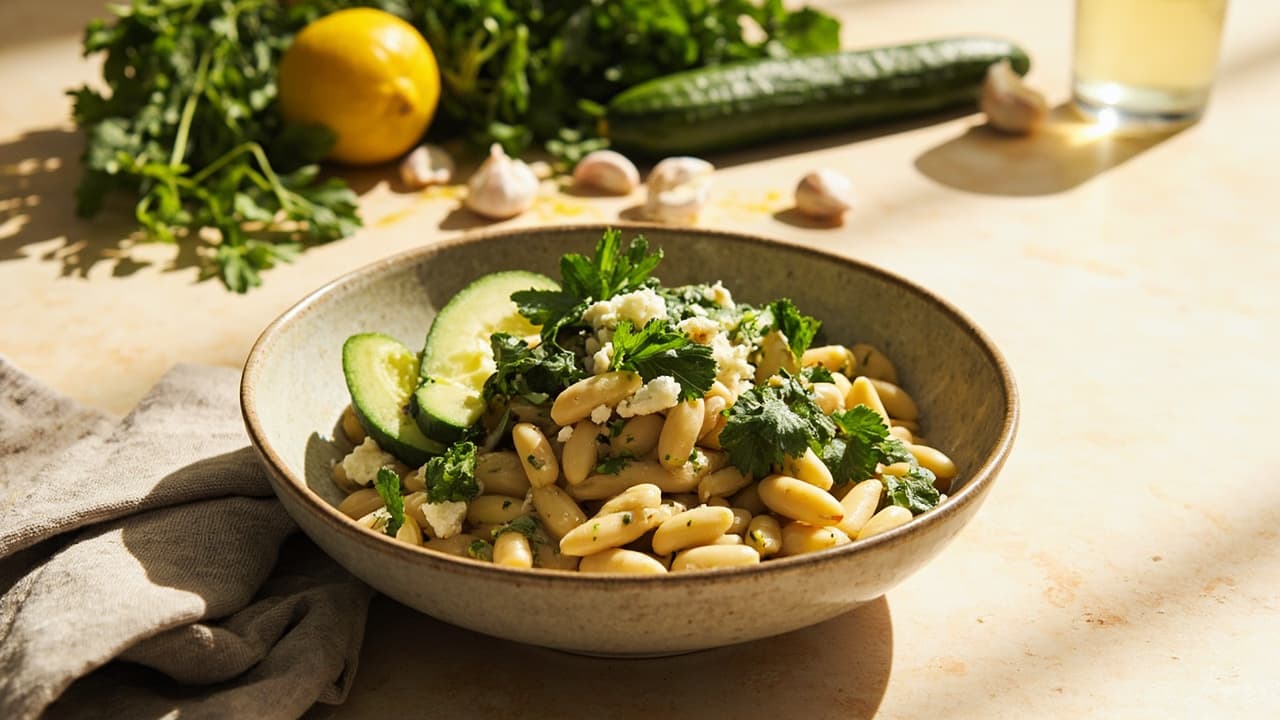
A bright, herb-forward bean salad that proves salad need not be boring. The lemon-garlic dressing clings to every bean and the feta crumbles luxuriously over the top.

Prep
15 min
Rest
5 min
Total
20 min
Method
Make the Lemon Garlic Dressing
2
Whisk in the olive oil in a slow, steady stream until the dressing emulsifies slightly. Season with salt and black pepper.
Assemble the Salad
3
Fold in the chopped herbs, distributing them evenly throughout the salad. The warmth from the beans will soften the herbs just slightly—exactly right.
4
Let the salad rest for 5 minutes so the beans absorb the dressing. Toss once more before serving.
Serve
5
Transfer to a wide serving bowl or platter. Crumble the feta generously over the top with your fingers—no need to be precious about it. Serve immediately with warm bread for dragging through the bowl.
A
Nutri-Score
Excellent balance
A–E · lower is better · score -6
Calories
674
per serving
High in protein · 36gSource of fibre · 15gLow sugar · 4g
Protein
36g
Carbs
89g
Fat
22g
Sat. fat
7g
Fiber
15g
Sugar
4g
Sodium
833mg
Gluten FreeMediterraneanHeart HealthyDiabetes FriendlyAnti InflammatoryHigh ProteinHigh FiberPlant Forward
Nutri-Score is a general nutritional-balance guide, not medical or dietary advice.
B
Environmental impact
Low impact
A–E · lower is better · includes estimates
kg CO2e
0.7
per serving
BCarbonAEU all-round· carbon sets the grade
Water
1.3m³
Runoff
0.07g P
Feta drives 31% of this recipe’s estimated footprint.
Carbon from Poore & Nemecek 2018; water, land & runoff from Agribalyse — modelled averages for comparing recipes, not a measurement of your groceries.
Flavor Profile
6
Umami
2
Sweet
5
Salty
7
Sour
2
Bitter
3
Spicy
Textures
TenderCrunchyCrumblySoft
Aromas
HerbalCitrusPungent GarlicFatty Oil
Kitchen Equipment
Primary Tool
Mixing BowlWhiskMixing BowlCutting BoardChef KnifeMeasuring CupsMeasuring SpoonsJuicerServing BowlServing Platter
Counter FootprintSmall
Techniques
Safety & Storage
Cross Contamination
Use separate cutting boards and utensils for the fresh herbs and feta cheese. Wash all prep tools thoroughly between uses, especially if they contact the crumbled feta before other ingredients.
Storage
Refrigerate leftovers promptly in airtight containers. The bean base and feta contain perishable ingredients that require consistent cold storage below 40°F.
Shelf Life
Consume the prepared salad within 2-3 days when properly refrigerated. The fresh herbs will oxidize and lose quality after this period, and the feta may dry out.
High Risk Population
Pregnant women, elderly individuals, and immunocompromised persons should verify that the feta cheese is pasteurized. Traditional feta made from unpasteurized milk carries listeria risk.
Handling
As a no-cook recipe, thorough washing of all fresh produce is essential. Rinse parsley, mint, cilantro, and cucumber under running water before chopping to reduce microbial contamination risk.
Pro Tips
Technique
Whisk your olive oil into the lemon and garlic slowly, like you're teaching two strangers to become friends. Rushing this means a broken dressing that slides off the beans instead of hugging them.
Substitution
No fresh mint? Double the parsley and add a pinch of dried oregano. No cilantro? basil works beautifully. The herbs are flexible; the lemon-garlic ratio is sacred.
Storage
Store the dressed salad separately from the feta. The feta you crumble fresh at the moment of serving—when it crumbles over the herbs, it creates little pockets of salt and cream that contrast with the bright dressing.
Batch Cooking
Make a double batch of the lemon-garlic dressing. Keep it in a jar. This stuff is not just for this salad—it belongs on roasted vegetables, grilled bread, even scrambled eggs. You will thank me in a week.
From the chef
This is the salad my mother made when she wanted to remind us that a bowl of beans, dressed properly, could silence an entire table of hungry people. The lemon-garlic dressing is not optional. It is the point. It should cling to every bean, pool at the bottom of your bowl, and absolutely be the thing you drag your bread through until your fingers smell like garlic and happiness. The herbs soften just slightly against the warm beans—that gentle warmth is everything.
TagsNo CookCold SaladVegetarian FriendlyHerb ForwardSummerQuickEasy
AllergensMilk
Source: generated · June 10, 2026