 Vietnamese
Medium · Hot
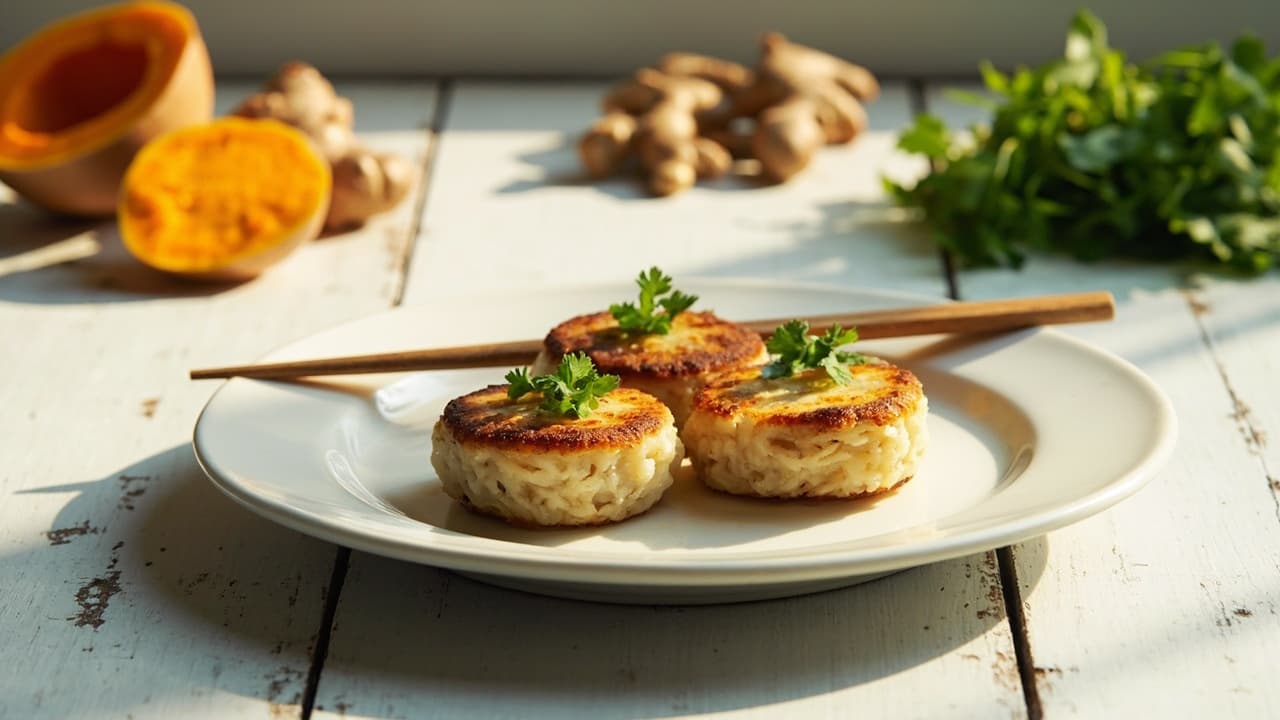
Butternut Squash and Ginger Rice Cakes
Delicate rice cakes with sweet roasted squash and warm ginger, pan-fried until golden. A gentle Vietnamese-inspired comfort dish that balances earthiness with bright, fresh herbs at the finish.
Prep
20 min
Cook
25 min
Total
45 min
Method
1
Preheat oven to 200C (400F). Peel and cube the butternut squash into 2cm pieces. Toss with 1 tbsp olive oil and spread on a baking sheet in a single layer.
2
Roast for 18-20 minutes, until the squash is completely tender and the edges are beginning to caramelize. Set aside to cool slightly.
3
4
Add the minced garlic and cook for another 30 seconds, until just golden at the edges. Remove from heat immediately to prevent burning.
5
In a large bowl, gently fold together the cooked rice, roasted squash, and ginger-garlic mixture. Fold in the beaten egg, salt, and white pepper until evenly distributed.
6
With damp hands, divide the mixture into 4 equal portions. Shape each into a round cake about 2cm thick. If the mixture feels loose, refrigerate for 10 minutes to firm up before cooking.
7
Heat 1 tbsp olive oil in a non-stick skillet over medium heat until shimmering. Place 2 rice cakes in the pan without crowding.
8
Cook for 3-4 minutes per side, until deeply golden and a crust has formed. Transfer to a paper-lined plate. Repeat with remaining cakes, adding oil as needed.
9
Let the rice cakes rest for 2 minutes to set. Top each with a small pinch of fresh cilantro and serve immediately while still warm and crisp.
B
Nutri-Score
Good balance
A–E · lower is better · score 0
Calories
580
per serving
Calorie-dense · 580 kcalLow sugar · 3g
Protein
11g
Carbs
104g
Fat
12g
Sat. fat
4g
Fiber
4g
Sugar
3g
Sodium
329mg
Dairy FreeGluten FreeAnti InflammatoryDiabetesHeart HealthyLow SodiumBalanced MacrosPlant ForwardWhole Grain
Nutri-Score is a general nutritional-balance guide, not medical or dietary advice.
B
Environmental impact
Low impact
A–E · lower is better · includes estimates
kg CO2e
0.6
per serving
BCarbonAEU all-round· carbon sets the grade
Water
1.7m³
Land
16Pt
Runoff
0.04g P
Cooked White Rice drives 73% of this recipe’s estimated footprint.
Carbon from Poore & Nemecek 2018; water, land & runoff from Agribalyse — modelled averages for comparing recipes, not a measurement of your groceries.
Flavor Profile
5
Umami
5
Sweet
4
Salty
2
Sour
1
Bitter
3
Spicy
Textures
CrispyDelicateTender
Aromas
CaramelHerbalWarm Ginger
Kitchen Equipment
Techniques
Safety & Storage
Cooking Temperature
Ensure the skillet reaches proper medium heat before placing rice cakes. The internal temperature should reach at least 74°C (165°F) to ensure egg is fully cooked. Do not reduce heat to low during cooking as this can lead to undercooking.
Cross Contamination
Use separate cutting boards and utensils for raw butternut squash and prepared ingredients. If serving raw fresh herbs as garnish, wash hands thoroughly after handling the egg mixture before handling cilantro.
High Risk Population
This dish contains egg. Ensure egg is thoroughly cooked when preparing for pregnant individuals, young children, elderly, or immunocompromised persons. Avoid consuming if there is any visible rawness in the center of the cakes.
Storage
Cool rice cakes to room temperature within 2 hours of cooking. Store in an airtight container in the refrigerator for up to 3 days. Do not leave at room temperature for more than 2 hours total.
Handling
When shaping rice cakes with damp hands, ensure hands are clean and dry the surface before plating. The dampening prevents sticking but excess moisture can affect browning. Refrigerate shaped cakes for 10 minutes if mixture feels loose to help them hold form during frying.
Allergen Warning
This recipe contains egg. When pan-frying, use clean oil if preparing this dish for someone with egg allergy, as the oil may have absorbed egg proteins from previous batches in shared equipment.
Pro Tips
Technique
When pan-frying, resist the urge to press the cakes down. Patience creates that golden crust — pressing squeezes out moisture and you'll lose the delicate texture you're building.
Substitution
If butternut squash isn't available, sweet potato makes a lovely substitute with the same gentle sweetness and soft texture when roasted.
From the chef
Roasted butternut squash brings a gentle caramelized sweetness to these rice cakes, while fresh ginger and garlic cooked slowly in oil add warmth without weight. Everything folds together — rice, squash, egg, a little white pepper — then rests in the pan until a golden crust forms on each side. Cilantro arrives only at the end, a small pinch placed just before serving, so its fragrance is still alive when the cakes reach the table. This is comfort that does not sit heavily; it finishes clean.
TagsRice CakePan FriedVietnamese InspiredVegetarianComfort FoodWeeknight Dinner
AllergensEggs
Source: generated · June 13, 2026