 Fusion
Medium · Hot
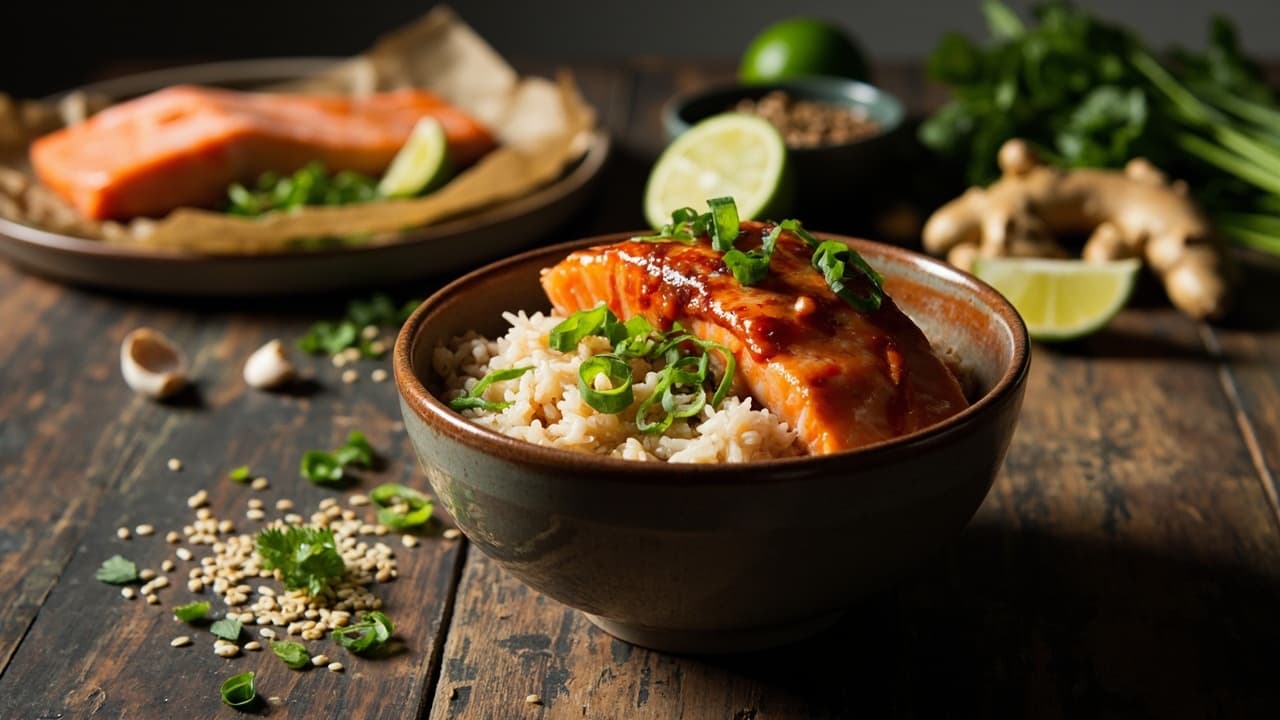
Sriracha-Lime Salmon with Sesame Rice
A vibrant pan-seared salmon glazed with a sticky sriracha-lime sauce, served over fluffy sesame-infused rice with fresh herb garnish. Kenji-style fusion comfort food that brings together spicy, tangy, and umami notes in every bite.

Prep
15 min
Cook
25 min
Rest
5 min
Total
45 min
Method
Cook the Sesame Rice
2
While rice cooks, mince the remaining 2 garlic cloves. When rice is done, fold in sesame seeds, minced garlic, and juice from the remaining half lime. Fluff gently and keep warm.
Sear the Salmon
3
Heat oven-safe skillet over medium-high heat until shimmering. Add 1 tablespoon high smoke-point oil (vegetable or avocado). Pat salmon fillets completely dry with paper towels. Season lightly with salt. Sear salmon skin-side up for 3-4 minutes until a golden crust forms. Flip fillets and cook for another 3-4 minutes until salmon reaches an internal temperature of 145°F (63°C) and flakes easily.
4
Reduce heat to medium. Brush or spoon the cooked glaze over the salmon fillets. Continue cooking for 1-2 minutes, allowing glaze to caramelize slightly without burning. Use a calibrated meat thermometer inserted into thickest part of fillet to verify internal temperature reaches 145°F (63°C). Remove from heat immediately once temperature is achieved.
Finish and Serve
5
Plate the sesame rice as a base, top with glazed salmon, and drizzle the warm reserved glaze over each fillet. Scatter sesame seeds, scallions, and cilantro on top. Serve immediately.
B
Nutri-Score
Good balance
A–E · lower is better · score 0
Calories
846
per serving
High in protein · 44gLow sugar · 14gLow saturated fat · 5g
Protein
44g
Carbs
92g
Fat
32g
Sat. fat
5g
Fiber
4g
Sugar
14g
Sodium
1089mg
Heart HealthyAnti InflammatoryDiabetes FriendlyHigh ProteinOmega 3 RichBalanced Meal
Nutri-Score is a general nutritional-balance guide, not medical or dietary advice.
E
Environmental impact
Very high impact
A–E · lower is better · includes estimates
kg CO2e
2.8
per serving
ECarbonAEU all-round· carbon sets the grade
Water
1.6m³
Land
49Pt
Runoff
0.3g P
Salmon Fillets drives 84% of this recipe’s estimated footprint.
Carbon from Poore & Nemecek 2018; water, land & runoff from Agribalyse — modelled averages for comparing recipes, not a measurement of your groceries.
Flavor Profile
7
Umami
5
Sweet
5
Salty
4
Sour
1
Bitter
5
Spicy
Textures
CrispyTenderFluffySaucy
Aromas
HerbalSmokyNuttyCitrusGarlicky
Kitchen Equipment
Primary Tool
WokCounter FootprintMedium
Techniques
Safety & Storage
Cooking Temperature
Salmon must reach internal temperature of 145°F (63°C) to ensure food safety. Use a calibrated meat thermometer inserted into thickest part of fillet.
Cross Contamination
Raw salmon can harbor parasites and bacteria. Use separate cutting boards for raw fish and ready-to-eat ingredients. Wash all utensils and surfaces with hot soapy water after handling raw salmon.
Storage
Keep raw salmon refrigerated at 40°F or below until ready to cook. Store leftover glazed salmon separately from sesame rice within 2 hours of cooking.
Shelf Life
Cooked salmon is safe for 3-4 days refrigerated. Discard if left at room temperature for more than 2 hours (1 hour in temperatures above 90°F).
High Risk Population
Pregnant individuals, elderly, and immunocompromised should ensure salmon is cooked to 145°F throughout. Raw or undercooked fish poses increased risk of Listeria and parasites.
Allergen Warning
Recipe contains multiple priority allergens: fish, soy, sesame, and gluten. Use tamari or coconut aminos as wheat-free soy alternative if needed.
Handling
Pat salmon dry before searing to achieve proper caramelization. Wet fish will cause sticking and uneven browning. Coat with glaze only after surface is dry.
Equipment Safety
Use oven-safe skillet or heavy-bottomed pan for searing. Pan-searing at high temperatures can cause oil splatter—use splatter guard and long tongs.
Raw Garlic Warning
If glaze is not cooked prior to application, raw garlic poses Listeria risk. For pregnant individuals, elderly, children under 5, and immunocompromised: always cook glaze to a full boil (165°F/74°C) before brushing on salmon, or use roasted garlic instead.
Pro Tips
Technique
The Maillard reaction is your best friend here — make sure your pan is genuinely smoking before the salmon hits it, otherwise you'll steam instead of sear, and nobody wants that rubbery tragedy.-pat your fillets dry, crank the heat, and let that glaze do its caramelizing dance.
Substitution
Running low on sriracha? Swap in a tablespoon of gochujang mixed with a teaspoon of rice vinegar — you'll get that same fermented heat with an even deeper umami punch. The honey can sub for maple syrup without anyone noticing, except maybe your breakfast fans.
From the chef
The sriracha-lime glaze is what makes this salmon worth understanding. Sriracha brings fermented chili heat, honey pulls it back toward caramel, and fresh lime cuts through with acidity that keeps the whole thing alive. When that glaze hits a hot pan with the salmon it tightens and lacquers the fish in seconds. The sesame rice underneath is not just filler — toasted seeds and garlic folded in at the end give it its own savory register. The result is spicy, tangy, and umami-rich in every bite, and it comes together in under thirty minutes.
TagsSpicyWeeknight DinnerSeafoodHigh ProteinGluten Free
AllergensFishSoySesameGlutenSulfites
Source: generated · June 10, 2026