 Algerian
Medium · Hot
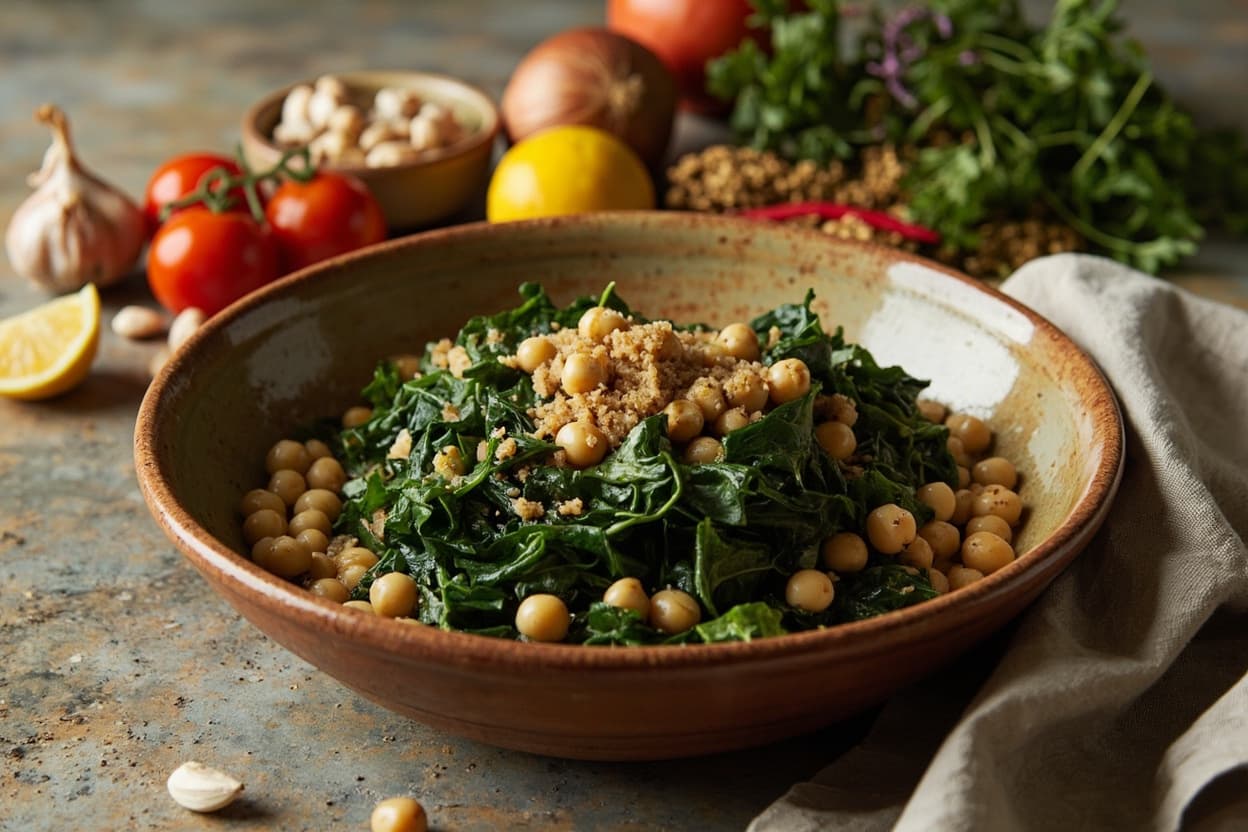
Garlicky Chard and Chickpeas with Lemon
Chard wilts into warm olive oil already fragrant with garlic and cumin, its bitterness easing as the heat coaxes it down. Chickpeas add heft without weight, giving the pan a satisfying fullness that still leaves room for the lemon that finishes everything — sharp, clean, necessary. A simple dish that knows its own worth and doesn't overstep.
Prep
15 min
Cook
25 min
Total
40 min
Method
Prep the Chard
1
Separate the chard stems from the leaves. Chop the stems into 1-inch pieces and roughly tear the leaves into bite-sized pieces. Rinse everything well and drain.
2
Zest the lemon into a small bowl, then cut it in half. Juice one half and set both the zest and juice aside. Keep the other half for serving.
Build the Base
3
4
Sprinkle in the cumin and smoked paprika. Stir them into the oil and let the spices bloom for 30 seconds until their aroma opens up.
Braise the Chard and Chickpeas
5
Add the chopped chard stems to the pot. Season with salt and black pepper. Toss to coat in the spiced oil and cook, stirring occasionally, for 5 minutes until the stems begin to soften.
6
Pour in the chickpeas with their liquid from the cans. Stir everything together and bring to a gentle simmer. Let the broth build for 3 minutes.
Wilt and Finish
7
8
Uncover and stir in the lemon juice. Taste and adjust seasoning — it should have warmth, body, and that bright lemon lift Yasmine loves. If it needs more, squeeze in the remaining lemon half.
A
Nutri-Score
Excellent balance
A–E · lower is better · score -3
Calories
312
per serving
Source of protein · 12gSource of fibre · 7gLow sugar · 2gLow saturated fat · 2g
Protein
12g
Carbs
39g
Fat
14g
Sat. fat
2g
Fiber
7g
Sugar
2g
Sodium
770mg
Gluten FreeDairy FreeVeganNut FreeLow CalorieHeart HealthyDiabetes FriendlyAnti InflammatoryAnti OxidantHigh ProteinHigh FiberPlant BasedWeight Loss Friendly
Nutri-Score is a general nutritional-balance guide, not medical or dietary advice.
B
Environmental impact
Low impact
A–E · lower is better · includes estimates
kg CO2e
0.2
per serving
BCarbonAEU all-round· carbon sets the grade
Water
0.6m³
Runoff
0.03g P
Chickpeas drives 45% of this recipe’s estimated footprint.
Carbon from Poore & Nemecek 2018; water, land & runoff from Agribalyse — modelled averages for comparing recipes, not a measurement of your groceries.
Flavor Profile
6
Umami
3
Sweet
5
Salty
4
Sour
2
Bitter
3
Spicy
Textures
TenderMeatySilky
Aromas
GarlickySpicedHerbal
Kitchen Equipment
Primary Tool
StockpotCounter FootprintSmall
Techniques
Safety & Storage
Storage
Refrigerate leftover Garlicky Chard and Chickpeas within 2 hours of cooking. Store in airtight containers for up to 3-4 days.
Cooking Temperature
When warming olive oil for sautéing garlic, ensure medium heat is maintained to prevent burning. Burnt garlic can cause acrid flavors and potential smoke hazards.
Cross Contamination
If preparing this dish in a kitchen with common allergens present, use separate cutting boards and utensils. No allergen-containing ingredients in this recipe, but cross-contact mitigation is recommended.
Handling
Rinse chard thoroughly under running water to remove soil and debris. Inspect leaves for damage before washing.
Shelf Life
The lemon juice and zest lose freshness after 2-3 days. Fresh parsley should be used within a week when refrigerated properly.
High Risk Population
For immunocompromised individuals, ensure all produce is washed thoroughly and the dish is heated to steaming hot (165°F minimum) when reheating leftovers.
Pro Tips
Technique
Let your garlic sizzle in the oil until you can truly smell it — not browned, just fragrant and yielding. This patience is how the Maghreb taught me to coax sweetness rather than sharpness from alliums.
Substitution
If chard isn't available, thick-stemmed spinach or even hearty kale works beautifully here. The key is matching the cooking time to how sturdy your greens are — softer greens need less wilt time.
Flavor Boost
A small spoonful of harissa stirred into the pot at the very end adds that Tunisian warmth I sometimes crave, though the dish holds its own character without it.
From the chef
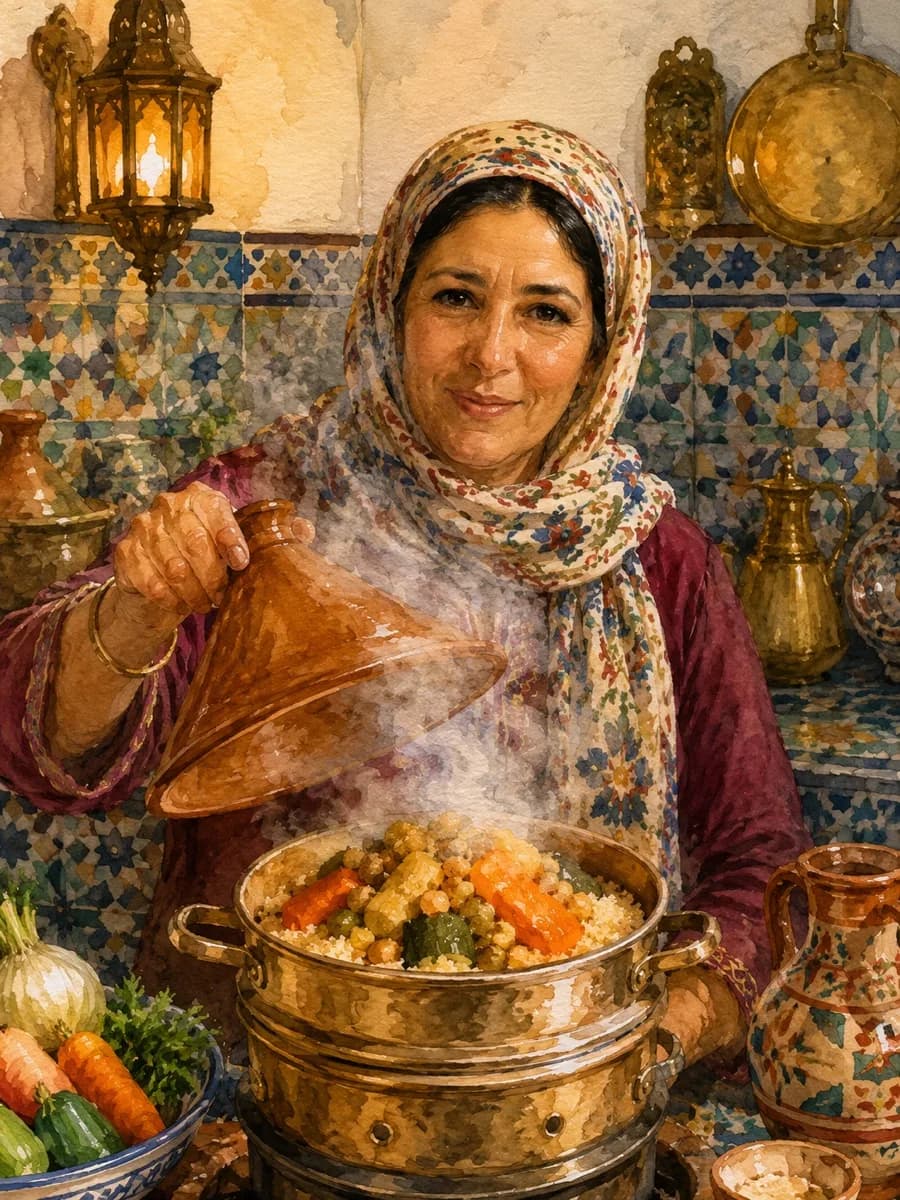
This is the kind of dish I return to after tracing distant routes — when I need something that feels like home but requires no grand effort. Along the Algerian coast, fishermen's wives would toss wilted greens into chickpea braises, feeding families with whatever the morning market offered, a squeeze of lemon doing the work of transformation. I've kept that spirit here: patient with the garlic, generous with the cumin, letting the chard soften into something surrendering and good.
TagsWeeknight DinnerVegetarianBraisedOne PotCitrus FinishWarm Spices
Source: generated · May 30, 2026