 Sichuan
Medium · Hot
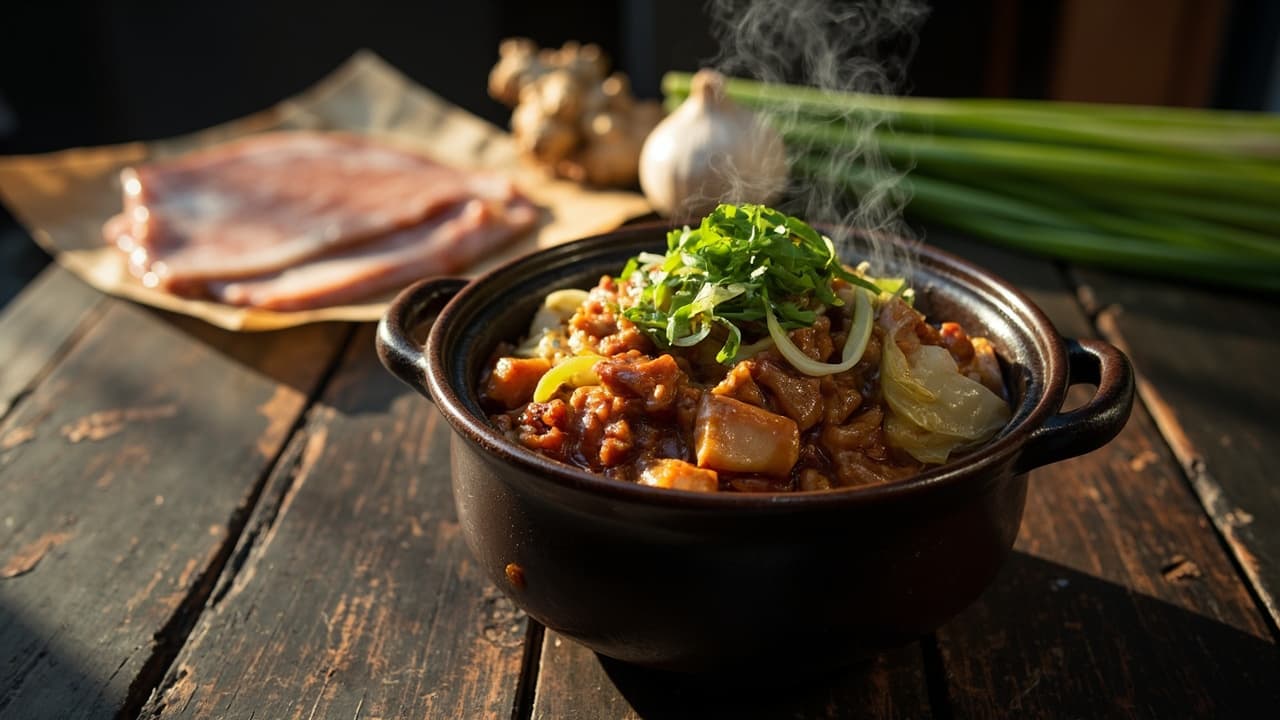
Spicy Pork Belly Stir-Fry with Cabbage and Ginger
A bold Sichuan-inspired stir-fry featuring crispy-edged pork belly caramelized with ginger and tossed with tender cabbage in a savory-spicy sauce. Wok hei at its finest.

Prep
15 min
Cook
20 min
Total
35 min
Method
Mise en Place
1
Slice pork belly into thin strips, about 1/4 inch thick. Pat dry with paper towels — moisture is the enemy of crispy.
Marinade (Optional but Recommended)
3
Toss pork belly strips with 1 tbsp soy sauce and a pinch of salt. Let sit for 10 minutes while your wok heats up.
High-Heat Wok Work
4
Place your wok over highest heat until smoking. Add 2 tbsp sunflower oil and swirl to coat. Lay pork belly pieces in a single layer — do NOT crowd. Let sear undisturbed for 2 minutes until edges are crispy.
5
Sauce and Finish
7
Drizzle remaining soy sauce, rice vinegar, and sesame oil over everything. Add cayenne, white sugar, salt, and black pepper. Toss vigorously for 2 minutes until sauce is glossy and coats every piece.
8
Taste and adjust — Mei-Lin says: be bold, not timid. Add more cayenne if you want more fire.
9
Remove from heat. Garnish with scallion greens. Serve immediately over white rice.
B
Nutri-Score
Good balance
A–E · lower is better · score 2
Calories
732
per serving
Low sugar · 10g
Protein
13g
Carbs
20g
Fat
68g
Sat. fat
18g
Fiber
7g
Sugar
10g
Sodium
914mg
High ProteinBalanced Macros
Nutri-Score is a general nutritional-balance guide, not medical or dietary advice.
C
Environmental impact
Moderate impact
A–E · lower is better · includes estimates
kg CO2e
1.4
per serving
CCarbonAEU all-round· carbon sets the grade
Water
0.4m³
Land
45Pt
Runoff
0.1g P
Pork Belly, sliced thin drives 86% of this recipe’s estimated footprint.
Carbon from Poore & Nemecek 2018; water, land & runoff from Agribalyse — modelled averages for comparing recipes, not a measurement of your groceries.
Flavor Profile
7
Umami
3
Sweet
6
Salty
2
Sour
1
Bitter
5
Spicy
Textures
CrispyTenderChewy
Aromas
PungentSmokyAromaticNutty
Kitchen Equipment
Primary Tool
WokCounter FootprintMedium
Techniques
Safety & Storage
Cooking Temperature
Wok must be preheated to smoking point before adding oil and ingredients. Never add pork to a cold wok as this prevents proper searing and creates excess moisture leading to steaming instead of frying.
High Risk Population
Pork belly is a high-fat protein. Individuals with heart disease, cholesterol concerns, or sodium restrictions should limit consumption. The high sodium content from soy sauce also poses risks for those with hypertension.
Cross Contamination
Raw pork belly must be handled with separate utensils and cutting boards. Never use the same board for vegetables after handling raw meat without thorough sanitization between uses.
Sesame seeds or sesame oil residue in shared equipment can cause reactions for those with sesame allergies. Clean all utensils and surfaces thoroughly when preparing for allergen-sensitive individuals.
Handling
When drying pork belly with paper towels, use separate towels from those used for other ingredients. Moisture on pork belly will prevent the crispy sear essential to this dish.
Equipment Safety
High heat wok cooking produces oil splatter and smoke. Use long-handled utensils, a splatter guard when adding pork to oil, and ensure proper ventilation. Never leave unattended over high flame.
Storage
Leftover pork belly stir-fry must be refrigerated within 2 hours at 40°F or below. Consume within 3-4 days. Reheat to 165°F before serving.
Allergen Warning
This dish contains soy and gluten. Those with celiac disease or severe soy allergies should use tamari or coconut aminos as substitutes. Sesame oil cannot be omitted due to its role in the sauce profile.
Pro Tips
Technique
Never crowd your wok—lay pork belly in a single layer and let it sear undisturbed for 2 full minutes. That patience is what transforms simple strips into crispy, caramelized perfection. If you touch it too soon, you lose the wok hei.
Substitution
No pork belly? Thick-cut bacon or pork shoulder can step in, though you'll sacrifice some of that luxurious fat-to-meat ratio that makes this dish sing. Just render it longer and watch the edges.
From the chef
Thin-sliced pork belly is the move here — pat it dry, sear it hard in a smoking wok, and those edges go crispy while the center stays tender. Julienned ginger and garlic go in next, and the fragrance hits immediately. The cabbage gets its own moment against the bare wok surface before everything comes together in a savory-spicy sauce built on soy, rice vinegar, and cayenne. Do not be timid with the heat or the seasoning — this dish rewards boldness at every step.
TagsSpicyPorkStir FryWeeknight DinnerWok CookedSichuan Inspired
AllergensSoySesameGluten
Source: generated · June 10, 2026