 Vietnamese
Medium · Hot
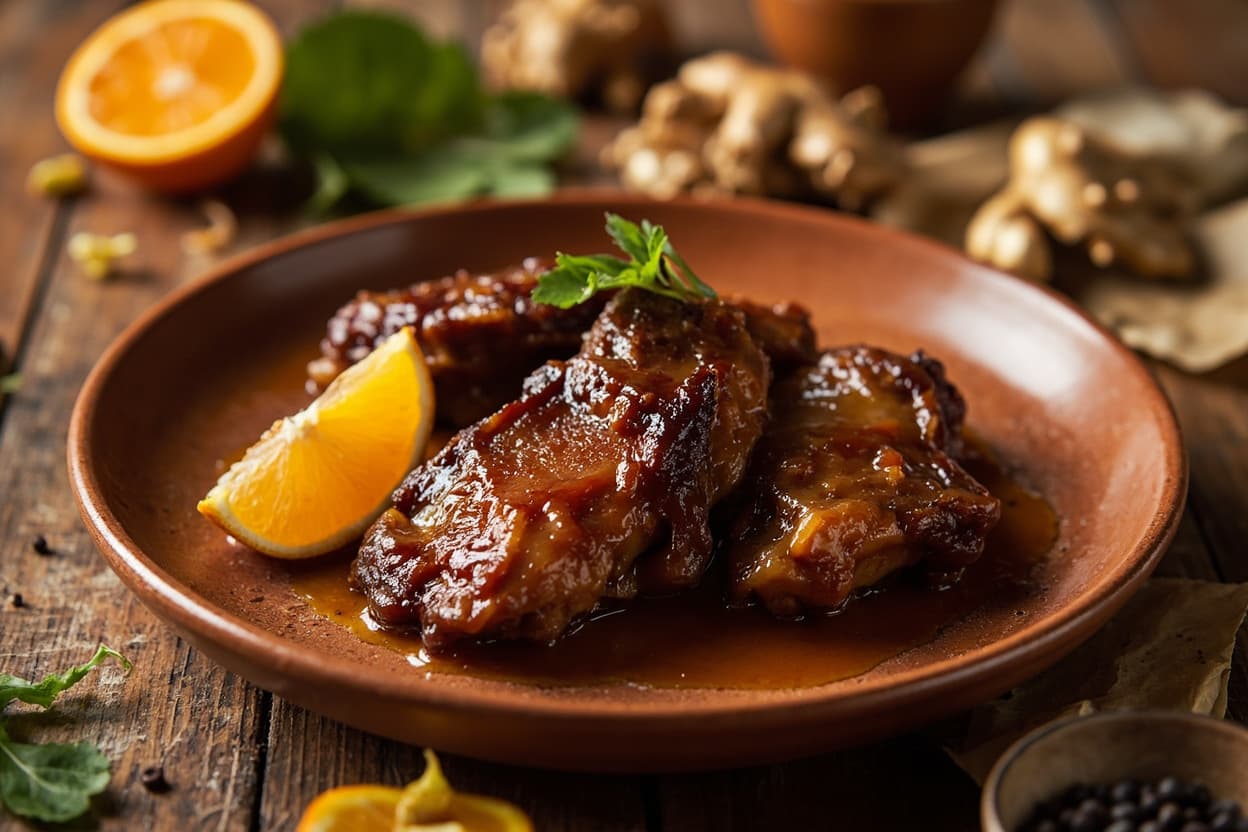
Caramel-Braised Duck with Ginger and Orange
Duck braised long in a dark caramel with orange zest and juice develops a lacquer so deeply flavored it barely needs tasting to know it is ready. Ginger and black pepper thread through the fat-rich broth, keeping the sweetness from settling too comfortably, and the finished meat pulls from the bone with the slow, deliberate tenderness that only a proper braise can produce.

Prep
20 min
Cook
2h
Rest
10 min
Total
2h 30m
Method
Prepare the Duck
1
Pat the duck dry with paper towels and season generously with salt on all sides. Let it rest at room temperature while you prepare the other components.
Build the Aromatics
Prepare the Orange
3
Wash the oranges thoroughly. Using a fine grater, zest both oranges to capture their bright oils. Then juice both oranges — you should have about 1/2 to 3/4 cup of fresh juice.
Sear the Duck
4
Heat the olive oil in a heavy-bottomed Dutch oven or clay pot over medium-high heat. When the oil shimmers, carefully place the duck breast-side down. Sear for 5-6 minutes until the skin is deeply golden and crispy. Flip and sear the other sides for 3 minutes each.
Caramelize the Braising Liquid
5
Heat the olive oil in a heavy-bottomed Dutch oven or clay pot over medium-high heat. When the oil shimmers, carefully place the duck breast-side down. Sear for 5-6 minutes until the skin is deeply golden and crispy. Using tongs, rotate and brown the thighs and sides for 2-3 minutes each — do not attempt to sear every surface of the whole bird.
Braise with Aromatics and Citrus
Slow Braise
Finish and Serve
8
Remove the duck to a cutting board. Strain the braising liquid into a small saucepan and simmer for 5 minutes to concentrate the flavors. Serve the duck whole or carved, with the glossy sauce spooned generously over every piece. Scatter fresh julienned ginger over the top for a bright finish.
D
Nutri-Score
Needs balance
A–E · lower is better · score 15
Calories
245
per serving
High in salt · 1235mgSource of protein · 7g
Protein
7g
Carbs
20g
Fat
15g
Sat. fat
6g
Fiber
2g
Sugar
16g
Sodium
1235mg
Gluten FreeDairy FreeDiabetes FriendlyHeart HealthyLow CarbHigh ProteinLow Glycemic
Nutri-Score is a general nutritional-balance guide, not medical or dietary advice.
C
Environmental impact
Moderate impact
A–E · lower is better · includes estimates
kg CO2e
0.4
per serving
CCarbonAEU all-round· carbon sets the grade
Water
1.0m³
Land
21Pt
Runoff
0.06g P
Duck drives 71% of this recipe’s estimated footprint.
Carbon from Poore & Nemecek 2018; water, land & runoff from Agribalyse — modelled averages for comparing recipes, not a measurement of your groceries.
Flavor Profile
7
Umami
6
Sweet
5
Salty
4
Sour
1
Bitter
5
Spicy
Textures
CrispyTenderSilky
Aromas
CitrusSmokyHerbalPungent
Kitchen Equipment
Primary Tool
Dutch OvenDutch OvenSmall SaucepanChef KnifeCutting BoardFine GraterCitrus JuicerFine Mesh StrainerTongsPaper TowelsPlastic Wrap
Counter FootprintMedium
Safety & Storage
Allergen Warning
This recipe contains soy and gluten from soy sauce. Use tamari or coconut aminos as a soy-free substitute. Verify all condiments are gluten-free if managing celiac disease or gluten sensitivity.
Cooking Temperature
Duck must reach an internal temperature of 165°F (74°C) throughout to ensure food safety. Use a meat thermometer inserted into the thickest part of the thigh, avoiding bone.
When caramelizing brown sugar in rendered duck fat, swirl gently and watch closely. Sugar can burn rapidly above 320°F (160°C), turning bitter and creating a fire hazard.
Handling
Allow duck to rest only 10 minutes at room temperature before searing. Do not leave raw duck at room temperature for extended periods — bacteria multiply rapidly between 40°F (4°C) and 140°F (60°C).
Cross Contamination
Use separate cutting boards for raw duck and ready-to-eat ingredients like orange zest. Sanitize all surfaces, utensils, and hands after handling raw poultry.
Equipment Safety
Use oven mitts when handling the Dutch oven — handles remain extremely hot during searing and caramelization. Steam escaping from the pot during braising can cause severe burns when lifting the lid.
Storage
Cool leftover braised duck and sauce to below 40°F (4°C) within 2 hours. Store in airtight containers and consume within 3-4 days, or freeze for up to 3 months.
High Risk Population
Pregnant individuals, immunocompromised persons, young children, and elderly should only consume duck cooked to 165°F (74°C) with no pink remaining. Avoid recipes where the duck is served rare or medium-rare.
Pro Tips
Technique
Watch your caramel like you watch a sleeping child—it can turn from perfect to burnt in seconds. When the sugar turns a rich amber and smells like toffee, act immediately. The soy sauce will splash dramatically, and that sizzle is exactly what you want.
Substitution
If you can find palm sugar at an Asian market, use it in place of brown sugar—it has a deeper, more complex sweetness with hints of caramel that complement the duck beautifully. If using palm sugar, add a teaspoon of water to help it melt evenly.
From the chef
The dark caramel is where this duck begins and ends. Brown sugar melts into the rendered fat, turns amber, and then the orange juice hits the pot — a hiss of steam and acid pulling the caramel into a glossy braising liquid threaded with ginger and garlic. The duck cooks long and low, absorbing that sweet-savory depth while ginger and black pepper keep the richness in check. After two hours the meat pulls from the bone easily, and the strained braising liquid, reduced to a lacquer, gives every piece a finish that barely needs anything else beside it.
TagsBraisedCaramelCitrusAromaticOne PotWeekend CookingSoy Caramel
AllergensSoyGluten
Source: generated · May 30, 2026