 Levantine
Medium · Hot
Garlic-Tahini Roasted Chicken for Bread Dippers
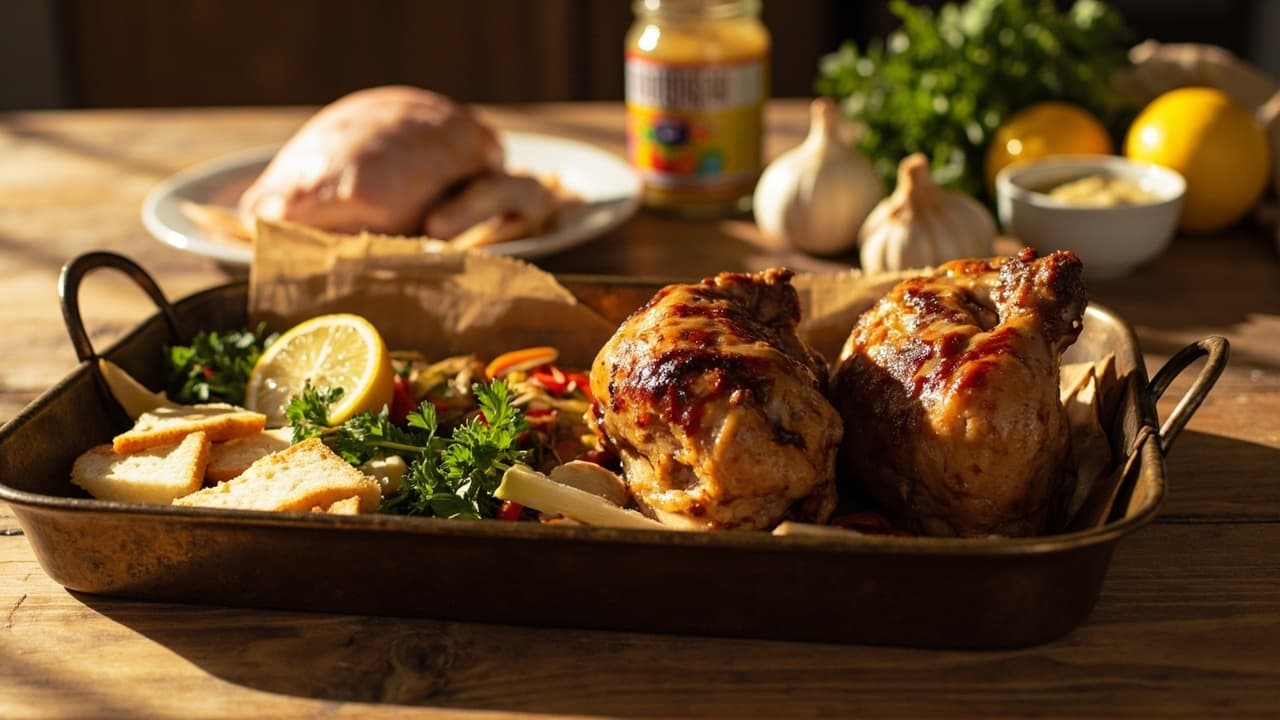
Crispy-skinned chicken lacquered with a garlicky tahini-lemon marinade, built for tearing apart and dragging through warm bread. This is the kind of meal where the sauce and the protein arrive together, inseparable, both demanding your attention.

Prep
20 min
Cook
35 min
Rest
5 min
Total
1h
Method
Build the Garlic-Tahini Marinade
1
Mince the garlic to a paste using a mortar and pestle — yes, the effort matters, it releases oils that bottled minced garlic cannot.
Marinate the Chicken
3
Pat the chicken-thigh pieces dry with paper towels. Score the skin and meat with a knife to create pockets for the marinade to penetrate.
4
Roast Until Golden
6
Preheat your oven to 425°F (220°C). Line a baking sheet with foil and place a wire rack on top.
7
Arrange the marinated chicken pieces skin-side up on the rack, leaving space between each piece. Spoon any remaining marinade over the tops.
Serve for Bread Dipping
9
Let the chicken rest for 5 minutes. This is not optional — the juices need to settle or they will abandon the bread mid-dip.
10
Tear the white-bread loaf into large, grabbable pieces. Scatter fresh parsley over the chicken.
11
Set the whole tray in the center of the table and let everyone tear into it — pulling apart chicken, dragging bread through the remaining tahini glaze, building bites that combine crispy skin, tender meat, and saucy bread in every forkful.
B
Nutri-Score
Good balance
A–E · lower is better · score 0
Calories
936
per serving
High in protein · 76gLow sugar · 8g
Protein
76g
Carbs
65g
Fat
41g
Sat. fat
9g
Fiber
8g
Sugar
8g
Sodium
1657mg
Non VegetarianHeart HealthyAnti InflammatoryImmune SupportHigh ProteinBalanced MacrosWhole Foods
Nutri-Score is a general nutritional-balance guide, not medical or dietary advice.
D
Environmental impact
High impact
A–E · lower is better · includes estimates
kg CO2e
2.3
per serving
DCarbonAEU all-round· carbon sets the grade
Water
1.5m³
Land
86Pt
Runoff
0.3g P
chicken-thigh drives 93% of this recipe’s estimated footprint.
Carbon from Poore & Nemecek 2018; water, land & runoff from Agribalyse — modelled averages for comparing recipes, not a measurement of your groceries.
Flavor Profile
7
Umami
3
Sweet
5
Salty
6
Sour
2
Bitter
3
Spicy
Textures
CrispyTenderMoistCaramelized
Aromas
GarlickyNuttyCitrusHerbalSmoky
Kitchen Equipment
Primary Tool
OvenOvenMortar And PestleWhiskMixing BowlBaking SheetWire RackChef KnifePaper TowelsAluminum FoilPlastic Wrap
Counter FootprintMedium
Techniques
Safety & Storage
Cooking Temperature
Internal temperature of chicken must reach 165°F (74°C) to eliminate harmful bacteria including Salmonella and Campylobacter. Use a calibrated meat thermometer inserted into the thickest part of the thigh without touching bone.
Cross Contamination
Raw poultry releases dangerous bacteria that can contaminate all surfaces, utensils, and hands. Designate separate cutting boards, bowls, and tongs exclusively for raw chicken handling. Never place cooked chicken on plates or surfaces that held raw meat.
Storage
Marinated raw chicken must remain refrigerated at 40°F (4°C) or below. Do not allow marinating chicken to sit at room temperature for more than 2 hours total. Once cooked, refrigerate leftovers within 2 hours and consume within 3-4 days.
Allergen Warning
Tahini and yogurt present dual allergen concerns. Tahini contains sesame seeds; yogurt contains milk proteins. Guests with sesame allergies should avoid entirely as tahini is a primary flavor component. Ensure serving utensils for bread are not contaminated by marinade if serving to guests with milk allergies.
High Risk Population
Pregnant individuals, young children under 5, adults over 65, and immunocompromised persons face elevated risk from undercooked poultry. Serve only chicken that has reached and maintained 165°F internally. Recommend these populations avoid consuming any remaining marinade as a dipping sauce without additional heat treatment.
Handling
Thorough handwashing with soap for minimum 20 seconds is mandatory after handling raw chicken. Remove all jewelry from hands and wrists. Pat chicken dry before roasting to promote crispy skin and reduce splatter risk during handling.
Marinade Disposal
Discard any marinade that has been in contact with raw chicken. Do not reuse it for basting during cooking or as a dipping sauce without first bringing it to a full boil. The safest approach is to reserve a portion of the marinade before adding raw chicken, reserving it exclusively for use after cooking.
Pro Tips
Technique
That mortar and pestle is not optional, my friend. Yes, it takes three extra minutes, but the garlic oils releasing into the tahini are doing something that jarred minced garlic simply cannot. This is the difference between a dish that tastes good and a dish that tastes like you actually care.
When the tahini caramelizes at the edges of the chicken, do not panic. That is not burning — that is the Maillard reaction doing holy work. It is the flavor of patience and proper heat, and it belongs on your bread just as much as the chicken itself.
Substitution
No tahini in the pantry? Run, do not walk, to the store. But in absolute desperation, smooth almond butter will give you something respectable, though you will have compromised the soul of this dish. The sesame is non-negotiable if you want the real thing.
Batch Cooking
Double the marinade. Trust me. You will want extra for the bread, for drizzling over roasted vegetables, and for the inevitable moment when someone says 'is there more sauce' and you want to answer with confidence rather than apology.
From the chef
I will tell you something my grandmother told me: the chicken is just the vehicle. What you are really building is a delivery system for that garlicky, nutty, lemon-bright tahini lacquer to make its way onto torn bread, into your grateful mouth, and directly into your heart. This is a dish meant for the center of a table where everyone reaches in together, fingers golden with glaze, nobody pretending to be polite. The sauce and the protein arrive together, inseparable, both demanding your complete and undivided attention.
TagsTahiniGarlicRoasted ChickenBread DippingMarinatedCommunalLemonYogurt
AllergensSesameMilkWheatGluten
Source: generated · June 10, 2026