 German
Medium · Hot
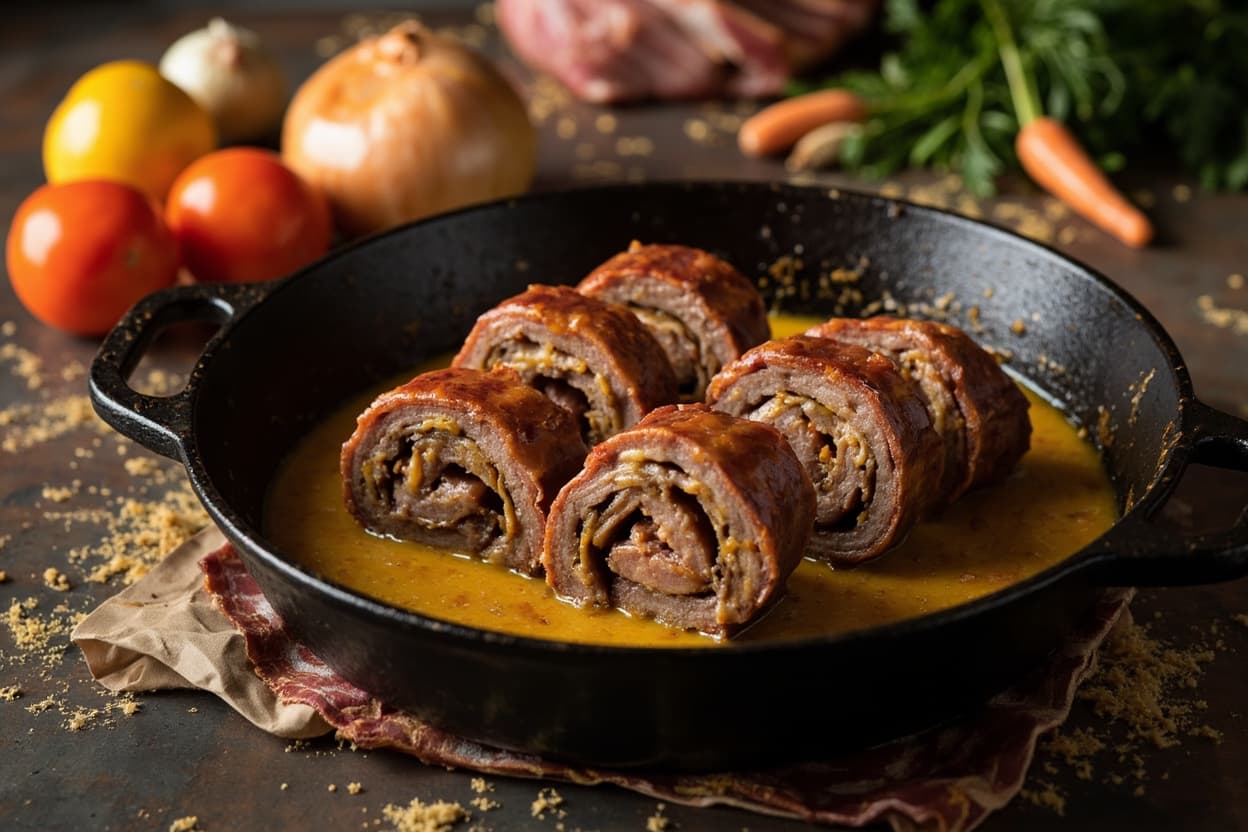
Beef Rouladen with Bacon, Onion and Mustard
Thin slices of beef spread with mustard, rolled around bacon and onion, then browned all over and braised long and slow until you can cut them with a spoon and the sauce from the pan is dark and deeply savory. Carrot goes in early and gives the braise a slight sweetness to balance the mustard's sharpness. Classic Hausmannskost, made properly.

Prep
25 min
Cook
2h
Rest
10 min
Total
2h 35m
Method
Prepare the Rouladen
1
Lay the beef slices flat on a work surface. Season both sides generously with salt and black pepper.
2
Spread 1 tablespoon of mustard evenly across each slice, covering the entire surface.
4
Roll each slice tightly into a log, pressing gently to compress the filling. Secure each end with toothpicks if needed.
Sear the Rouladen
5
In a heavy casserole or Dutch oven, melt butter over high heat until it foams and begins to turn golden.
6
In a heavy casserole or Dutch oven, heat 1-2 tbsp neutral oil (such as vegetable or canola) over high heat until shimmering. Add butter only after searing begins, allowing it to foam without burning.
Build the Braise
7
8
Add the minced garlic and cook for 1 minute until fragrant.
9
Pour in the tomato sauce and white vinegar. Stir to combine, scraping up the fond from the bottom of the pot.
10
Nestle the seared beef rolls into the sauce, ensuring they are mostly submerged. Bring to a gentle simmer.
Braise Covered
11
12
Check every 30 minutes, giving the pot a gentle shake. If the sauce reduces too aggressively, add a splash of water only as needed.
Finish and Serve
13
14
Reduce the sauce over medium-high heat for 5 minutes until it coats the back of a spoon nicely. Taste and adjust seasoning with salt and black pepper.
15
Slice each beef roll on the bias into 3-4 rounds. Fan the slices on warm plates and nap generously with the reduced sauce.
16
Finish with a generous sprinkle of fresh parsley. Serve with buttered potatoes or warm spaetzle alongside.
B
Nutri-Score
Good balance
A–E · lower is better · score 0
Calories
756
per serving
High in protein · 53gLow sugar · 14g
Protein
53g
Carbs
22g
Fat
51g
Sat. fat
14g
Fiber
5g
Sugar
14g
Sodium
1534mg
Cardiovascular FriendlyHigh ProteinIron Rich
Nutri-Score is a general nutritional-balance guide, not medical or dietary advice.
E
Environmental impact
Very high impact
A–E · lower is better · includes estimates
kg CO2e
16
per serving
ECarbonBEU all-round· carbon sets the grade
Water
0.9m³
Land
321Pt
Runoff
0.3g P
Beef steak, thinly sliced drives 94% of this recipe’s estimated footprint.
Carbon from Poore & Nemecek 2018; water, land & runoff from Agribalyse — modelled averages for comparing recipes, not a measurement of your groceries.
Flavor Profile
7
Umami
3
Sweet
5
Salty
3
Sour
1
Bitter
2
Spicy
Textures
TenderSucculentCrispy
Aromas
SmokyHerbalSavouryButteryPungent
Kitchen Equipment
Safety & Storage
Cooking Temperature
Sear beef rolls at high heat until deeply browned (about 4 minutes per roll), then braise covered at low heat for 2 hours until fork-tender. Internal temperature must reach 145°F for medium-rare beef.
Cross Contamination
Handle raw beef slices and bacon on separate cutting boards. Wash all utensils and surfaces that contact raw meat before preparing other ingredients.
Storage
Cool braising sauce within 2 hours and refrigerate. Store beef rolls separate from sauce. Consume leftovers within 3 days or freeze for up to 3 months.
Handling
Secure rolled beef with toothpicks as needed during assembly and cooking. Remove all toothpicks before serving to prevent choking hazard.
The 2-hour braise at low heat is sufficient for safe consumption by most adults. However, pregnant women, elderly, and immunocompromised individuals should ensure beef reaches an internal temperature of at least 145°F throughout (USDA recommendation for whole muscle beef cuts). Use a calibrated meat thermometer to verify.
Allergen Warning
This dish contains mustard and dairy. Notify guests of these allergens before serving. Use separate serving utensils to prevent cross-contact with other dishes.
Pro Tips
Technique
Lay your beef slices between two sheets of plastic wrap and give them a few firm whacks with the flat of your knife or a mallet. Thin, even beef rolls without tears, and it also tenderizes — you're not making cube steak, just opening up the fibers so the roll stays together through the braise.
Substitution
If you can't find coarse mustard, mix two parts Dijon with one part yellow mustard and a pinch of brown sugar. The grainy texture isn't just about looks — it gives pleasant texture hit against the tender beef and caramelized onion.
Equipment
A heavy Dutch oven or cast-iron pot retains heat consistently through the long braise. This isn't a dish you rush; let the low steady warmth work its magic for two hours and your reward is beef that yields to a fork without falling apart.
From the chef
Rouladen demands precision at every step: the beef sliced thin, the mustard spread corner to corner, the bacon and onion packed tight before you roll and sear until the outside is properly dark. The tomato-vinegar braise does the rest over two hours, pulling everything into a sauce that is sharp where it needs to be and deeply savory underneath. You cut one open and the filling holds its shape, the mustard and onion still distinct. That is what a proper Rouladen looks like — nothing dissolved, nothing hidden, just the work doing what it promised.
TagsGermanClassicComfort FoodBraisedBeefButter RichMustardWeekend Cooking
AllergensMustardMilkSulfites
Source: generated · May 30, 2026