 Japanese
Medium · Hot
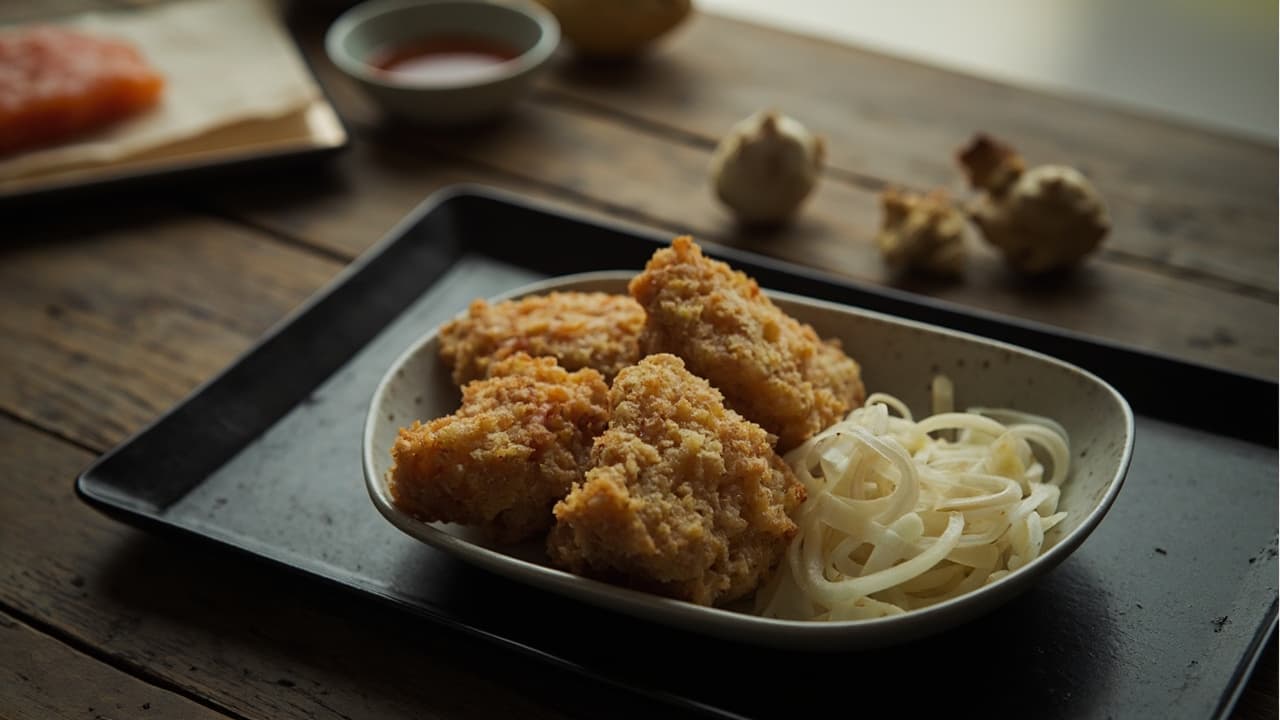
Almond Flour Salmon Karaage with Pickled Turnip
Crispy almond flour-battered salmon with a tender, juicy center, paired with tangy quick-pickled turnip. Yuki's gluten-conscious take on karaage brings the same golden crunch without wheat.

Prep
20 min
Cook
12 min
Total
32 min
Method
1
2
Pat the salmon dry with paper towel. Cut into 4 equal pieces, roughly 75g each.
3
Squeeze excess moisture from the turnip slices. Combine with rice vinegar, white sugar, and ½ tsp salt in a small bowl. Toss well.
4
Cover and refrigerate for at least 30 minutes, or up to 24 hours. The turnip will soften and absorb the tangy brine.
5
6
Add salmon pieces and turn to coat. Let marinate for 10 minutes at room temperature.
7
In a wide bowl, whisk together almond flour, egg, ¼ tsp salt, and black pepper until a thick batter forms.
8
Lift each salmon piece from the marinade, letting excess drip off, and coat thoroughly in the almond flour batter. Press gently to adhere.
9
Heat sunflower oil in a heavy skillet over medium-high heat. When it shimmers and flows easily across the pan, carefully lay in the salmon pieces.
10
Fry 3-4 minutes per side until the coating is deeply golden and crisp. Salmon is done when it flakes easily and reaches 63°C at the thickest point.
11
Transfer to a wire rack or paper towel to drain briefly.
C
Nutri-Score
Fair balance
A–E · lower is better · score 10
Calories
1282
per serving
High in salt · 2556mgCalorie-dense · 1282 kcalSource of protein · 48gLow sugar · 12g
Protein
48g
Carbs
25g
Fat
112g
Sat. fat
13g
Fiber
9g
Sugar
12g
Sodium
2556mg
Dairy FreeGluten FreeAnti InflammatoryHeart HealthyHigh ProteinGluten ConsciousOmega 3
Nutri-Score is a general nutritional-balance guide, not medical or dietary advice.
D
Environmental impact
High impact
A–E · lower is better · includes estimates
kg CO2e
2.5
per serving
DCarbonAEU all-round· carbon sets the grade
Water
1.0m³
Land
82Pt
Runoff
0.3g P
Salmon drives 83% of this recipe’s estimated footprint.
Carbon from Poore & Nemecek 2018; water, land & runoff from Agribalyse — modelled averages for comparing recipes, not a measurement of your groceries.
Flavor Profile
7
Umami
4
Sweet
6
Salty
4
Sour
1
Bitter
2
Spicy
Textures
CrispCrispyJuicyTender
Aromas
HerbalPungentSmokyUmami
Kitchen Equipment
Primary Tool
Heavy SkilletTechniques
Safety & Storage
Cooking Temperature
Salmon must reach 63°C at the thickest point to ensure food safety. Use a calibrated meat thermometer to verify doneness.
Cross Contamination
Keep almond flour separate from other ingredients to prevent cross-contact with tree nut allergens. Wash utensils thoroughly between uses if preparing for allergen-sensitive individuals.
Storage
Refrigerate pickled turnip separately in an airtight container for up to 5 days. Store leftover fried salmon on a wire rack, not paper towels, to maintain crispness. Consume within 2 days.
High Risk Population
Egg in the coating must be fully cooked. Immunocompromised individuals, pregnant women, and elderly should ensure salmon reaches 63°C throughout before consuming.
Allergen Warning
This dish contains tree nuts (almonds), eggs, soy, and fish. Clearly communicate all allergens to guests before serving.
Handling
Do not leave marinated salmon at room temperature for more than 10 minutes as indicated. After marinating, return to refrigeration until ready to cook.
Pro Tips
Technique
When the oil shimmers and flows like water across your pan, you know it is ready. Test with a single drop of batter — it should float and sizzle immediately, not sink.
Substitution
If turnip is unavailable, daikon makes an excellent substitute for the pickles. The texture softens similarly, and the clean crunch complements the rich salmon.
From the chef
Karaage demands a crust that shatters on first bite — and almond flour delivers exactly that. Salmon, marinated briefly in grated ginger and soy, stays tender and yielding beneath the golden shell. The almond batter seals in the fish's natural richness without masking it. Quick-pickled turnip sits alongside: sharp, clean, its acidity cutting through the fat the way a good counterpoint should. Each element has a purpose. Nothing is added for decoration.
TagsWeeknight DinnerGluten FreeFriedHigh ProteinDairy Free
AllergensTree NutsEggsSoyFish
Source: generated · June 13, 2026