 Catalan
Medium · Hot
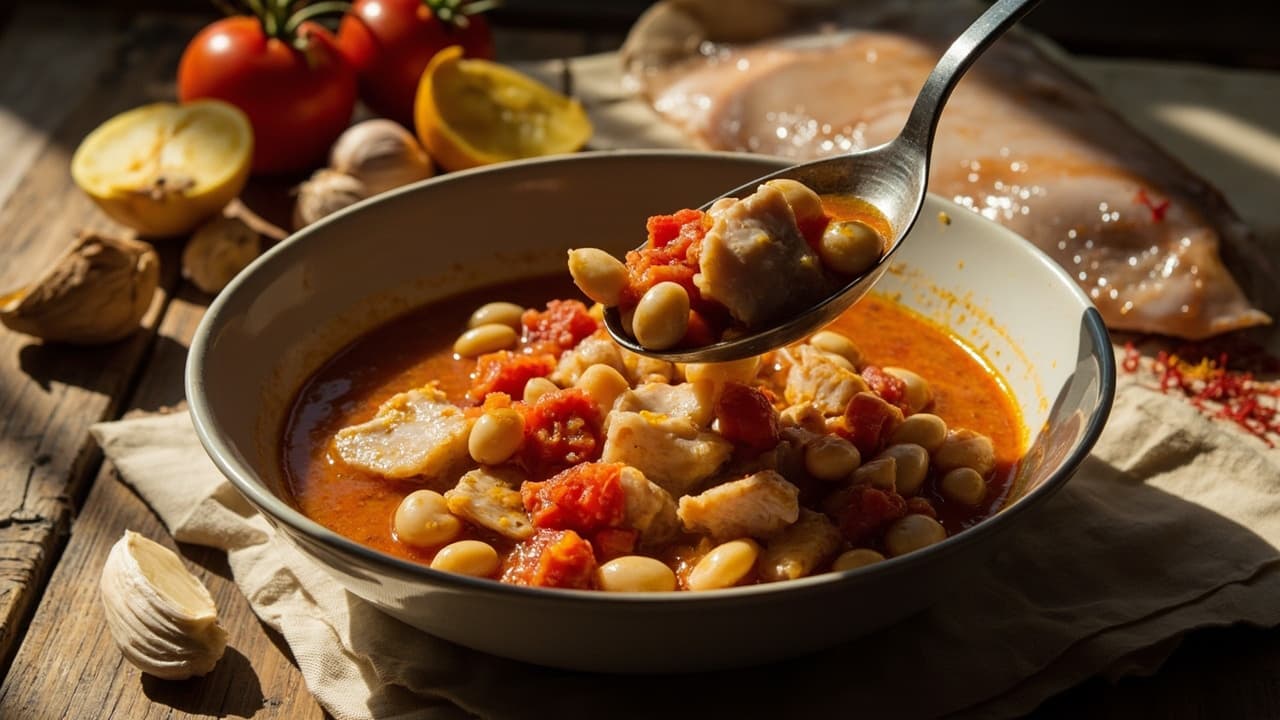
Cod Stewed with Tomatoes and White Beans
A Catalonian-inspired white bean stew with tender cod in a saffron-stained tomato broth, finished with a rustic almond picada and bright lemon.
Prep
20 min
Cook
40 min
Rest
5 min
Total
1h 5m
Method
Build the Sofregit
1
Heat olive oil in a Dutch oven over medium heat. Add the diced yellow onion and cook slowly, stirring occasionally, until soft and golden, about 12 minutes.
2
Add the sliced garlic and cook 2 minutes more until fragrant but not browned.
3
Roughly chop the tomatoes and add them to the pot. Cook down, stirring often, until the tomatoes break into a thick, jammy sauce, about 15 minutes. This is your sofregit.
Prepare the Saffron Broth
4
In a small bowl, crumble the saffron threads into 2 tablespoons of warm water. Let steep 5 minutes to release its color and aroma.
5
Pour the chicken broth into the sofregit and stir to combine. Add the saffron water and its soaking liquid, stirring until the broth takes on a deep amber color.
6
Add the drained white beans to the pot. Bring to a gentle simmer and cook 10 minutes to let the beans absorb the broth.
Make the Picada
7
While the broth simmers, toast the almonds in a dry skillet over medium heat until golden and fragrant, about 3 minutes. Let cool slightly.
8
Using a mortar and pestle, pound the toasted almonds with the remaining garlic cloves and a pinch of salt into a rough, textured paste. This is your picada.
Cook the Cod
9
Season the cod fillets with salt and white pepper. Nestle them gently into the simmering bean broth.
Finish and Serve
11
Stir the picada into the stew, swirling it through gently to thicken the broth slightly without breaking up the fish.
12
A
Nutri-Score
Excellent balance
A–E · lower is better · score -5
Calories
765
per serving
High in protein · 59gLow sugar · 7gLow saturated fat · 3g
Protein
59g
Carbs
87g
Fat
22g
Sat. fat
3g
Fiber
12g
Sugar
7g
Sodium
1607mg
Gluten FreePescatarianMediterraneanDairy FreeHeart HealthyDiabetes FriendlyWeight Loss FriendlyHigh ProteinLow Processed FoodOmega 3 Rich
Nutri-Score is a general nutritional-balance guide, not medical or dietary advice.
Grade pending
Environmental impact
Estimated footprint
Grade pending · 66% ingredient coverage
kg CO2e
≥0.5
per serving
Tomato drives 38% of this recipe’s estimated footprint.
Carbon from Poore & Nemecek 2018; water, land & runoff from Agribalyse — modelled averages for comparing recipes, not a measurement of your groceries.
Flavor Profile
7
Umami
4
Sweet
5
Salty
3
Sour
2
Bitter
3
Spicy
Textures
TenderSilkySoftCreamy
Aromas
HerbalNuttyGarlickyFloralOceanic
Kitchen Equipment
Primary Tool
Dutch OvenDutch OvenFrying PanMortar And PestleLadleCooking KnifeCutting BoardMixing BowlWooden SpoonKitchen Twine
Counter FootprintMedium
Safety & Storage
Cooking Temperature
Cook cod until it reaches an internal temperature of 145°F (63°C) to ensure food safety. Maintain gentle simmer throughout cooking process.
Cross Contamination
Use separate cutting boards and utensils for raw cod and other ingredients. Wash hands thoroughly with soap after handling raw fish before touching other foods.
Storage
Refrigerate leftover stew within 2 hours of cooking. Store in airtight containers at 40°F (4°C) or below. Consume within 3-4 days for best quality and safety.
Allergen Warning
Recipe contains tree nuts (almonds) and fish (cod). Clearly label all dishes containing these allergens. Ensure all preparation surfaces and utensils are cleaned between uses to prevent cross-contact.
High Risk Population
Pregnant individuals, elderly, young children, and immunocompromised persons should ensure cod is sourced from reputable suppliers and cooked to proper internal temperature.
Handling
Cod should smell fresh and mild, never fishy or sour. Reject any fish with sunken eyes, dull flesh, or strong odor. Keep fish cold until ready to cook.
Pro Tips
Technique
Take your time with the sofregit — those onions should be soft and golden, the tomatoes broken down into a thick, concentrated sauce. A rushed sofregit gives a flat, watery broth; a patient one gives you depth and body that no amount of seasoning can fake.
Substitution
If cannellini beans aren't handy, great Northern beans or even cooked chickpeas work beautifully here. For the fish, any firm white fillet that won't disintegrate in the broth — hake, halibut, or thick-cut sea bass all accept this treatment willingly.
From the chef
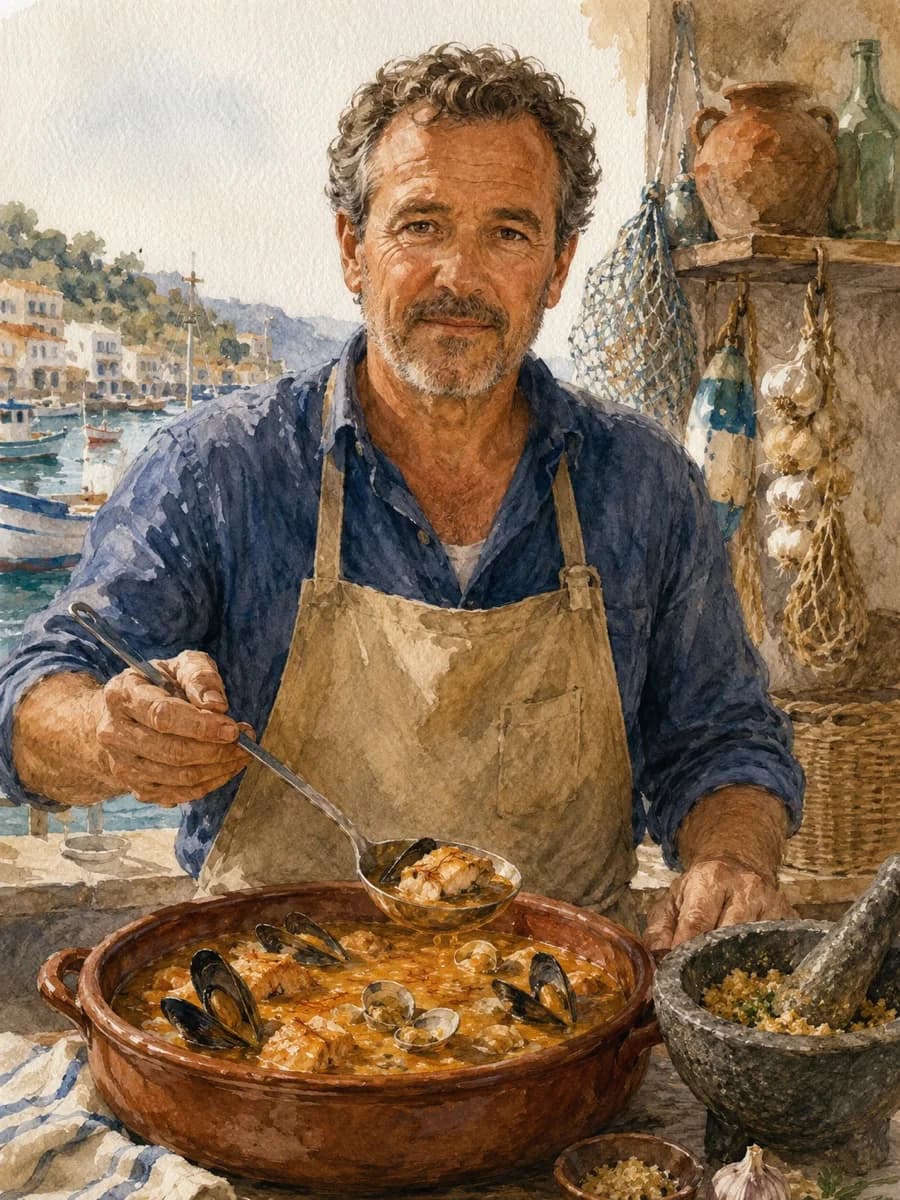
This dish carries the soul of a proper suquet — that patient, unhurried approach to building flavor that my grandmother taught me over the fish-stew pots of Barceloneta. The sofregit must become thick and jammy before anything else touches it, and the saffron needs time to release its color into the broth, not just adding yellow but perfume. White beans here replace the traditional potato, and they drink that saffron broth deep into themselves until each one carries the sea within it. The picada stirred through at the end — that's the binding thought, the thing that makes it all one dish rather than separate components sitting together.
TagsOne PotStewSeafoodCannellini BeansSofregitPicadaSaffronMediterraneanGluten FreeDairy Free
AllergensTree NutsFish
Source: generated · June 10, 2026