 Persian
Medium · Hot
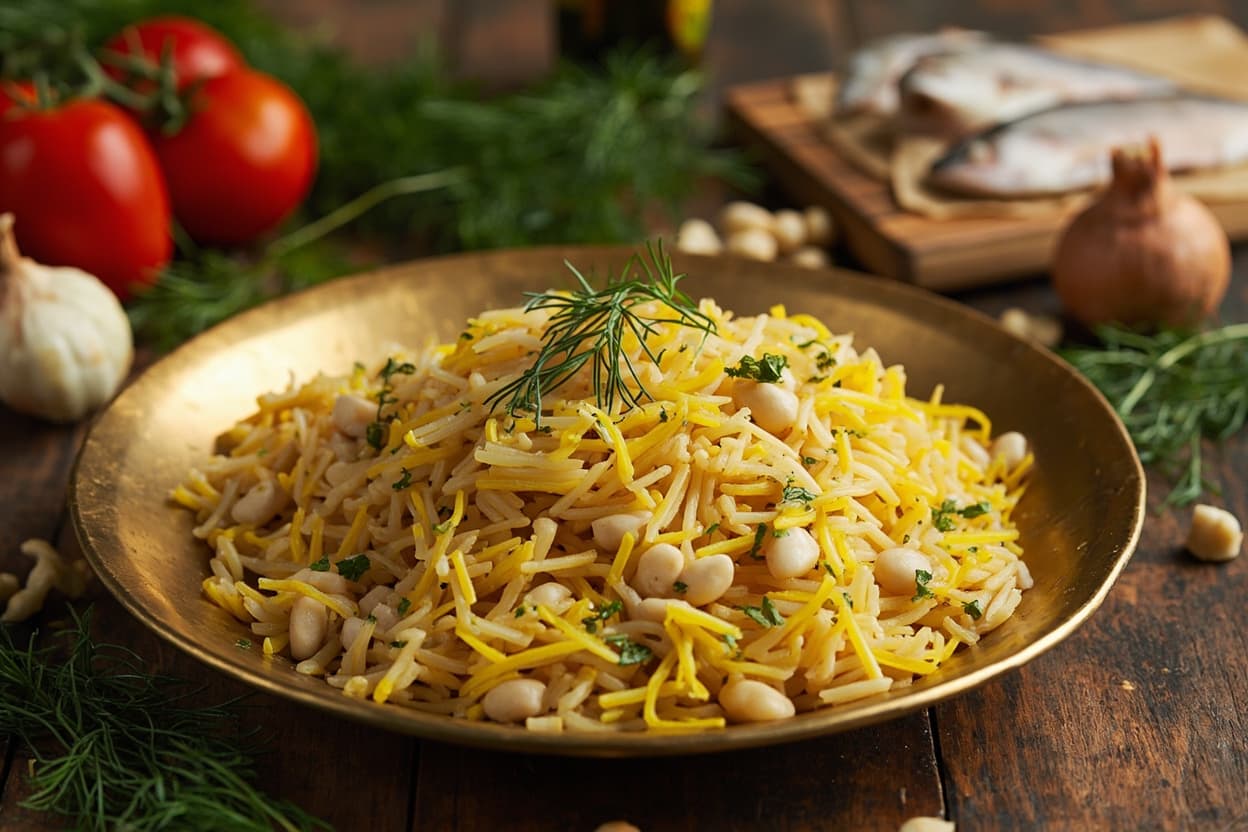
Baghali Polo: Dill and White Bean Rice
Dill woven through the basmati layers its bright, anise-edged perfume into every grain as the rice steams toward its golden crust. White beans brought in with the rice absorb the butter and saffron that bloom at the top, turning soft and fragrant at the center of each forkful. The tahdig that forms at the base is where all patience is rewarded — shatteringly crisp, saffron-gilded, irreplaceable.

Prep
30 min
Cook
1h
Rest
10 min
Total
1h 40m
Method
Preparation
1
Pick through and rinse the basmati rice. Soak in cold salted water for at least 2 hours, or overnight for best results. This patience is where the poetry begins.
2
If using dried white beans, soak them separately overnight. Drain and rinse before cooking.
Building the Base
3
Drain the soaked rice. In a large pot, bring 6 cups of lightly salted water to a boil. Par-cook the rice for 5-7 minutes until just tender but still firm when bitten. Drain immediately through a strainer.
4
If using raw white beans, simmer them separately in salted water until tender, about 45 minutes. Drain and set aside.
Preparing the Saffron
5
Crumble the saffron threads into a small bowl. Pour 3 tablespoons of boiling water over them and let steep for 15 minutes until the water turns a deep amber. This bloom is the heart of the dish.
Cooking the Rice
6
Dice the yellow onion finely. In a large non-stick pot, melt 2 tablespoons of butter with the sunflower oil over medium heat. Add the onion and cook until soft and golden, about 5 minutes.
7
Stir in the turmeric, allowing its warm earthiness to bloom in the fat.
8
Add half the par-cooked rice to the pot, then layer the white beans and fresh dill. Top with the remaining rice, creating gentle layers like pages of a poem.
9
Creating the Tahdig
11
Place the pot over medium-low heat. Cook undisturbed for 45 minutes to 1 hour. You will hear a gentle sizzling—do not lift the lid, do not peek. Patience makes the crust.
12
After an hour, remove from heat and let rest, still covered, for 10 minutes. This allows the rice to steam and the crust to release.
Serving
13
To reveal the tahdig, carefully invert the pot onto a large serving platter. The golden crust should gleam like a medal. If any rice sticks, gently scrape it free.
14
Cut the lemon into wedges for squeezing over each serving. Baghali Polo is traditionally served with plain yogurt and a fresh herb salad alongside.
A
Nutri-Score
Excellent balance
A–E · lower is better · score -1
Calories
824
per serving
Calorie-dense · 824 kcalSource of protein · 26gLow sugar · 3g
Protein
26g
Carbs
140g
Fat
19g
Sat. fat
8g
Fiber
8g
Sugar
3g
Sodium
651mg
Gluten FreeVegetarianDiabetes FriendlyHeart HealthyAnti InflammatoryLow Sodium OptionHigh ProteinHigh FiberBalanced MacrosIron Rich
Nutri-Score is a general nutritional-balance guide, not medical or dietary advice.
B
Environmental impact
Low impact
A–E · lower is better · includes estimates
kg CO2e
0.8
per serving
BCarbonAEU all-round· carbon sets the grade
Water
2.2m³
Runoff
0.08g P
Basmati rice drives 57% of this recipe’s estimated footprint.
Carbon from Poore & Nemecek 2018; water, land & runoff from Agribalyse — modelled averages for comparing recipes, not a measurement of your groceries.
Flavor Profile
7
Umami
5
Sweet
5
Salty
3
Sour
2
Bitter
2
Spicy
Textures
CrispyTenderFluffySoft
Aromas
HerbalFloralEarthyButtery
Kitchen Equipment
Primary Tool
Stock PotCounter FootprintMedium
Techniques
Safety & Storage
High Risk Population
Dried white beans must be soaked overnight and cooked until completely tender. Undercooked beans contain lectins that can cause foodborne illness, particularly dangerous for immunocompromised individuals, children, and elderly.
Handling
When inverting the pot to reveal the tahdig crust, use dry oven mitts and protect hands from hot steam. The pot and rice are at near-boiling temperatures and pose burn risk.
Allergen Warning
Butter contains milk, a major allergen. Ensure dairy-allergic individuals are informed before serving. Use dairy-free butter alternative if serving to milk-allergic guests.
Storage
Cooked rice left at room temperature for more than 2 hours enters the danger zone (40-140°F). Refrigerate leftovers within 2 hours and consume within 3-4 days. Reheat to 165°F before serving.
Cross Contamination
If serving with yogurt as traditionally recommended, prevent cross-contamination by not double-dipping serving spoons. Keep separate serving utensils for each dish.
Cooking Temperature
Saffron steeping requires boiling water (212°F). Allow to cool slightly before handling to prevent burns. The tahdig requires sustained medium-low heat (275-300°F) for 45-60 minutes to develop proper crust without burning.
Pro Tips
Technique
Never skip the soak—two hours minimum for basmati. This is what transforms hard grains into something that will steam into poetry and yield that precious golden crust we call tahdig.
Substitution
If fresh dill is hard to find, you may substitute with dried dill, but use half the amount and add it earlier in the cooking so it has time to rehydrate and release its flavor.
From the chef
Baghali Polo asks everything of its ingredients and takes its time returning that ask in full. Fresh dill is layered through parcoooked basmati in pages — its bright anise perfume seeping into every grain as the rice steams slowly toward its golden crust. White beans soften into the saffron butter that blooms at the top, absorbing warmth and fragrance until each forkful carries both. The tahdig forming at the base is the whole ceremony: shatteringly crisp, amber from turmeric and saffron, worth every minute of the undisturbed wait. Invert the pot with confidence, and let the crust speak.
TagsTahdigSaffronBasmati RiceWhite BeansDillOne PotPersian CuisineGolden Crust
AllergensMilk
Source: generated · May 30, 2026