 German
Medium · Hot
Braised Beef and Cabbage with Butter and Black Pepper
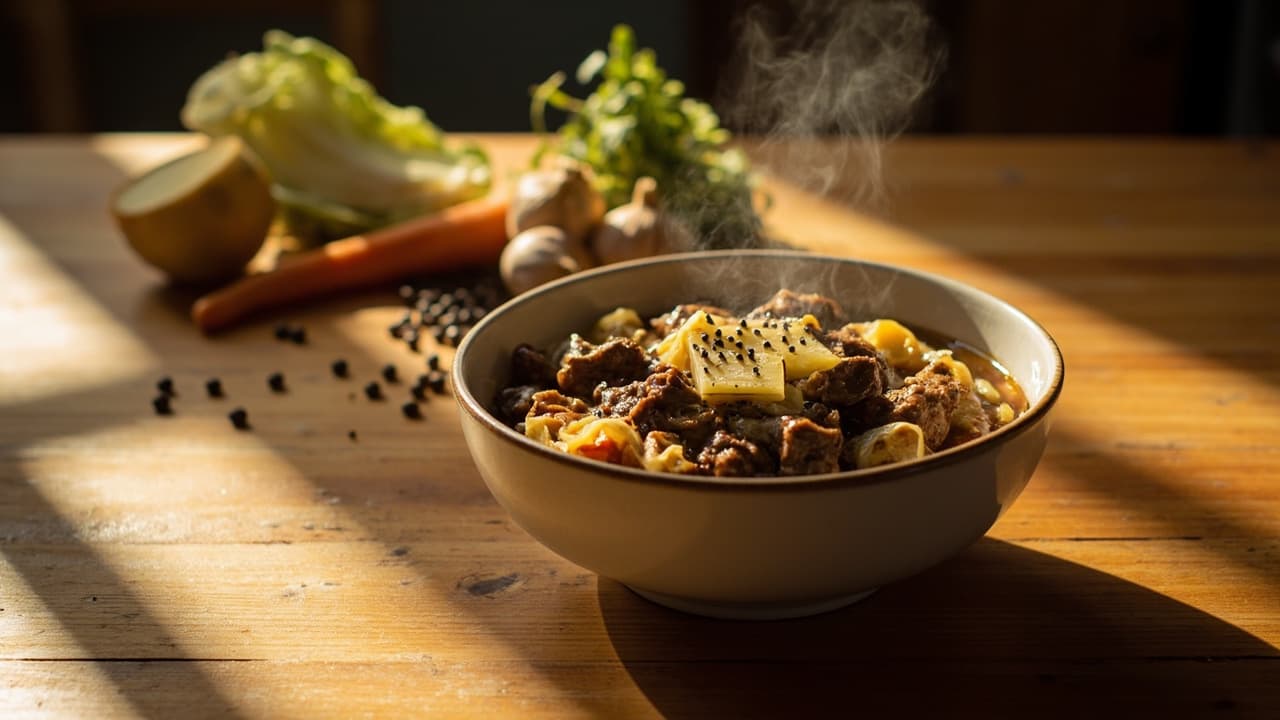
Tender braised beef and sweet cabbage slow-cooked in a rich buttery broth with plenty of black pepper. A hearty German-Austrian comfort dish that fills the kitchen with warmth.

Prep
20 min
Cook
40 min
Rest
5 min
Total
1h 5m
Method
Prep
1
Remove beef steak from refrigerator 20 minutes before cooking. Cut into 4 equal portions and pat dry with paper towels. Season generously with salt and 1 tsp of black pepper on all sides.
2
Halve the cabbage, remove core, and cut into 1-inch wedges. Peel and dice the yellow onion. Peel and thinly slice the garlic. Peel and cut carrot into half-moons.
Sear
3
Heat a heavy Dutch oven or cast-iron pot over high heat until smoking. Add 1 tbsp butter and let it foam. Sear beef portions for 2 minutes per side until deep golden-brown crust forms. Remove and set aside.
Braise
4
Finish
6
Add cabbage wedges to the pot, pressing them into the broth. Cover and cook for 10 minutes until cabbage is tender but not mushy.
7
Remove lid, increase heat slightly. Stir in remaining 30g butter and remaining black pepper. Simmer uncovered for 3 minutes to let the sauce thicken slightly and coat everything in glossy buttery richness.
B
Nutri-Score
Good balance
A–E · lower is better · score 2
Calories
539
per serving
High in protein · 39gLow sugar · 5g
Protein
39g
Carbs
10g
Fat
39g
Sat. fat
11g
Fiber
3g
Sugar
5g
Sodium
661mg
Gluten FreeDairy PresentLow CarbHeart HealthyDiabetes FriendlyLow InflammatoryHigh Protein
Nutri-Score is a general nutritional-balance guide, not medical or dietary advice.
E
Environmental impact
Very high impact
A–E · lower is better · includes estimates
kg CO2e
15
per serving
ECarbonBEU all-round· carbon sets the grade
Water
0.5m³
Land
292Pt
Runoff
0.2g P
Beef Steak drives 99% of this recipe’s estimated footprint.
Carbon from Poore & Nemecek 2018; water, land & runoff from Agribalyse — modelled averages for comparing recipes, not a measurement of your groceries.
Flavor Profile
7
Umami
4
Sweet
5
Salty
2
Sour
2
Bitter
4
Spicy
Textures
TenderSilkySoft
Aromas
ButterySavoryPepperyCaramelized
Kitchen Equipment
Primary Tool
Dutch OvenCounter FootprintMedium
Safety & Storage
Cooking Temperature
Sear beef at high heat until deep golden-brown. Braise at gentle simmer covered. Final internal temperature of beef should reach 145°F minimum for food safety.
Cross Contamination
Use separate cutting boards for raw beef and vegetables. Wash hands thoroughly with soap after handling raw meat. Avoid placing cooked beef on surfaces that touched raw beef.
Storage
Refrigerate leftovers within 2 hours in airtight containers. Use within 3-4 days or freeze for up to 3 months. Reheat to 165°F before consuming.
High Risk Population
Infants, elderly, pregnant individuals, and immunocompromised persons should ensure beef reaches 160°F internal temperature. Verify chicken broth is fully heated during braising.
Handling
Pat beef dry before searing to achieve proper browning. Let beef rest 20 minutes at room temperature before cooking. Use tongs to handle beef to preserve juices and avoid piercing meat.
Equipment Safety
Dutch oven and cast-iron retain heat after cooking - use dry oven mitts and place on heat-resistant surfaces only. Be cautious of hot glass lids.
Pro Tips
Technique
Pat your beef completely dry before seasoning — moisture is the enemy of a proper sear. You want that deep golden crust, not a grey-steamed mess.
Substitution
If you haven't pork loin on hand, this technique works beautifully with beef chuck or even thick-cut pork chops. The butter and black pepper hold everything together.
Time Saver
You can sear the beef and sauté the aromatics up to a day ahead, then finish the braise when you're ready to eat.
From the chef
Beef and cabbage belong together. Sear the beef until it has real color — that golden crust is where all the flavor lives — then let it braise low and slow until it is tender right through. The cabbage goes in late so it takes on the buttery, peppery braising liquid without turning to mush. A generous hand with the black pepper is not optional; it is what keeps the dish from going flat. Finish with a knob of cold butter stirred in off the heat, serve in deep bowls, and have crusty bread ready to mop up every last drop.
TagsComfort FoodOne PotHeartyButteryWinter
AllergensMilkGlutenSoy
Source: generated · June 10, 2026