 Catalan
Medium · Served Cold
Salt Cod Tartare with Radish and Saffron
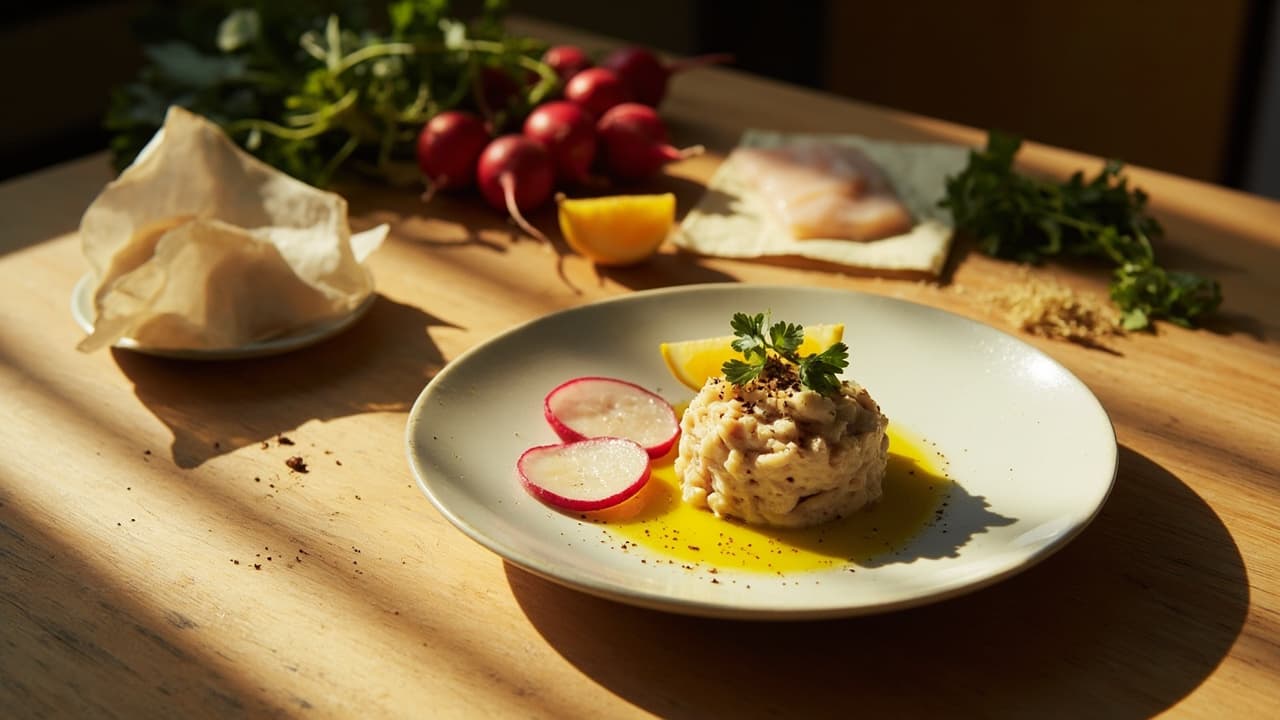
Desalted salt cod diced fine, bound in a saffron-garlic aioli, served over crisp radish rounds with a whisper of lemon and fresh parsley — coastal Catalonia on a plate.

Prep
24h
Cook
30 min
Total
24h 30m
Method
1
Rinse the salt cod briefly under cold running water. Place it in a large bowl, cover with 1 liter of cold water, and refrigerate for 24 hours, changing the water every 8 hours. This is essential for food safety and proper texture — properly desalinated cod will feel firm yet yield to gentle pressure.
2
After soaking, drain the cod and pat it completely dry with clean kitchen paper. Using your fingers and a small knife, check carefully for any remaining scales or bones. Flake the flesh into clean, bone-free pieces. Refrigerate until needed.
3
Crush the saffron threads between your fingertips into a small bowl. Add 2 tablespoons of the olive oil and let it steep at room temperature for at least 15 minutes — the threads will release their color slowly, staining the oil a deep amber-gold.
4
Using a mortar and pestle, pound the garlic cloves with a generous pinch of salt until you have a smooth, creamy paste. This is the foundation — take your time, as a grainy paste will ruin the emulsion.
5
6
Once stable, pour in the saffron-infused oil along with the saffron threads. Add the lemon juice and continue whisking until you have a thick, glossy aioli with an even saffron color. Taste and adjust salt. Refrigerate until needed.
7
Wash the radishes thoroughly and slice them into paper-thin rounds, about 3mm thick. A mandoline works best here for uniform thickness. Lay the rounds on a paper-lined plate to drain slightly.
8
Dice the desalted cod into small, even brunoise cubes — about 5mm. Do not overwork it; each piece should hold its shape. Place the diced cod in a cold mixing bowl.
9
10
Taste the mixture and add a pinch of black pepper. If the cod needs more brightness, add another drop of lemon. The mixture should taste of the sea, the saffron, and clean acidity.
11
12
Using a ring mold or simply a scoop, place the salt cod tartare in the center of the radish rounds. Garnish with the remaining fresh parsley scattered lightly over the top.
13
Drizzle an additional whisper of olive oil and a final grating of black pepper over each portion. Serve immediately with a lemon wedge on the side.
A
Nutri-Score
Excellent balance
A–E · lower is better · score -1
Calories
463
per serving
High in protein · 23gLow sugar · 8g
Protein
23g
Carbs
10g
Fat
38g
Sat. fat
8g
Fiber
9g
Sugar
8g
Sodium
764mg
Dairy FreeGluten FreeLow CarbPescatarianWhole30Anti Inflammatory DietDiabetesHeart HealthyLow Sodium DietWeight ManagementHigh ProteinMediterranean StyleOmega 3 Fatty Acids
Nutri-Score is a general nutritional-balance guide, not medical or dietary advice.
Grade pending
Environmental impact
Estimated footprint
Grade pending · 84% ingredient coverage
kg CO2e
≥0.4
per serving
Olive Oil drives 43% of this recipe’s estimated footprint.
Carbon from Poore & Nemecek 2018; water, land & runoff from Agribalyse — modelled averages for comparing recipes, not a measurement of your groceries.
Flavor Profile
7
Umami
3
Sweet
4
Salty
5
Sour
2
Bitter
2
Spicy
Textures
CrispSilkyTender
Aromas
CitrusFloralHerbalPungent
Kitchen Equipment
Safety & Storage
High Risk Population
This dish contains RAW fish and RAW eggs. Do not serve to pregnant women, infants, elderly, or immunocompromised individuals. Use pasteurized eggs if serving to high-risk populations.
Allergen Warning
Contains fish (cod) and eggs. Inform guests of these allergens before service. Ensure no cross-contact with other ingredients during preparation.
Storage
Refrigerate desalted cod and saffron aioli separately at 40°F (4°C) or below. The 24-hour soaking process must occur in the refrigerator. Do not leave components at room temperature for more than 2 hours combined.
Cross Contamination
Use separate cutting boards and utensils for raw fish and raw eggs. Sanitize all preparation surfaces with bleach solution (1 tbsp/gallon water) before contact with ready-to-eat ingredients. Wash hands thoroughly between handling raw and cooked items.
Handling
Keep raw fish and raw eggs COLD until final assembly. The aioli emulsion is made with raw egg - ensure oil is added slowly and thoroughly to achieve safe emulsion. Do not taste raw mixture with utensils used for preparation.
Shelf Life
Serve the finished tartare immediately. Discard any leftover tartare after 24 hours. The desalted cod should be used within 48 hours after soaking completes.
Cooking Temperature
Maintain soaking water at 38-40°F (3-4°C) during the 24-hour desalting process. Change water every 8 hours as specified. Final plating should occur on chilled plates to keep tartare cold. Never exceed 40°F (4°C) during soaking.
Pro Tips
Technique
The desalting is not a step to rush — those 24 hours in cold water, with three changes, are what separate a properly seasoned cod from one that will overwhelm the delicate saffron. Test by feel: it should yield gently to pressure, not spring back like fresh fish.
Substitution
If finding quality desalted salt cod proves difficult, fresh cod poached briefly in heavily salted water (30g per liter) for 10 minutes, then cooled, can work in a pinch — though it will lack the depth that true baccalà carries.
From the chef
Salt cod is patience made protein — it carries the sea in concentrated form, and the work of desalinating it slowly over twenty-four hours is what makes this tartare worth eating. The flesh, once soaked and dried, dices cleanly and holds its shape, each cube coated in a saffron aioli that blooms amber from the threads steeped in oil. Crisp radish rounds underneath give contrast without competing. The acidity comes from lemon added with restraint — just enough to brighten the brine, never enough to bury it. This is coastal Catalonia on a single plate.
TagsSeafoodNo CookMediterraneanTapas StyleElegantCitrusRawTartareCold DishSaffronGarlicDairy Free
AllergensFishEgg
Source: generated · June 13, 2026