 Spanish
Medium · Hot
White Bean and Chard Saffron Rice
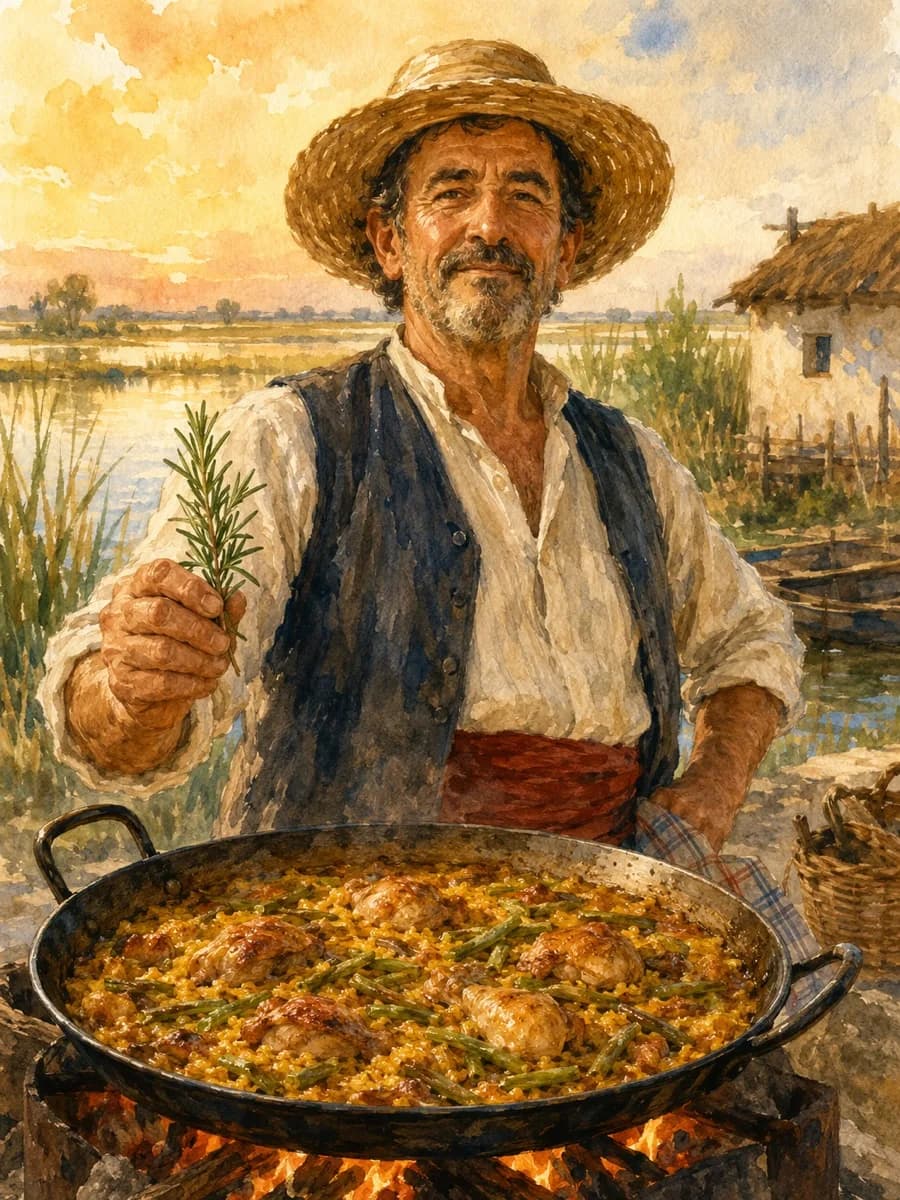
White beans and chard in a saffron-tinted broth, rice added and left to absorb without interference, olive oil stirred in at the end so every grain is glossed and golden. It is quiet food, the kind the Albufera villages have been eating for generations — legumes and greens and rice, honest to the last spoonful.
Prep
15 min
Cook
35 min
Rest
5 min
Total
55 min
Method
Bloom the Saffron
1
Crush the saffron threads between your fingers and steep them in the hot water for 10 minutes until the liquid turns a deep golden amber. Set aside.
Build the Sofrito
2
In a wide paella pan or heavy skillet, warm the olive oil over medium heat. Add the sliced garlic and cook gently until fragrant and just turning golden, about 2 minutes. Do not let it brown — this is the foundation of your flavor.
3
Add the grated tomatoes, paprika, and salt. Stir with your wooden spoon and let this cook down to a thick, jammy sofrito, about 8 to 10 minutes. Patience here makes all the difference.
Add the Beans and Chard Stems
4
Stir in the white beans and the chopped chard stems. Let them mingle with the sofrito for 2 minutes, absorbing all those beautiful flavors.
Cook the Rice
6
Add the white rice in an even layer across the pan. For the next 5 minutes, gently shake the pan back and forth. Do not stir the rice — this is not a risotto.
Add the Chard and Create the Socarrat
7
Nestle the chard leaves into the rice, pressing them down gently. Lay the rosemary sprigs on top and continue cooking, untouched, until the liquid is nearly absorbed and you hear a gentle crackling from the bottom, about 8 to 10 minutes more. This crackling is your socarrat forming — the toasted crust that is the whole point of the exercise.
8
Remove from heat, cover with a clean cloth, and rest for 5 minutes. The cloth absorbs condensation so your rice stays dry and the socarrat stays crisp.
A
Nutri-Score
Excellent balance
A–E · lower is better · score -4
Calories
645
per serving
Calorie-dense · 645 kcalSource of protein · 22gLow sugar · 3gLow saturated fat · 2g
Protein
22g
Carbs
114g
Fat
12g
Sat. fat
2g
Fiber
6g
Sugar
3g
Sodium
658mg
Gluten FreeDairy FreePlant ForwardHeart HealthyDiabetes FriendlyLow Sodium AdjustedHigh FiberPlant ProteinIron Rich
Nutri-Score is a general nutritional-balance guide, not medical or dietary advice.
B
Environmental impact
Low impact
A–E · lower is better · includes estimates
kg CO2e
0.6
per serving
BCarbonAEU all-round· carbon sets the grade
Water
1.4m³
Runoff
0.04g P
White rice drives 53% of this recipe’s estimated footprint.
Carbon from Poore & Nemecek 2018; water, land & runoff from Agribalyse — modelled averages for comparing recipes, not a measurement of your groceries.
Flavor Profile
6
Umami
4
Sweet
5
Salty
2
Sour
2
Bitter
2
Spicy
Textures
CrispyTenderCreamy
Aromas
HerbalSmokyEarthy
Kitchen Equipment
Primary Tool
Paella PanPaella PanWooden SpoonChef KnifeCutting BoardGraterMeasuring CupsMeasuring SpoonsClean ClothKitchen Towel
Counter FootprintMedium
Safety & Storage
Cooking Temperature
The sofrito must reach adequate caramelization temperature during the 8-10 minute cook time to develop proper flavor and safety; monitor the garlic closely to prevent burning which creates bitter compounds.
The socarrat formation requires the pan to remain undisturbed over heat until a gentle crackling sound indicates proper browning at approximately 8-10 minutes; insufficient heat will prevent crust formation.
The rice must reach an internal temperature of at least 165°F (74°C) before serving to eliminate potential Bacillus cereus and other pathogens; use a calibrated food thermometer to verify doneness, especially at the center of the pan where heat penetration is slowest.
Storage
Cooked rice dishes are high-risk for Bacillus cereus and other bacterial growth if left at room temperature for more than 2 hours; cool and refrigerate leftovers within 1 hour of serving.
Handling
Saffron threads should be properly crushed and steeped in hot water at appropriate temperature to extract color compounds safely; water should be hot but not scalding to avoid degradation of delicate compounds.
Cross Contamination
Use separate cutting boards and utensils for raw ingredients and ready-to-eat items like the finished sofrito; sanitize surfaces after handling chard stems before working with leaves.
Chard contains high levels of oxalates which may concern individuals with kidney issues; the preparation method (cooking) reduces but does not eliminate oxalate content.
Pro Tips
Technique
Do not touch the rice after you spread it. Shake the pan gently for the first five minutes only, then leave it absolutely alone. Every stir is an insult to the socarrat, and the socarrat is the whole point — it is the part my grandfather always fought my cousins for.
Substitution
If chard is not available, use lacinato kale or even good Swiss chard from another farm. The green bean is more sacred — in a true paella it stays — but white beans forgive almost anything if they are already cooked and tender.
Equipment
Use your widest pan, the one with the thinnest bottom you own. A paella pan is ideal but a large cast-iron skillet works beautifully — what matters is that the rice spreads in a thin layer, no more than one grain deep, so the socarrat can form evenly across the entire surface.
From the chef
Quiet food, honest food — white beans and chard in saffron-tinted broth, rice spread flat across the pan and left completely alone until the bottom toasts and the surface pulls dry. This is the kind of dish the Albufera villages have been eating for generations: garlic and olive oil, a slow tomato sofrito, greens that melt into the grain like a quiet blessing. The saffron turns everything gold. The chard goes in last, pressed gently into the surface, and the rosemary lies on top while the pan does its work undisturbed. That crackling sound from the bottom — that is the rice telling you it is ready.
TagsRiceSaffronBeansGreensOne PotPaellaSocarratVegetarian Friendly
Source: generated · May 30, 2026