 Galician
Medium · Hot
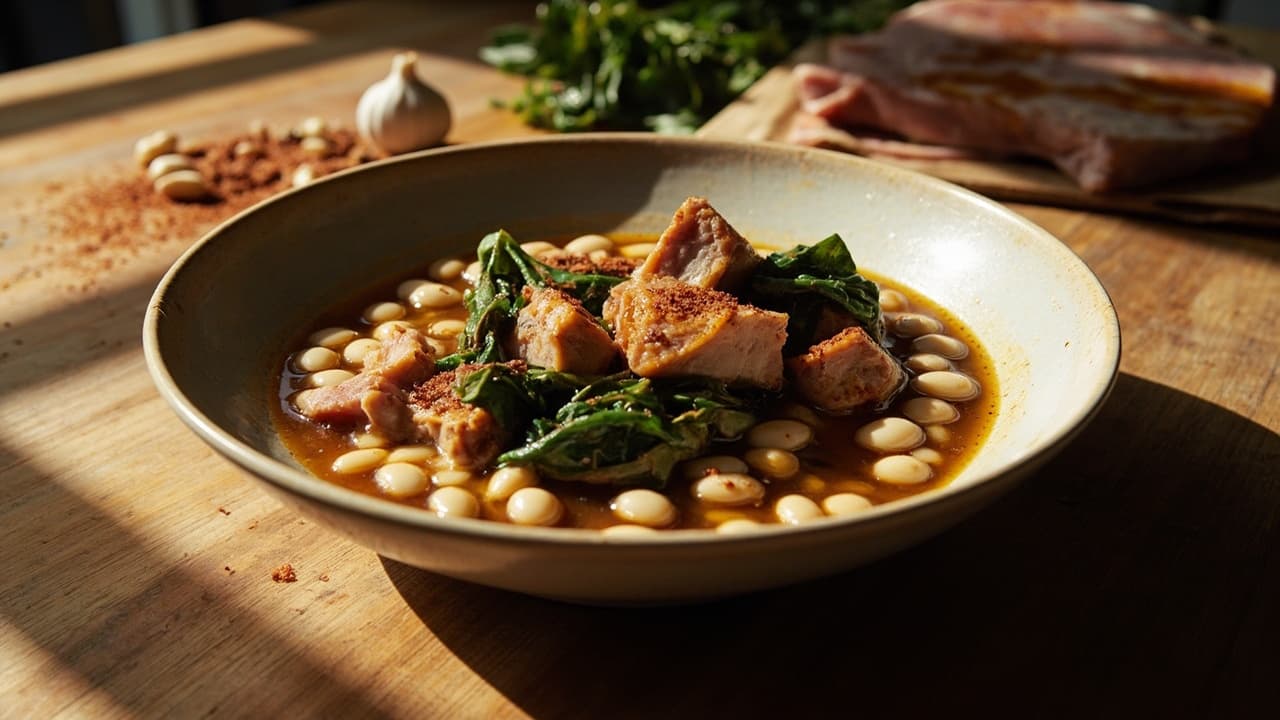
White Beans and Pork Belly Slow-Stewed with Chard
A hearty Galician one-pot where tender white beans and silky pork belly meld together over a long slow simmer, finished with chard wilted in at the end and a generous drizzle of olive oil with smoked paprika on top.
Prep
20 min
Cook
1h 40m
Rest
15 min
Total
2h 15m
Method
Prepare the pork
1
Season the pork belly chunks generously with salt and black pepper. Let them sit at room temperature for 15 minutes while you prepare the other ingredients.
Build the sofrito and brown the pork
2
Heat the 3 tablespoons of olive oil in a large Dutch oven over medium-high heat. Add the pork belly pieces and brown on all sides, about 8-10 minutes total. The edges should be golden and slightly crispy.
3
Push the pork to the sides and add the diced onion to the center. Cook the onion until soft and translucent, about 5 minutes, scraping up the fond from the bottom.
4
Add the minced garlic and cook for another minute until fragrant.
Slow stew the beans and pork
5
Add the soaked and drained white beans to the pot along with the cubed potato and the chicken broth. Stir everything together and bring to a gentle boil.
6
Reduce the heat to its lowest setting. Cover the Dutch oven with a tight-fitting lid and let the stew simmer very gently for 1 hour and 15 minutes, stirring occasionally. The beans should be creamy and the pork belly tender and yielding.
Add the chard and finish
7
Plate and serve
9
Ladle the white bean and pork belly stew into deep bowls. Dust the top generously with smoked paprika and finish with a good drizzle of olive oil.
10
Serve immediately with crusty bread or white rice alongside to soak up the cooking liquid. This dish is even better the next day once the flavors have fully married together.
C
Nutri-Score
Fair balance
A–E · lower is better · score 6
Calories
1211
per serving
High in saturated fat · 23gCalorie-dense · 1211 kcalSource of protein · 38gLow sugar · 4g
Protein
38g
Carbs
77g
Fat
85g
Sat. fat
23g
Fiber
10g
Sugar
4g
Sodium
1132mg
Gluten FreeDairy FreeNot Suitable Low SodiumNot Suitable Heart HealthNot Suitable Kidney FriendlyHigh ProteinModerate CarbLow Fiber Target
Nutri-Score is a general nutritional-balance guide, not medical or dietary advice.
D
Environmental impact
High impact
A–E · lower is better · includes estimates
kg CO2e
1.9
per serving
DCarbonAEU all-round· carbon sets the grade
Water
0.8m³
Runoff
0.2g P
Pork belly, cut into large chunks drives 80% of this recipe’s estimated footprint.
Carbon from Poore & Nemecek 2018; water, land & runoff from Agribalyse — modelled averages for comparing recipes, not a measurement of your groceries.
Flavor Profile
7
Umami
3
Sweet
5
Salty
1
Sour
1
Bitter
4
Spicy
Textures
TenderSilkyUnctuous
Aromas
SmokyEarthyHerbal
Kitchen Equipment
Primary Tool
Dutch OvenCounter FootprintMedium
Safety & Storage
Handling
Allow raw pork belly only 15 minutes at room temperature before cooking - do not exceed this window to prevent bacterial growth on the surface
Cross Contamination
Use separate cutting boards for raw pork and vegetables to prevent bacterial transfer from pork surface to produce
Storage
Cool stew to room temperature within 2 hours, then refrigerate in airtight containers for up to 4 days or freeze for 3 months
Cooking Temperature
Ensure pork reaches minimum 145°F during browning and maintain gentle simmer above 185°F throughout the 1 hour 15 minute cooking phase for safe bean and pork preparation
Allergen Warning
If using store-bought chicken broth, verify the ingredient label for hidden allergens as commercial broths frequently contain gluten, celery, or dairy-based seasonings
Pro Tips
Technique
Don't rush the browning of the pork belly — those golden, caramelized edges are where the real flavor lives, and a patient sear means a richer, deeper stew.
Make Ahead
This dish improves tremendously the next day once the flavors have fully married together. The beans thicken and the pork belly absorbs all that smoky, porky broth.
Equipment
A good Dutch oven with a tight-fitting lid is essential here. The heavy pot distributes heat evenly and keeps all that smoky Atlantic fragrance locked inside where it belongs.
Substitution
If you can't find chard, sturdy kale works in a pinch, though chard has a gentleness and tenderness that holds up better in the slow simmer without falling apart.
From the chef
White beans need time and pork to become what they are supposed to be. Here the belly browns first until the edges are gold and a little crisp, then the onion and garlic go in, then the soaked beans with potato and broth, everything covered and left to a long, gentle simmer until the beans are creamy and the pork gives without argument. Chard goes in last, wilting into the liquid in those final minutes. A dust of smoked paprika, a drizzle of olive oil on top — that is how this finishes, and how it should.
TagsSlow CookedOne PotHeartyWinter ComfortPork And BeansSmoked Paprika
AllergensGlutenCelery
Source: generated · June 10, 2026