 Japanese
Medium · Hot
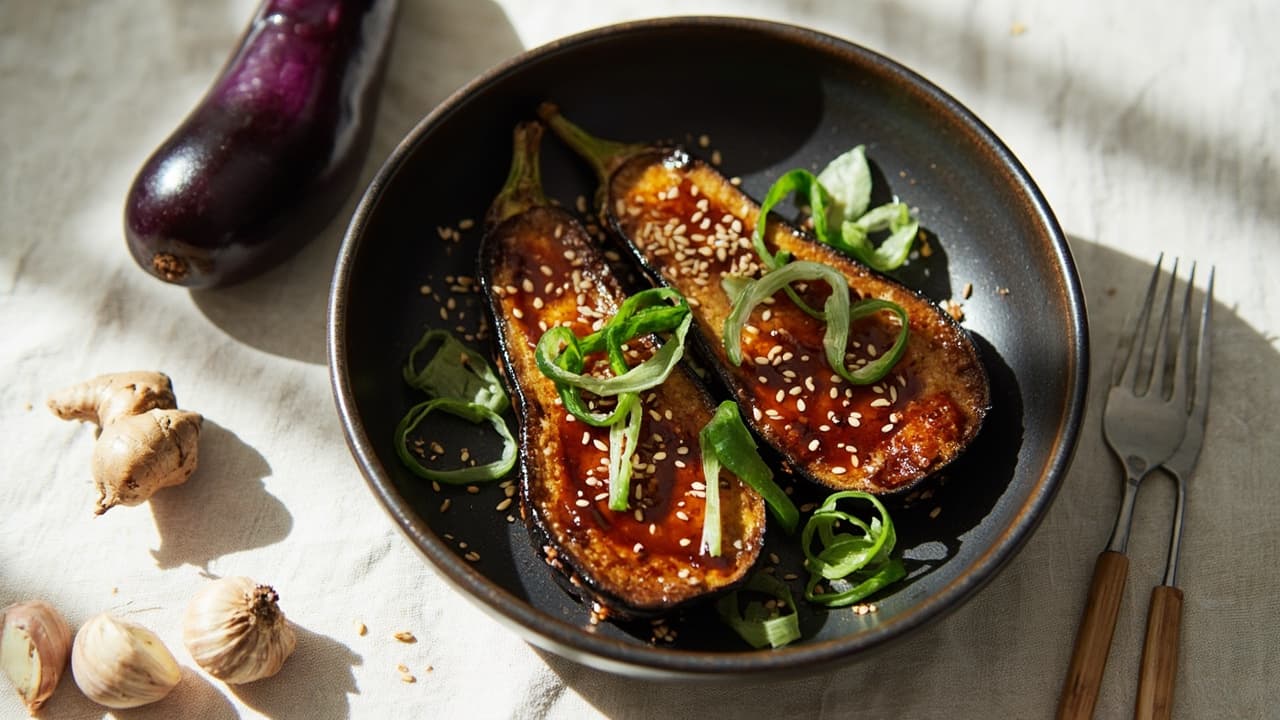
Soy Ginger Glazed Eggplant with Sesame
Caramelized eggplant halves with a sticky umami glaze featuring soy, ginger, and sesame. Pan-seared until golden then finished under the broiler for a glossy, restaurant-worthy finish.

Prep
15 min
Cook
30 min
Total
45 min
Method
Prep
1
Halve eggplants lengthwise. Score the flesh in a crosshatch pattern, cutting deeply but not through the skin. Brush with olive oil and season lightly with salt.
Make the Glaze
3
Whisk together soy sauce, maple syrup, grated ginger, minced garlic, and sesame oil in a small bowl until well combined.
Cook the Eggplant
4
Heat a large frying pan over medium-high heat. Place eggplants cut-side down and cook without moving for 5-6 minutes until deeply golden. Flip and cook another 3 minutes.
5
Pour the glaze over the eggplants. Reduce heat to medium-low and let the glaze bubble and thicken for 2-3 minutes, spooning it over the cut sides as it reduces.
Finish and Serve
6
Transfer eggplants to a baking sheet. Broil on high for 2 minutes to caramelize the glaze further and add char marks.
7
Plate the eggplants, spooning over any remaining glaze from the pan. Scatter sesame seeds and sliced scallion greens over top. Serve immediately over rice or as a standalone dish.
B
Nutri-Score
Good balance
A–E · lower is better · score 1
Calories
179
per serving
Source of fibre · 3g
Protein
2g
Carbs
13g
Fat
14g
Sat. fat
2g
Fiber
3g
Sugar
8g
Sodium
289mg
VeganVegetarianDairy FreeHeart HealthyAnti InflammatoryLow Saturated FatDiabetes FriendlyWeight ManagementFiber RichPlant Forward
Nutri-Score is a general nutritional-balance guide, not medical or dietary advice.
A
Environmental impact
Very low impact
A–E · lower is better · includes estimates
kg CO2e
0.2
per serving
ACarbonAEU all-round· both agree
Water
0.3m³
Land
12Pt
Runoff
0.03g P
Eggplant drives 58% of this recipe’s estimated footprint.
Carbon from Poore & Nemecek 2018; water, land & runoff from Agribalyse — modelled averages for comparing recipes, not a measurement of your groceries.
Flavor Profile
8
Umami
5
Sweet
6
Salty
1
Sour
2
Bitter
3
Spicy
Textures
CrispyTenderCaramelizedSoft
Aromas
HerbalSavoryNuttySmoky
Kitchen Equipment
Primary Tool
Frying PanCounter FootprintMedium
Safety & Storage
Cooking Temperature
Broiler finish reaches very high temperatures (500°F+). Watch closely for 2 minutes maximum to prevent burning or charring.
Pan-searing over medium-high heat creates risk of oil splatter. Use long-handled tongs and keep oven mitts nearby.
Cross Contamination
Use separate cutting boards for raw garlic/ginger and ready-to-eat vegetables like scallions to prevent bacterial transfer.
Allergen Warning
Soy sauce typically contains wheat-derived gluten. Use tamari or coconut aminos for gluten-free preparation if needed.
Sesame oil quality varies. Verify your sesame oil is pure sesame without peanut or other allergen cross-contamination.
Storage
Refrigerate leftovers within 2 hours in airtight containers. Consume within 3-4 days for best quality.
Reheat leftovers to 165°F minimum internal temperature when using oven or stovetop methods.
High Risk Population
Individuals with tree-nut allergies should verify sesame seed processing facilities are nut-free as cross-contamination can occur.
Handling
When scoring eggplant crosshatch pattern, cut deeply but stop before piercing the skin to avoid crumbling during cooking.
Equipment Safety
Allow hot pan to cool before washing. Never plunge hot cast iron into cold water as thermal shock can cause cracking.
Pro Tips
Technique
Score deep into the flesh in a crosshatch pattern, almost but not quite through the skin. These cuts create channels for the glaze to penetrate, turning a potentially bland vegetable into something packed with flavor in every bite.
Substitution
No maple syrup? Brown sugar or agave work as alternatives. Want extra depth? Add a tablespoon of white miso to the glaze for that signature umami punch I love.
Equipment
A good heavy-bottomed frying pan is essential here—you need even heat distribution to get that deep golden sear on the cut side before the broiler finish.
From the chef
Eggplants are like flavor sponges waiting to be filled, and this glaze is the perfect filling. I first nailed this dish after years of experimenting with Japanese nasu dengaku, swapping the traditional miso for a soy-ginger-maple combo that caramelizes beautifully under the broiler. The crosshatch scoring isn't just for looks—those deep cuts let all that sticky, umami-rich glaze seep straight into the flesh, transforming a humble vegetable into something you'll actually crave.
TagsVeganWeeknight DinnerUmami RichPan AsianSticky Glaze
AllergensSoySesameGluten
Source: generated · June 10, 2026