 Fusion
Medium · Hot
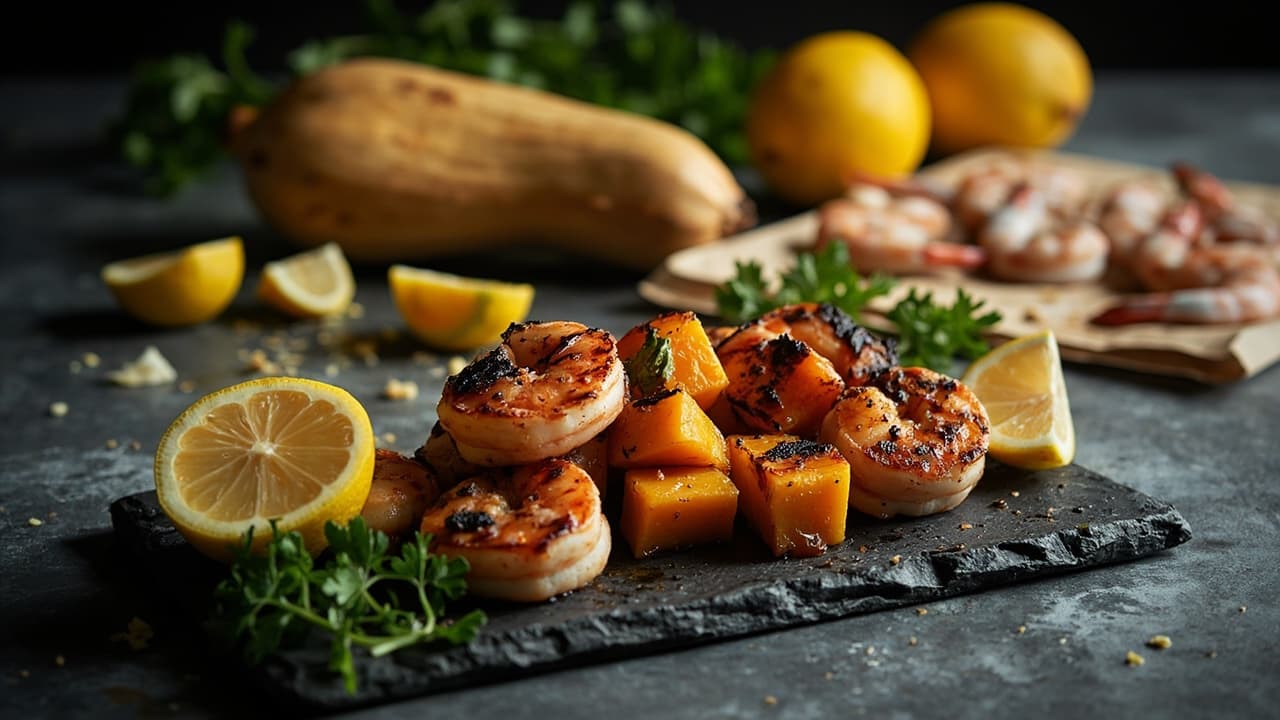
Seared Shrimp & Butternut Squash with Charred Lemon
Inspired by yakitori clarity, this dish pairs plump shrimp seared over high heat with caramelized butternut squash and lemon charred until the edges turn smoky-bitter. Simple seasoning lets each element speak for itself.

Prep
15 min
Cook
30 min
Total
45 min
Method
1
Peel and seed the butternut squash; cut into 2cm cubes. Pat the shrimp dry with paper towels. Halve the lemons crosswise.
2
Toss butternut squash cubes with 2 tbsp olive oil and 0.5 tsp salt until evenly coated. Set aside.
3
Preheat oven to 200°C (fan 180°C). Spread the squash cubes on a rimmed baking sheet in a single layer without crowding.
4
Roast for 20–22 minutes, flipping once at the 10-minute mark, until the edges are caramelized and a knife meets little resistance. Remove from oven and keep warm.
5
Place the lemon halves cut-side down in a dry cast-iron skillet over high heat. Char for 4–5 minutes without moving, until the cut surface is deeply golden with dark speckles. Set aside.
6
Heat the same skillet (wipe clean) over high heat until it just begins to smoke. Add 3 tbsp olive oil and let it shimmer for 30 seconds.
7
Lay shrimp in the pan in a single layer. Sear 90 seconds per side until pink and curled tightly. In the final 30 seconds of cooking, add minced garlic and cook until fragrant. Season with 1 tsp salt and 0.5 tsp black pepper.
8
9
Arrange the roasted butternut squash across a wide serving platter. Lay the seared shrimp on top. Place the charred lemon halves cut-side up beside the shrimp. Scatter roughly chopped parsley over the entire dish. Serve immediately.
A
Nutri-Score
Excellent balance
A–E · lower is better · score -2
Calories
366
per serving
High in protein · 33gLow sugar · 7g
Protein
33g
Carbs
25g
Fat
18g
Sat. fat
8g
Fiber
8g
Sugar
7g
Sodium
1567mg
Anti InflammatoryDiabetesHeart HealthyLow SodiumBalanced MacrosHigh ProteinWeight Management
Nutri-Score is a general nutritional-balance guide, not medical or dietary advice.
E
Environmental impact
Very high impact
A–E · lower is better · includes estimates
kg CO2e
3.6
per serving
ECarbonBEU all-round· carbon sets the grade
Water
23m³
Land
47Pt
Runoff
1.1g P
Large shrimp, peeled and deveined drives 94% of this recipe’s estimated footprint.
Carbon from Poore & Nemecek 2018; water, land & runoff from Agribalyse — modelled averages for comparing recipes, not a measurement of your groceries.
Flavor Profile
6
Umami
4
Sweet
5
Salty
4
Sour
2
Bitter
1
Spicy
Textures
CrispyTender
Aromas
CitrusHerbalSmoky
Kitchen Equipment
Primary Tool
Cast Iron SkilletSafety & Storage
Cooking Temperature
Shrimp must reach an internal temperature of 63°C at the thickest point to ensure food safety. The recipe specifies this temperature - verify with a calibrated food thermometer before serving.
Cross Contamination
Raw shrimp can harbor pathogenic bacteria. Use separate cutting boards for raw seafood and ready-to-eat ingredients. Wash all utensils, surfaces, and hands thoroughly with hot soapy water after handling raw shrimp.
Storage
Keep shrimp refrigerated at or below 4°C until ready to cook. Do not leave at room temperature for more than 2 hours total. If previously frozen, cook immediately after thawing in the refrigerator.
High Risk Population
Shellfish is particularly hazardous for pregnant individuals, elderly persons, young children, and immunocompromised individuals. Ensure thorough cooking to 63°C internal temperature and avoid any raw or undercooked portions.
Allergen Warning
This dish contains shellfish (shrimp). For individuals with shellfish allergies, the entire dish must be avoided. When serving others, clearly identify the presence of shrimp.
Handling
Pat shrimp dry with paper towels before searing to achieve proper caramelization. Excess moisture will cause steaming instead of searing and may affect both food safety and quality.
Pro Tips
Technique
The skillet must smoke before the oil touches it. When the oil shimmers and almost seems to settle into stillness, that is your moment. Place the shrimp and do not touch them for ninety seconds. Disturbing them before the sear forms is like opening the grill lid on binchōtan—the temperature collapses, and with it, the char that gives the flesh its voice.
Substitution
If butternut squash is unavailable, acorn squash works equally well—cut to the same 2cm cubes and roast until the edge resistance fades. The natural minerality of any winter squash holds well against high heat, so long as the surface is dry and the pieces are not crowded on the baking sheet.
From the chef
In Kagoshima, we say the fire speaks first. When I look at shrimp and butternut squash together, I see two textures that carry heat differently—one wants speed, the other patience—but both deserve the same respect: dry surface, screaming iron, no interference. The charred lemon is not garnish; it is confession—proof that even the sourest thing, subjected to enough honest heat, will surrender its bitterness and become something worth squeezing.
TagsSearedShrimpButternut SquashCharred LemonHigh HeatQuick CookingGluten FreePescatarian
AllergensShellfish
Source: generated · June 13, 2026