 British
Medium · Room Temp
Lemon Curd Custard Tart
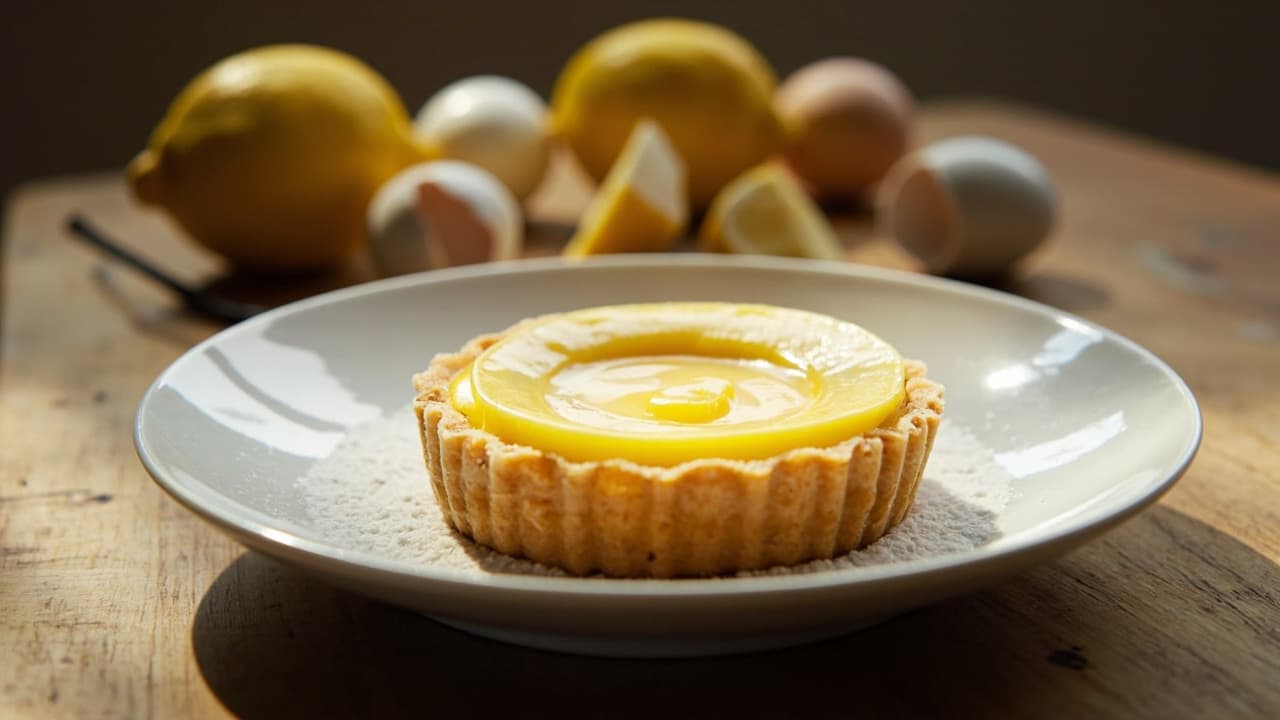
A proper British tart with a buttery shortcrust shell, tangy lemon curd, and a silky vanilla custard top — the sort of thing Margaret has made a hundred times and finds never fails to comfort.
Prep
45 min
Cook
40 min
Total
1h 25m
Method
1
2
Crack 1 egg into a small cup, beat lightly with a fork, then drizzle over the flour mixture. Add 2 tbsp cold water and bring together into a smooth dough. Flatten into a disc, wrap in cling film, and refrigerate for at least 30 minutes.
3
Preheat your oven to 190°C (375°F). On a lightly floured surface, roll out the chilled pastry to about 3mm thickness and line a 23cm loose-bottomed tart tin. Press it gently into the edges, trim the overhang, and prick the base several times with a fork.
4
Line the pastry with a sheet of greaseproof paper and fill with baking beans or dried pulses. Blind bake for 12 minutes, then remove the paper and beans and bake for a further 5 minutes until the base looks pale and dry but not coloured. Remove from the oven and cool slightly.
5
6
In a separate bowl, whisk 3 eggs together, then slowly pour the hot lemon mixture over them, whisking constantly to temper the eggs. Return everything to the saucepan and cook over low heat, stirring with a wooden spoon, for 8-10 minutes until the curd thickens noticeably and coats the back of the spoon. Do not let it boil. Strain through a fine sieve and set aside.
7
Whisk 3 eggs, 50g sugar, 1 tsp vanilla extract, and ⅛ tsp salt together in a bowl until pale and smooth. Heat 300ml whole milk in a saucepan until just beginning to steam and small bubbles appear around the edge — do not let it boil.
8
Slowly pour the hot milk into the egg mixture, whisking constantly. Return to the saucepan and cook over very low heat, stirring continuously, for 5-6 minutes until the custard thickens enough to coat the back of a spoon and reaches 82°C (179°F). Remove immediately from the heat and strain through a fine sieve into a jug.
9
Spread the warm lemon curd evenly across the base of the blind-baked tart shell, smoothing the top.
10
Carefully pour the vanilla custard over the lemon curd layer, filling to just below the pastry rim. The two layers will settle into distinct bands.
11
Bake at 160°C (320°F) for 15-18 minutes until the custard is set at the edges but still has a gentle wobble in the very centre — it will continue to firm up as it cools. Cool the tart completely in the tin on a wire rack before serving, ideally at room temperature for the best texture.
D
Nutri-Score
Needs balance
A–E · lower is better · score 12
Calories
591
per serving
High in saturated fat · 19gLow salt · 259mg
Protein
13g
Carbs
66g
Fat
31g
Sat. fat
19g
Fiber
3g
Sugar
38g
Sodium
259mg
VegetarianBalanced Nutrition
Nutri-Score is a general nutritional-balance guide, not medical or dietary advice.
B
Environmental impact
Low impact
A–E · lower is better · includes estimates
kg CO2e
0.8
per serving
BCarbonAEU all-round· carbon sets the grade
Water
0.8m³
Land
32Pt
Runoff
0.07g P
Carbon from Poore & Nemecek 2018; water, land & runoff from Agribalyse — modelled averages for comparing recipes, not a measurement of your groceries.
Flavor Profile
4
Umami
8
Sweet
2
Salty
7
Sour
1
Bitter
0
Spicy
Textures
CrispySilkySmoothTender
Aromas
CitrusDairyVanilla
Kitchen Equipment
Primary Tool
OvenHeavy Based SaucepanOvenFine SieveLarge BowlMeasuring JugPastry BrushRolling PinSmall BowlTart Tin 23cmWhiskWooden SpoonBaking BeansCling FilmGreaseproof Paper
Techniques
Safety & Storage
Cooking Temperature
Cook vanilla custard to 82°C (179°F) to ensure egg safety and proper thickening. Remove immediately once temperature is reached.
Do not allow lemon curd to boil during cooking — maintain low heat and stir constantly to prevent egg scrambling and curdling.
Handling
When tempering eggs for lemon curd, pour hot lemon mixture very slowly while whisking constantly to avoid cooking the eggs.
Cross Contamination
Strain both lemon curd and custard through fine sieves to remove any cooked egg particles and ensure smooth texture.
Storage
Refrigerate finished tart within 2 hours of cooling. Contains dairy and egg custard layer — consume within 3-4 days.
High Risk Population
Eggs in this recipe are not fully pasteurized. Pregnant individuals, elderly, young children, and immunocompromised persons should ensure eggs are fully cooked to safe temperature before consuming.
Equipment Safety
Use heavy-based saucepan for curd and custard to prevent scorching on the bottom. Stir continuously during low-heat cooking stages.
Allergen Warning
This tart contains wheat (flour), eggs, and milk. Cross-contact with nuts, soy, or other allergens may occur if using shared equipment.
Pro Tips
Technique
The curd is ready when it coats the back of your wooden spoon in a thick, velvety layer — if you can draw a clean line through it with your finger and it holds, you have done right. Do not be tempted to rush the cooking, and never let it boil, or it will split and lose that wonderful silken quality you're after.
Storage
This tart is best eaten the day it is made, when the pastry is still crisp and the custard wobbles just so. Should you have leftovers — and I doubt you will — press a sheet of greaseproof paper directly against the surface and keep at room temperature for no more than two days.
From the chef
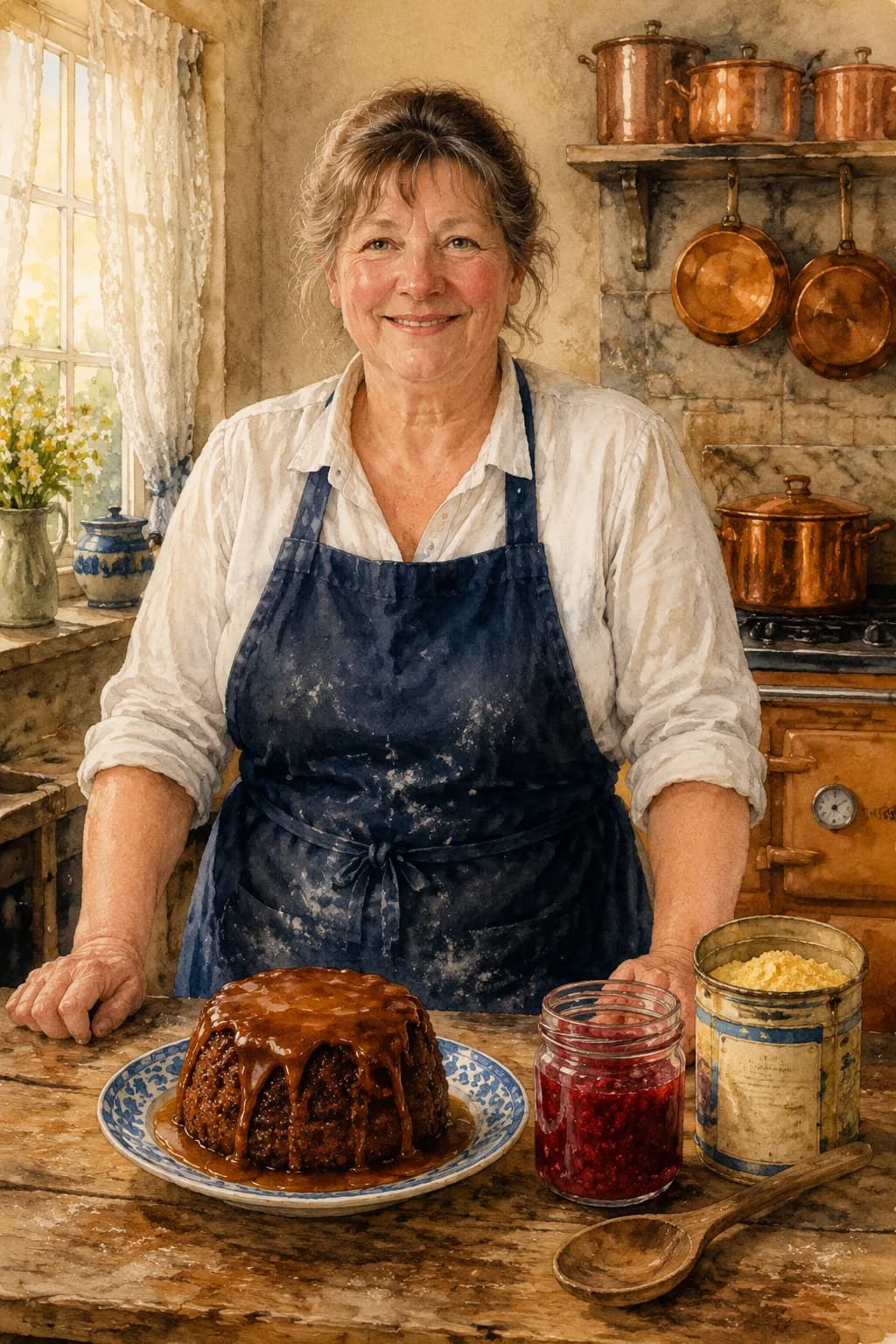
There is a particular satisfaction in a tart that holds its layers with quiet dignity — the buttery shell giving way to a ribbon of sharp lemon, beneath which the custard sets like a gentle cloud. This was the sort of thing my mother would make on a Sunday when the family was expected, and I have not once seen it come back with anything less than a clean plate.
TagsBritishTartPastryLemonCurdCustardVanillaButteryTraditionalClassicBakingEgg RichMilkDairy
AllergensWheatEggsMilkSalmonella Risk
Source: generated · June 13, 2026