 Italian
Medium · Hot
Clam Spaghetti with Tomato and Garlic
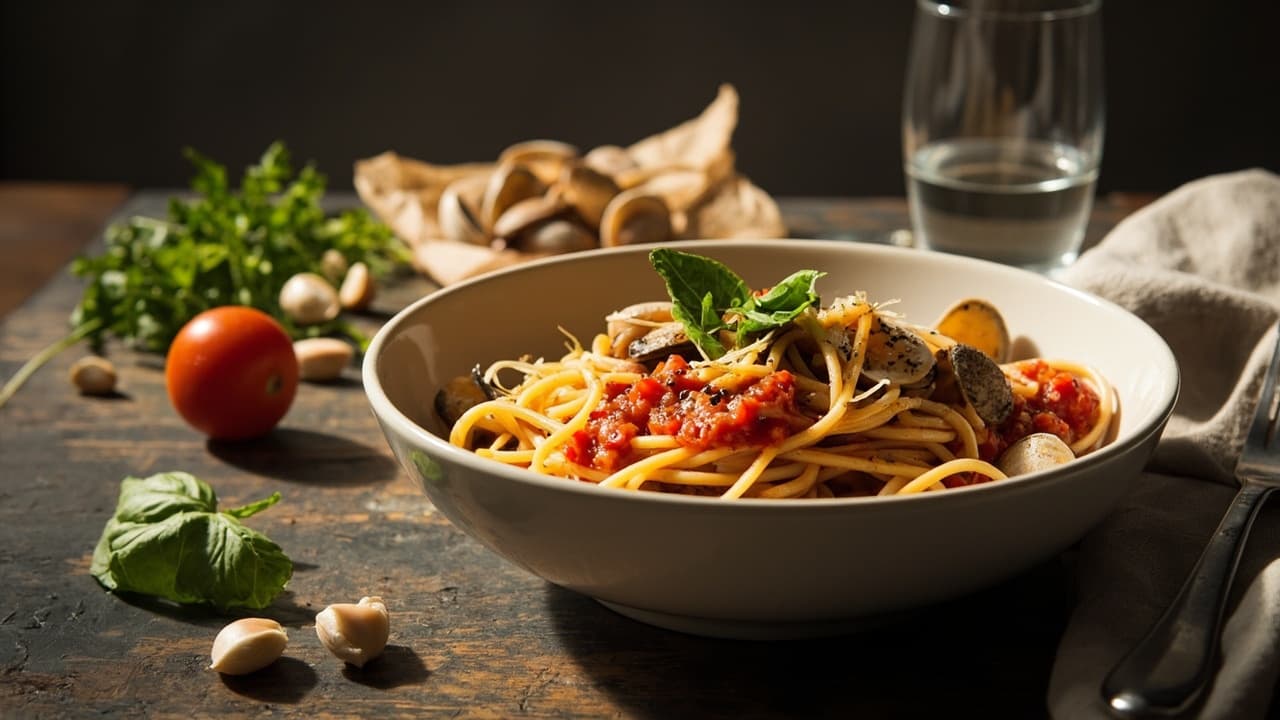
A sun-soaked Southern Italian classic: briny clams tuck into al dente spaghetti bathed in a garlicky tomato sauce, finished with torn basil and a bright squeeze of lemon. Gianna would never forgive me if I put cheese on this.

Prep
20 min
Cook
20 min
Total
40 min
Method
Prep the clams and tomatoes
1
Check each clam — tap any open ones: if they don't close, toss them. Rinse well under cold running water, scrubbing off any sand or barnacles. Set aside in a bowl of cold salted water while you prep.
Build the garlic-tomato sauce
3
Steam the clams in the sauce
5
6
Scatter in most of the parsley, give it one last toss, then take the pan off the heat. The residual heat keeps everything warm without overcooking.
Cook the spaghetti and marry it all
7
Boil a large pot of water with a tablespoon of salt. Cook the spaghetti until al dente — about 1 minute less than the package says. Reserve at least a coffee cup of the starchy pasta water before you drain.
Plate and finish
9
Divide among warm, shallow bowls — go generous with the sauce and make sure everyone gets plenty of open clams.
10
Scatter the torn basil over the top, add a final crack of black pepper, and bring it to the table right away. No cheese, per Gianna's sacred rule — the briny clams and bright lemon are all the cheese this dish needs.
A
Nutri-Score
Excellent balance
A–E · lower is better · score -1
Calories
782
per serving
High in protein · 52gLow sugar · 8gLow saturated fat · 4g
Protein
52g
Carbs
91g
Fat
23g
Sat. fat
4g
Fiber
5g
Sugar
8g
Sodium
2249mg
PescatarianMediterraneanHeart HealthyLow Saturated FatHigh ProteinBalanced Macros
Nutri-Score is a general nutritional-balance guide, not medical or dietary advice.
Flavor Profile
8
Umami
5
Sweet
7
Salty
3
Sour
1
Bitter
2
Spicy
Textures
ChewyTenderSilkySaucy
Aromas
BrinyGarlickyHerbalCitrusFruity
Kitchen Equipment
Primary Tool
FryingPanFryingPanPotStrainerWoodenSpoonChefKnifeCuttingBoard
Counter FootprintMedium
Techniques
Safety & Storage
Cooking Temperature
Steam clams until fully opened, approximately 4-5 minutes covered. Internal temperature should reach 145°F. Discard any clams that remain closed after cooking.
Cross Contamination
Use separate cutting boards and utensils for raw clams. Avoid contact with other ingredients, especially those served raw. Sanitize all surfaces and hands after handling raw shellfish.
Storage
Keep live clams refrigerated at 40°F or below. Use within 1-2 days of purchase. Store in a breathable container, not airtight, and do not submerge in fresh water.
High Risk Population
Pregnant women, elderly, young children, and immunocompromised individuals face higher risk from shellfish. Ensure clams are thoroughly cooked and from a trusted source.
Handling
Before cooking, tap open clams — discard any that do not close. Rinse thoroughly under cold water and scrub to remove sand and barnacles. Discard broken or damaged shells.
Allergen Warning
This dish contains mollusks. Even trace amounts can cause severe allergic reactions. Clearly label dishes containing clams and avoid cross-contact with allergen-free preparations.
Shelf Life
Fresh clams deteriorate rapidly. Cook within 24-48 hours of purchase. If clams die before cooking, they become unsafe and should be discarded.
Pro Tips
Technique
Tap any open clams before you start — if they don't close when you tap, toss them. Give them a good scrub under cold water too, and let them sit in salted water for 20 minutes to purge any sand. Nothing ruins a beautiful pasta like a crunch of grit.
Save your pasta water! That starchy liquid is what makes the sauce cling to every strand. Start with small splashes and toss constantly — you're building an emulsion, not drowning noodles.
Substitution
If you can't find fresh clams, use 2 cans of whole canned clams in brine instead — drain the brine into your sauce for extra briny depth, then add the clams just to warm through.
From the chef
The garlic goes in first — thin slices that bloom in olive oil until they are soft and golden, not a shade darker. Then the tomatoes, roughly chopped, cooked down until jammy and deep orange. The clams go in last, covered tight, and in five minutes they open wide and give the sauce all their brine. You toss the spaghetti right in the pan with a splash of starchy pasta water until every strand is glossy and coated. Lemon juice, torn basil, a crack of pepper — and no cheese anywhere near it. The clams are the cheese. That is the whole point.
TagsClamsGarlicTomato SauceLemonBasilOlive OilParsleyAl DenteWeeknight DinnerNo CheeseSouthern ItalianSeafood PastaMediterranean
AllergensMollusks
Source: generated · June 10, 2026