 Italian
Medium · Hot
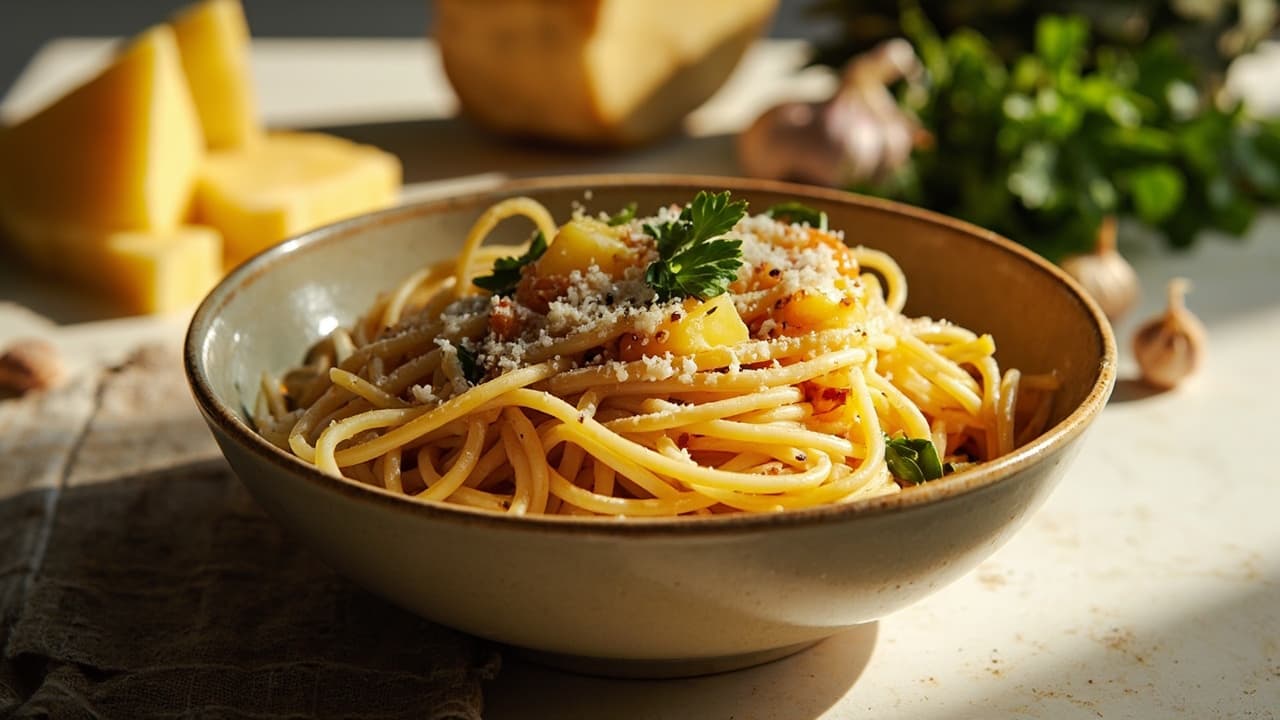
The Nonna's Pineapple Cacio e Pepe
A scandalous take on Rome's sacred cacio e pepe — sweet caramelized pineapple crashes the cheese-pepper party, and trust me, nobody leaves angry. Viola's rule: if it survives a blind tasting, it's not heresy, it's evolution.

Prep
15 min
Cook
20 min
Total
35 min
Method
Mise en Place
2
Cut the pineapple into small dice, roughly 1cm. Pat dry with paper towel to avoid a watery catastrophe in the pan.
3
Slice the garlic paper-thin. The thinner it is, the more it melts into the sauce like a silky secret.
The Pepper Foundation
4
Toast the black pepper in a large, dry skillet over medium heat for 60 seconds until fragrant. Let it bloom — this is not optional, it's the soul of cacio e pepe. Transfer to a bowl and reserve.
The Pasta
5
Boil spaghetti in heavily salted water until 2 minutes shy of al dente. Reserve at least 400ml of that starchy gold before draining.
The Scandalous Sauce
6
7
Toss in the pineapple and cook 3-4 minutes until edges caramelize and the fruit releases its perfume. This is your rebellion moment — own it.
8
Add the toasted pepper back in, then pour in 200ml pasta water. Let it bubble and reduce by half.
9
Add the pasta and toss vigorously for 2 minutes, adding pasta water splashes as needed — the goal is a glossy, clingy sauce that coats every strand like liquid silk.
10
Remove from heat. Now — and only now — add the grated Parmesan. Toss rapidly, adding pasta water a tablespoon at a time until you achieve a creamy, emulsified sauce that would make a Roman nonna clutch her chest (in approval or horror, who knows).
Plating
11
Twirl pasta into bowls with tongs. Top with caramelized pineapple pieces, a snow of extra Parmesan, fresh parsley, and one final crack of black pepper.
D
Nutri-Score
Needs balance
A–E · lower is better · score 15
Calories
677
per serving
High in saturated fat · 16gHigh in salt · 3790mgCalorie-dense · 677 kcalSource of protein · 28gSource of fibre · 13gLow sugar · 10g
Protein
28g
Carbs
86g
Fat
25g
Sat. fat
16g
Fiber
13g
Sugar
10g
Sodium
3790mg
Contains GlutenContains DairyBalancedComfort FoodIndulgentHigh Saturated FatModerate SodiumHeart HealthyHigh ProteinBalanced Macros
Nutri-Score is a general nutritional-balance guide, not medical or dietary advice.
C
Environmental impact
Moderate impact
A–E · lower is better · includes estimates
kg CO2e
1.3
per serving
CCarbonAEU all-round· carbon sets the grade
Water
0.2m³
Land
42Pt
Runoff
0.1g P
Parmesan, finely grated drives 72% of this recipe’s estimated footprint.
Carbon from Poore & Nemecek 2018; water, land & runoff from Agribalyse — modelled averages for comparing recipes, not a measurement of your groceries.
Flavor Profile
7
Umami
5
Sweet
5
Salty
3
Sour
2
Bitter
4
Spicy
Textures
TenderSilkyChewyTender Crisp
Aromas
HerbalSmokyNuttyButtery
Kitchen Equipment
Primary Tool
Large SkilletCounter FootprintMedium
Techniques
Safety & Storage
Handling
Always add Parmesan OFF HEAT, tossing rapidly while adding pasta water a tablespoon at a time. Adding cheese to hot pasta causes proteins to seize and clump, creating a grainy, stringy mess instead of a silky emulsion.
Cooking Temperature
Garlic should be cooked until just golden, about 2 minutes. Burnt garlic turns bitter and creates bitter compounds in the sauce. Pineapple should caramelize 3-4 minutes until edges brown but fruit remains intact.
Cross Contamination
Use separate cutting boards for raw garlic and other ingredients. While garlic itself is not a major allergen, cross-contamination prevention is essential kitchen practice, especially when serving to guests with unknown allergies.
Storage
Leftover cacio e pepe will congeal as it cools due to the dairy-based sauce. Refrigerate within 2 hours of cooking. Reheat gently in a pan with 2-3 tablespoons of pasta water, tossing continuously to restore creaminess. Consume within 2 days.
High Risk Population
The off-heat cheese addition technique ensures proper emulsification but also means the cheese reaches serving temperature through residual heat. For immunocompromised individuals, elderly, or pregnant individuals, ensure pasta is served hot throughout.
Reserve at least 400ml of starchy pasta water before draining. This starchy liquid is essential for creating the emulsified sauce and adjusting consistency. Without it, the sauce cannot bind properly and will be dry or greasy.
Pro Tips
Technique
Toast your pepper in a dry pan until you can smell it — that fragrance is the soul of cacio e pepe, and skipping this step is the only real crime here.
Add the Parmesan off the heat and toss rapidly with splashes of pasta water — you're building an emulsion, not a puddle. The sauce should coat the pasta like liquid silk, not slide off like a sad watery afterthought.
Substitution
No fresh pineapple? Brown sugar caramelized in butter with a squeeze of lemon makes a decent stand-in, though you'll miss the tropical brightness.
Flavor Boost
A tiny drizzle of good aged balsamic at the very end adds a mysterious depth that makes people ask 'what's that flavor?' and never guess right.
From the chef
Caramelized pineapple in cacio e pepe is the kind of move that sounds wrong and tastes like an argument you cannot win. The sweet-tart fruit cuts through the richness of Parmesan and black pepper like a perfectly timed punchline, and once you taste it you cannot un-taste why it works. Toast your pepper until it blooms, melt the garlic until it turns silk rather than chips, caramelize the pineapple until its edges go golden, then build the emulsion with patient splashes of starchy pasta water. Rome's sacred trinity survives the collision. It just gets considerably more interesting.
TagsItalianFusionPastaMain CourseQuickMedium DifficultyCheesePepperPineapple
AllergensMilkWheat
Source: generated · June 10, 2026