 French
Medium · Hot
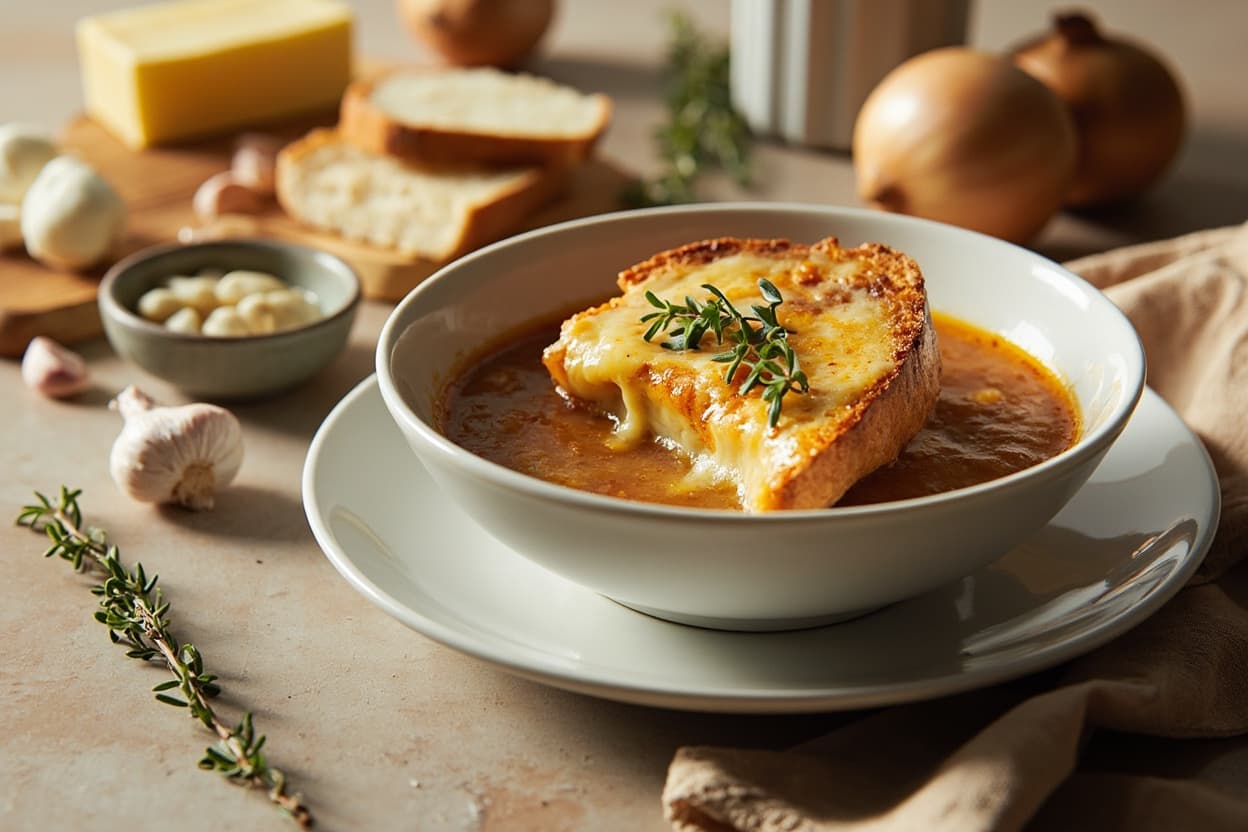
French Onion Soup with Melted Cheese Toast
Patience with yellow onions in a buttered pan transforms sharp and sulfurous into sweet and bronze — there is no honorable way to abbreviate this step. Thyme joins the broth, which deepens and settles into something ancient and warming. White bread floated on top and blanketed with melted mozzarella is not garnish; it is the point of arrival.

Prep
15 min
Cook
1h
Total
1h 15m
Method
Caramelizing the Onions
1
2
Building the Soup
4
Pour in 1 cup of water, scraping up any fond from the bottom of the pan with a wooden spoon. This deglaze is essential — the fond carries the flavour of the caramelized onions.
5
Add the heavy cream, remaining salt, and black pepper. Stir well and simmer for 10 minutes until the soup is thickened and warming. Taste and adjust seasoning. If serving immediately, keep warm over low heat.
Preparing the Cheese Toast
6
Preheat your oven broiler to high. Place the bread slices on a baking sheet and toast until lightly golden on one side, about 2 minutes per side.
7
Flip the bread so the untoasted side faces up. Spread butter generously over this surface, then cover completely with a thick layer of grated cheddar cheese.
Finishing and Serving
8
Return the cheese toasts under the broiler for 2-3 minutes until the cheese is melted, bubbling, and developing golden spots. Watch carefully — the line between perfectly melted and burnt is narrow.
9
Ladle the hot onion soup into warmed bowls. Float one cheese toast on each serving, presentation side up, allowing the toast to partially submerge in the broth. Serve immediately while the cheese is still stretchy.
D
Nutri-Score
Needs balance
A–E · lower is better · score 12
Calories
586
per serving
High in saturated fat · 27gLow sugar · 9g
Protein
17g
Carbs
27g
Fat
46g
Sat. fat
27g
Fiber
5g
Sugar
9g
Sodium
1052mg
High ProteinComfort FoodFrench CuisineGeneral WellnessBalanced Meal
Nutri-Score is a general nutritional-balance guide, not medical or dietary advice.
C
Environmental impact
Moderate impact
A–E · lower is better · includes estimates
kg CO2e
1.7
per serving
CCarbonAEU all-round· carbon sets the grade
Water
0.2m³
Land
34Pt
Runoff
0.07g P
Cheddar cheese drives 71% of this recipe’s estimated footprint.
Carbon from Poore & Nemecek 2018; water, land & runoff from Agribalyse — modelled averages for comparing recipes, not a measurement of your groceries.
Flavor Profile
7
Umami
5
Sweet
5
Salty
1
Sour
2
Bitter
3
Spicy
Textures
CrispyTenderCreamySaucy
Aromas
ButteryCaramelizedHerbalSmokySavory
Kitchen Equipment
Primary Tool
SaucepanSaucepanOven BroilerFrying PanChef KnifeCutting BoardWooden SpoonBaking SheetGraterLadleMeasuring SpoonsMeasuring CupsKitchen TongsKitchen TowelAluminum Foil
Counter FootprintMedium
Safety & Storage
Cooking Temperature
Broiler reaches very high temperatures — watch the cheese toast closely during the final 2-3 minutes as cheese can go from perfectly melted to burnt quickly.
Allergen Warning
This dish contains dairy (milk) from butter, heavy cream, and cheddar cheese. It also contains gluten from the white bread. Verify all guests have no dairy or gluten sensitivities before serving.
Handling
Use oven mitts when handling the baking sheet from under the broiler — the metal will be extremely hot and can cause burns.
Storage
Leftover soup can be stored in an airtight container in the refrigerator for up to 3 days. Reheat gently on the stove. The cheese toast is best made fresh and should not be stored or frozen.
Cross Contamination
If accommodating guests with dairy allergies, prepare the soup base separately without butter, cream, or cheese topping. Use dedicated utensils and clean equipment to prevent cross-contact.
Pro Tips
Technique
Never rush the caramelization. Those 45 minutes over medium-low heat transform raw, pungent onions into something sweet and jammy. Turn the heat too high and you will taste the difference immediately—bitter instead of beautiful.
Equipment
A heavy-bottomed saucepan is not optional here. Thin aluminum conducts heat unevenly, and you will scorch the onions before they have a chance to surrender their sugars properly.
Substitution
If you cannot find fresh thyme, bay leaves will serve in a pinch, but dried thyme is an insult to this dish. If you have no fresh herbs at all, skip them—the caramelized onions carry enough complexity on their own.
Presentation
Warm your bowls in the oven at its lowest setting while you finish the cheese toasts. Serving hot soup into cold porcelain is a crime against temperature, and the soup will cool before it reaches the table.
From the chef
In Lyon, we say the onion is patient, and so must you be. This soup is not about throwing ingredients into a pot and hoping for the best—it is about understanding what heat and time do to sugar molecules, about knowing when the fond at the bottom of your pan has become something worth scraping up with a wooden spoon rather than burning. When that molten cheese crown meets the hot broth, there is a brief, beautiful moment before it softens. That is when you serve it. Timing is everything, mes amis.
TagsFrenchClassicBistroCaramelized OnionsButteryHerbalOne PotWeeknight Dinner
AllergensMilkGluten
Source: generated · May 30, 2026