 French
Medium · Room Temp
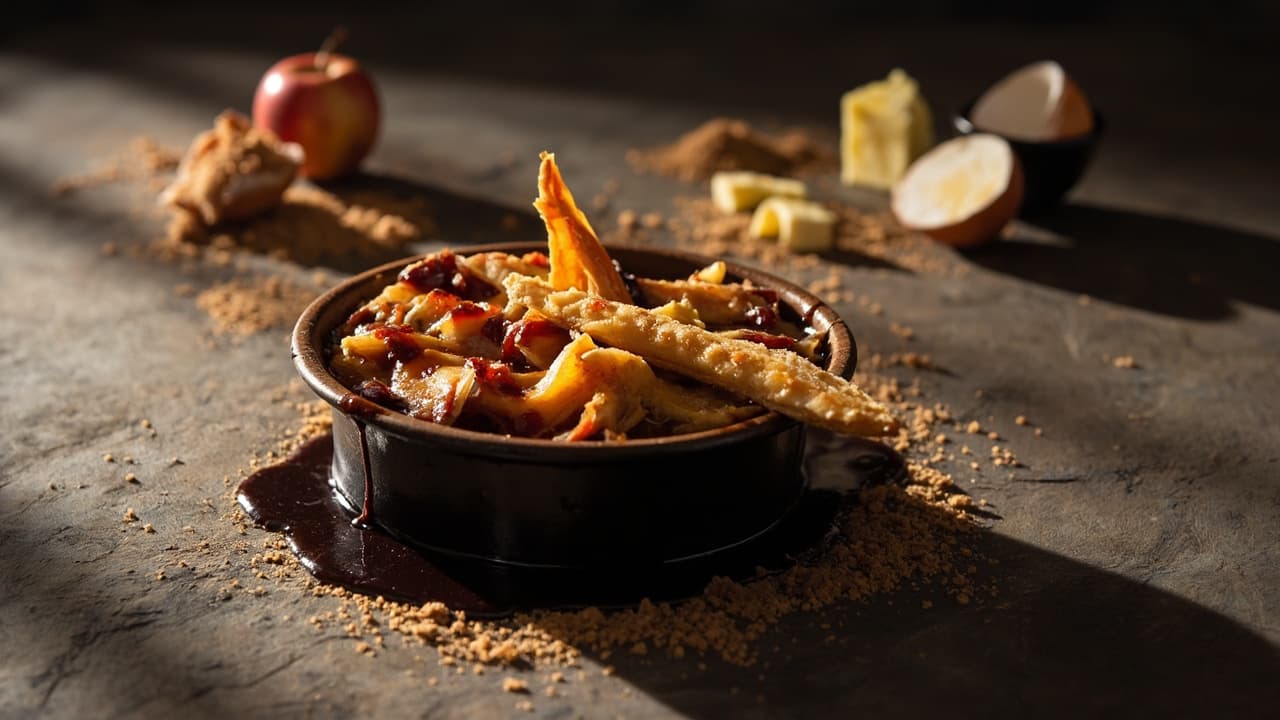
Deconstructed Tarte Tatin With Smoked Espresso Anglaise
Coco's rebellion against symmetry: shards of golden puff pastry collide with jammy caramelized apples, their edges deliberately uneven, all anchored by a pool of bittersweet smoked espresso anglaise that pools like liquid midnight around the composition.
Prep
30 min
Cook
40 min
Total
1h 10m
Method
1
Combine butter, brown sugar, and salt in a wide saucepan over medium heat. Let the butter melt and the sugar dissolve without stirring for 2-3 minutes until the mixture begins to bubble and turns deep amber.
2
Add the sliced apples in batches, stirring gently to coat each piece. Cook for 12-15 minutes, stirring occasionally, until the apples are tender, translucent at the edges, and the caramel has thickened to a glossy syrup coating the fruit.
3
4
Combine flour, salt, and white sugar in a large bowl. Add the cold cubed butter and work quickly to coat each piece with flour, keeping the butter cold.
5
Use your fingertips or a pastry cutter to cut the butter into the flour until the mixture resembles coarse crumbs with some pea-sized butter pieces remaining—this creates the flaky layers.
6
Add 3-4 tablespoons of ice water gradually, mixing with a fork just until the dough comes together and holds its shape when pressed. It should look shaggy but not crumbly.
7
Turn the dough onto a lightly floured surface, form it into a rough rectangle, and wrap tightly in plastic wrap. Refrigerate for at least 30 minutes to chill the butter and relax the gluten.
8
9
Place on a parchment-lined baking sheet and bake at 200°C (400°F) for 15-18 minutes until the pastry is deeply golden and crispy at the edges. Cool completely on a wire rack.
10
Whisk together egg whites, sugar, and salt in a medium bowl until the mixture turns pale and slightly thickened, about 2 minutes.
11
Bring the milk just to a simmer in a small saucepan over medium heat. Remove from heat immediately.
12
Slowly pour the hot milk into the egg white mixture in a thin, steady stream, whisking constantly to temper the whites without scrambling them. Whisk in the vanilla extract and cocoa powder until smooth.
13
Pour the mixture back into the saucepan and cook over medium-low heat, stirring constantly with a wooden spoon in a figure-eight motion until the anglaise coats the back of the spoon and reaches 82-85°C (180-185°F), about 5-7 minutes. Do not let it boil.
14
Immediately strain through a fine-mesh sieve into a clean bowl. Press plastic wrap directly onto the surface to prevent a skin from forming. Refrigerate until thoroughly chilled, at least 1 hour.
15
C
Nutri-Score
Fair balance
A–E · lower is better · score 10
Calories
798
per serving
High in saturated fat · 22g
Protein
21g
Carbs
106g
Fat
34g
Sat. fat
22g
Fiber
4g
Sugar
67g
Sodium
632mg
Dairy PresentEgg PresentGluten ContainingRefined Sugar PresentVegetarian
Nutri-Score is a general nutritional-balance guide, not medical or dietary advice.
C
Environmental impact
Moderate impact
A–E · lower is better · includes estimates
kg CO2e
1.0
per serving
CCarbonAEU all-round· carbon sets the grade
Water
0.5m³
Land
39Pt
Runoff
0.08g P
Cold Butter, cut into small cubes drives 26% of this recipe’s estimated footprint.
Carbon from Poore & Nemecek 2018; water, land & runoff from Agribalyse — modelled averages for comparing recipes, not a measurement of your groceries.
Flavor Profile
4
Umami
8
Sweet
5
Salty
3
Sour
4
Bitter
0
Spicy
Textures
CrispySilkyTender
Aromas
CaramelEspressoSmokyVanilla
Kitchen Equipment
Primary Tool
OvenOvenStovetopBaking SheetFine Mesh SieveForkMedium BowlMixing BowlParchment PaperPlastic WrapPlateProbe ThermometerRolling PinSmall SaucepanWhiskWide SaucepanWooden SpoonParchment PaperPlastic Wrap
Techniques
Safety & Storage
Cooking Temperature
The anglaise must reach 82-85°C (180-185°F) to thicken properly but must NOT boil or the eggs will scramble. Use a probe thermometer and remove from heat the moment it coats the back of a spoon.
High Risk Population
This recipe contains raw egg whites which pose salmonella risk. Pregnant women, children under 5, adults over 65, and immunocompromised individuals should avoid consuming the uncooked or lightly cooked egg mixture.
Cross Contamination
Raw egg whites require strict hygiene. Use sanitized equipment, wash hands thoroughly after handling, and prevent cross-contact with ready-to-eat foods.
Handling
Keep puff pastry butter cold throughout preparation. If the butter melts before baking, the pastry will not rise properly and become greasy rather than flaky.
Storage
Refrigerate the finished anglaise within 2 hours. Press plastic wrap directly on the surface to prevent skin formation. Consume within 24-48 hours for food safety.
Store caramelized apples and reserved caramel separately. The caramel may crystallize if refrigerated; bring to room temperature or gently reheat before plating.
Pro Tips
Technique
The caramel will threaten to burn if you breathe on it wrong—stay with it, but do not stir. Swirl the pan like you're conducting a very small, very sweet orchestra. Touching it with a spoon risks crystallization, and we want glass, not gravel.
Substitution
If cocoa powder isn't in your arsenal, swap it for 60g of melted bittersweet chocolate stirred into the hot anglaise after straining—same smoky depth, extra silkiness.
Equipment
A probe thermometer isn't optional for the anglaise—it's the difference between velvet and scrambled eggs. We need 82-85°C, and your finger is not a scientific instrument.
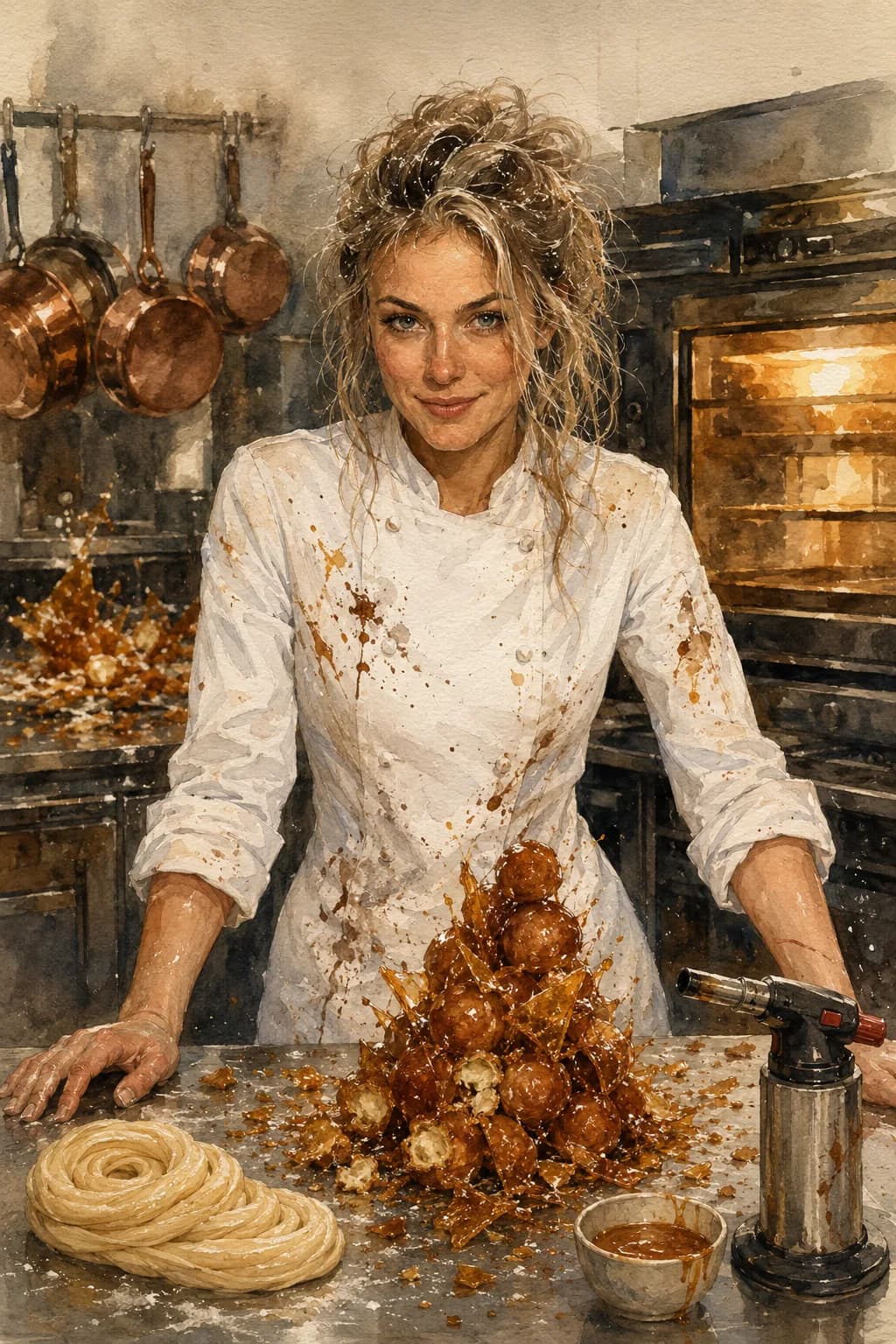
From the chef
The original Tarte Tatin sits there in its perfect, round, obedient form—proof that France's grandmothers were brilliant but terrified of mess. I adore them. I also despise them a little. This deconstructed monument—shattered pastry shards colliding with jammy caramelized apples, anchored by a pool of bittersweet smoked espresso anglaise like liquid midnight—is my answer to symmetry: chaos you can actually taste. If it refuses to be tidy, the plate knows what it's doing.
TagsDeconstructedFrenchDessertPastryCaramelEspressoElegantAutumnIndulgentSmokedRestaurant QualityClassic Reinvention
AllergensMilkEggsWheat
Source: generated · June 13, 2026