 Fusion
Medium · Warm
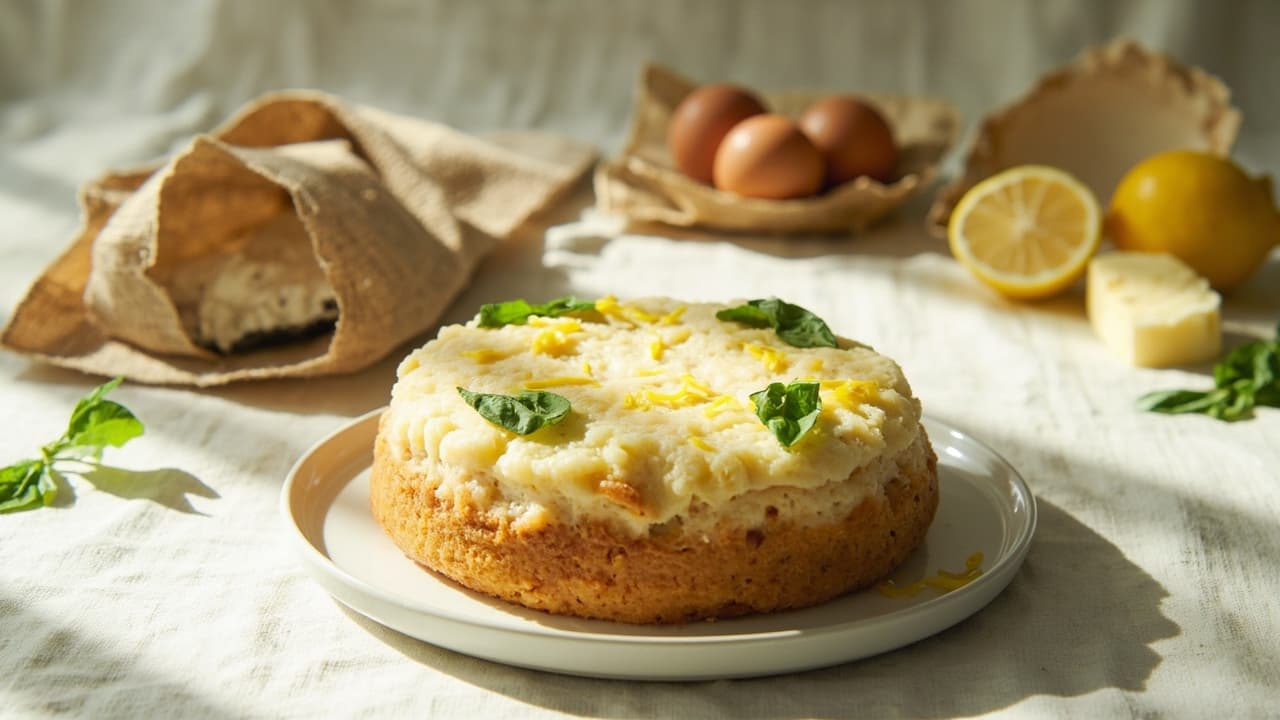
Coconut Flour Cake with Lemon Zest and Fresh Basil
A delicate gluten-free cake made with coconut flour, brightened with fresh lemon zest and finished with fragrant torn basil leaves. Light, slightly nutty, and surprisingly herbaceous.

Prep
15 min
Cook
30 min
Total
45 min
Method
1
Preheat your oven to 180°C (350°F). Line the bottom of an 8-inch round cake pan with parchment paper and lightly grease the sides with a little of the butter.
2
3
Melt the remaining butter in a small saucepan over low heat or in the microwave in 10-second bursts. Let it cool for 1 minute, then whisk it into the eggs along with the white sugar until the mixture is smooth.
4
Add the coconut flour, baking powder, and salt to the egg mixture. Whisk vigorously to combine — the batter will be slightly thick and may have small lumps. Let rest for 5 minutes so the coconut flour fully hydrates.
5
Gradually pour in the whole milk while whisking constantly until you have a smooth, pourable batter with the consistency of thick pancake batter.
6
Wash the lemons thoroughly. Using a fine grater or zester, remove the bright yellow outer zest from both lemons, avoiding the bitter white pith. Fold the lemon zest gently into the batter with a spatula.
7
Pour the batter into the prepared cake pan and smooth the top with the spatula. Place in the preheated oven on the middle rack.
8
Bake for 28-30 minutes, until the top is lightly golden and a toothpick inserted into the center comes out clean. The edges should pull slightly away from the pan.
9
Remove the cake from the oven and let it cool in the pan for 10 minutes before transferring to a wire rack.
10
While the cake is still slightly warm, wash and dry the fresh basil. Tear the leaves roughly with your hands and scatter them over the top of the cake just before serving for maximum fragrance.
B
Nutri-Score
Good balance
A–E · lower is better · score 1
Calories
237
per serving
High in saturated fat · 8gSource of protein · 9gSource of fibre · 7g
Protein
9g
Carbs
26g
Fat
12g
Sat. fat
8g
Fiber
7g
Sugar
17g
Sodium
225mg
Gluten FreeVegetarianDiabetesHeart Health ConsciousHigh FiberModerate Protein
Nutri-Score is a general nutritional-balance guide, not medical or dietary advice.
C
Environmental impact
Moderate impact
A–E · lower is better · includes estimates
kg CO2e
0.4
per serving
CCarbonAEU all-round· carbon sets the grade
Water
0.5m³
Land
12Pt
Runoff
0.03g P
Egg drives 49% of this recipe’s estimated footprint.
Carbon from Poore & Nemecek 2018; water, land & runoff from Agribalyse — modelled averages for comparing recipes, not a measurement of your groceries.
Flavor Profile
4
Umami
6
Sweet
3
Salty
4
Sour
2
Bitter
0
Spicy
Textures
CrispyCrumblyTender
Aromas
CitrusDairyFreshHerbalNutty
Kitchen Equipment
Primary Tool
Mixing BowlsSafety & Storage
High Risk Population
This recipe contains raw eggs in the batter before baking. Immunocompromised individuals, pregnant women, young children, and elderly should avoid consumption until fully baked and cooled.
Cooking Temperature
Bake cake at 180°C (350°F) for 28-30 minutes until toothpick inserted in center comes out clean. Internal temperature should reach 74°C (165°F) to ensure egg safety.
Cross Contamination
Use separate bowls and utensils for allergen-free preparations. Clean all equipment thoroughly after contact with egg and dairy ingredients before using for allergen-sensitive food prep.
Storage
Store leftover cake in airtight container in refrigerator for up to 3 days. Bring to room temperature 30 minutes before serving for best texture.
Allergen Warning
This cake contains eggs and milk/dairy. Verify all baking powder and flour ingredients are free from cross-contact with allergens if serving to individuals with severe allergies.
Raw Produce
Ensure lemons are washed thoroughly under running water before zesting. If using store-bought lemons, consider using organic or unwaxed varieties if zesting the outer peel for consumption.
Pro Tips
Technique
Tear the basil with your hands at the very last moment—never cut it. A knife bruises the cells differently, releasing a bitter note instead of that bright, green scent. Think of how we pinch the Thai basil in pho; the same respect applies here.
Substitution
If your coconut flour batter feels too thick after the 5-minute rest, thin it with whole milk one tablespoon at a time—coconut flour absorbs differently depending on the brand, so feel the batter, not the recipe.
From the chef
In Vietnam, we call it “giải bàt”—finishing at the table. The broth simmers for hours, but the herbs, the lime, the raw onions arrive last, bruising their fragrance into the steam as you eat. This cake whispers the same philosophy: the batter is patient, the oven does its work, but the basil—it waits for you. I learned that freshness is not just an ingredient; it is the last thing your tongue remembers.
TagsCoconut FlourLemonFresh BasilGluten FreeLightHerbaceousCitrusWestern BakingSoutheast Asian IngredientsElegantWeekend BakingEgg RichDairy
AllergensEggsMilk
Source: generated · June 12, 2026