 Spanish
Medium · Hot
Listen-to-the-Pan Tomato Rice
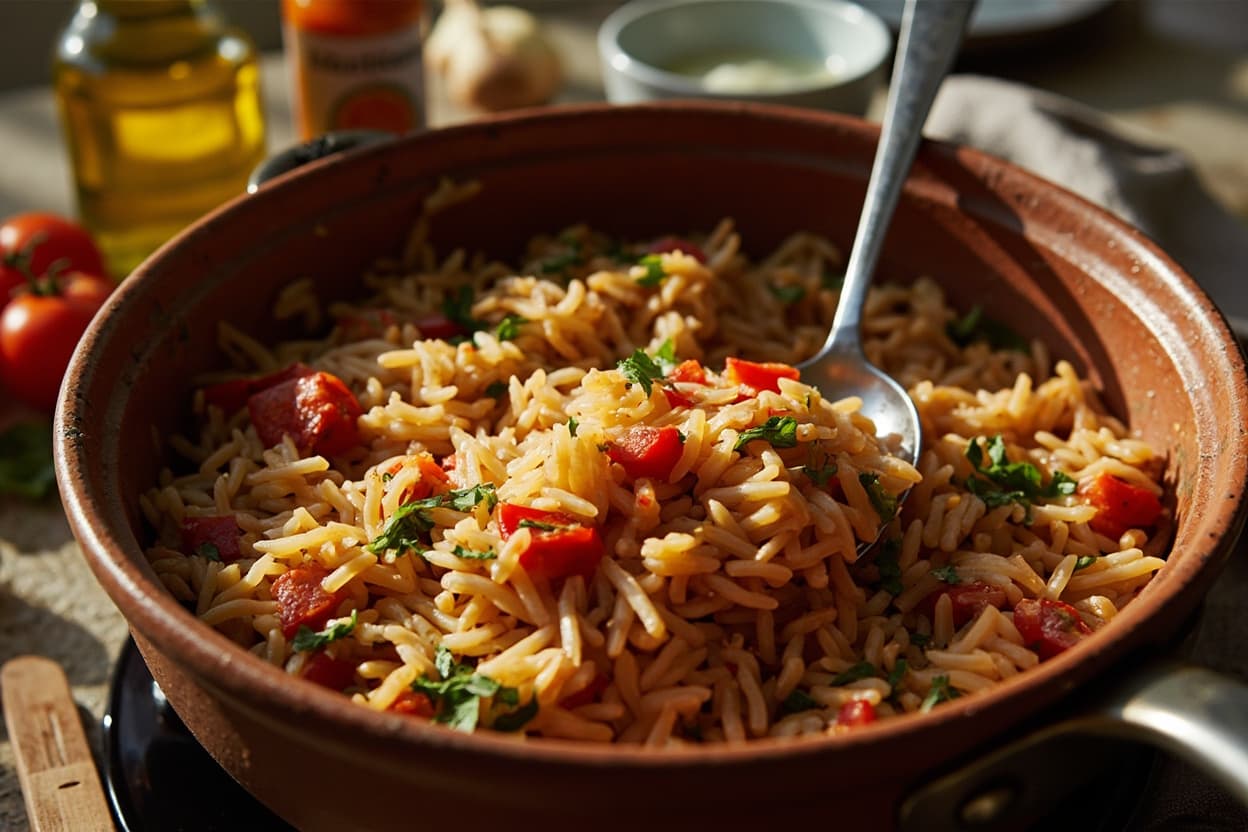
A paella-style improvisation where you learn to read the pan's whispers. This tomato rice teaches you to cook by sound and smell — when the onions turn glassy, when the rice pops, when the sauce looks like it's thinking about being done.

Prep
15 min
Cook
35 min
Rest
5 min
Total
55 min
Method
First Listen — The Soffritto
1
2
Cook until the onion turns translucent and soft, about 5-7 minutes. You want it glassy, not brown. If it browns, lower your heat and add a splash of water to rescue it.
3
Add the garlic. Stir it in and breathe. It should smell sweet, not sharp. About 1 minute. This is your smell checkpoint — garlic goes from raw to golden in under 2 minutes, so don't walk away.
Second Listen — The Tomato
4
Add the diced tomatoes and tomato sauce. Stir well. The sound will change from sizzle to a gentler simmer.
5
Season with salt, smoked paprika, and cumin. Stir and taste. It should taste a little too bold right now — the rice will mellow it out.
6
Let this simmer for 5 minutes, stirring occasionally. You're building flavor. The sauce should reduce slightly and look glossy.
Third Listen — The Rice
7
Pour in the white rice. Stir it so every grain gets coated in that gorgeous tomato color. The pan should sound wet and heavy.
8
Add 2.5 cups of water or chicken broth. Stir once. Bring to a boil, then immediately drop the heat to the lowest setting. Cover and walk away for exactly 15 minutes.
9
After 15 minutes, remove from heat but DO NOT lift the lid yet. Let it steam, covered, for 5 minutes. This is non-negotiable.
B
Nutri-Score
Good balance
A–E · lower is better · score 1
Calories
600
per serving
Low sugar · 9gLow saturated fat · 2g
Protein
12g
Carbs
111g
Fat
12g
Sat. fat
2g
Fiber
5g
Sugar
9g
Sodium
1131mg
VeganEgg FreeDairy FreeEgg FreeNut FreeSoy FreeHeart HealthyDiabetes FriendlyWeight ManagementMediterranean DietBalanced MealsPlant ForwardLow Processed Food
Nutri-Score is a general nutritional-balance guide, not medical or dietary advice.
C
Environmental impact
Moderate impact
A–E · lower is better · includes estimates
kg CO2e
0.9
per serving
CCarbonAEU all-round· carbon sets the grade
Water
2.0m³
Land
21Pt
Runoff
0.07g P
white rice drives 47% of this recipe’s estimated footprint.
Carbon from Poore & Nemecek 2018; water, land & runoff from Agribalyse — modelled averages for comparing recipes, not a measurement of your groceries.
Flavor Profile
7
Umami
5
Sweet
5
Salty
3
Sour
2
Bitter
4
Spicy
Textures
TenderSaucySilkyCrispy
Aromas
SmokyEarthySavoryHerbalSweet
Kitchen Equipment
Primary Tool
SkilletCounter FootprintMedium
Safety & Storage
Handling
Use caution when removing the lid after steaming — trapped steam can cause burns. Lift the edge away from your face and body.
The pan and rice will be extremely hot after cooking. Use oven mitts or a thick towel when handling and serving directly from the pan.
Cross Contamination
If using chicken broth, be aware that commercially prepared broths may contain allergens. Check the label and consider cross-contamination with shared equipment.
Cooking Temperature
Bring the rice and liquid mixture to a rolling boil before reducing heat. This ensures proper cooking temperature throughout the dish.
Storage
Store leftover tomato rice in an airtight container in the refrigerator for up to 4 days. Reheat thoroughly until steaming hot throughout.
Shelf Life
Rice-based dishes are susceptible to Bacillus cereus bacteria if left at room temperature. Cool and refrigerate within 2 hours of cooking.
High Risk Population
Reheated rice should be heated to at least 165°F. People with weakened immune systems should ensure thorough reheating before consumption.
Pro Tips
Technique
When the onion goes in and you hear that first sizzle — that's your pan talking to you. If it sounds angry and aggressive, your heat is too high. A happy pan whispers. Lower it immediately and add a splash of water. The dish will forgive you.
The 5-minute steam after you turn off the heat isn't optional — it's the difference between rice that's pillowy and rice that's mushy. That steam is finishing the cook without your supervision. Trust it.
Substitution
No smoked paprika? Regular paprika works, but add a pinch of cayenne to compensate. No fresh parsley? Dried works fine — use about one-third the amount. The tomato sauce? Blend up a can of whole tomatoes if you're out. This dish is built for improvisation, not perfection.
Flavor Boost
If your sauce tastes too bold before the rice goes in, that's perfect — you want it slightly aggressive at this stage. The rice will absorb and mellow everything. But if it tastes flat, add more salt. Salt is the volume knob.
From the chef
Tomato rice is a master class in listening. You coat every grain in that glossy tomato-paprika-cumin base before the water goes in, so the flavor soaks through rather than just sitting on top. The smell tells you when the garlic is ready, the sound changes when the onions go soft, and the pan goes quiet when the rice is done steaming. Lift the lid too early and you lose it. Wait the full five minutes of resting time and you get pillowy, tomato-stained grains that taste like you knew what you were doing all along — because you did.
TagsOne PotTomato RiceMediterraneanSensory CookingBeginner Friendly
AllergensSoy (If Using Chicken Broth)Wheat (If Using Chicken Broth)Celery (If Using Chicken Broth)
Source: generated · June 9, 2026