 Portuguese
Medium · Hot
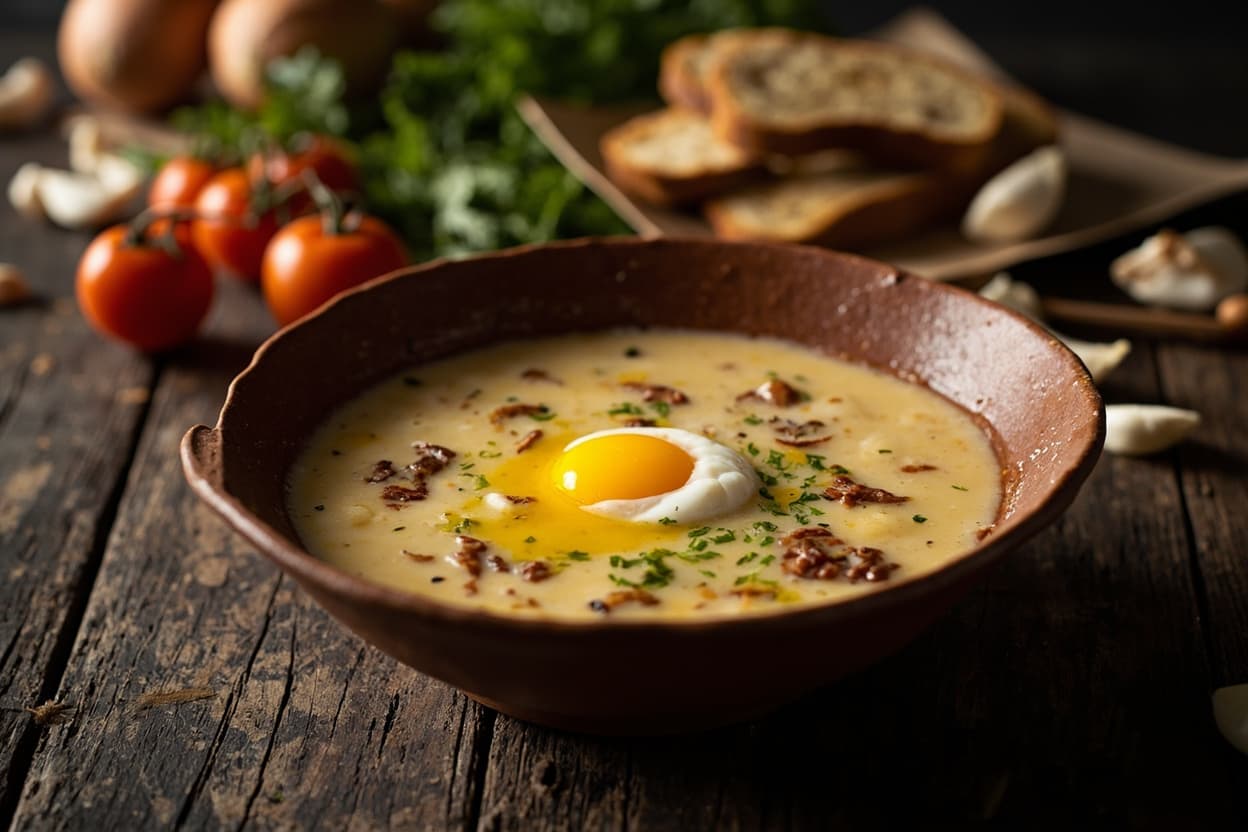
Açorda, Garlic Bread Soup with Poached Egg
Stale bread soaked until it drinks up the garlic-scented broth, cilantro stirred in with a heavy hand while everything is still steaming, olive oil poured generously so the bowl shines. The egg is poached directly in, its yolk left soft so it breaks when the spoon finds it and enriches every mouthful. A dish born from having very little and knowing exactly what to do with it.

Prep
10 min
Cook
30 min
Total
40 min
Method
Prepare the bread
1
Tear the stale bread into rough 5-centimeter chunks. If the bread is not sufficiently dried, let it sit on the counter for an hour or toast it lightly in a dry pan until the exterior firms.
Build the garlic oil
2
In a heavy pot or Dutch oven over medium-low heat, pour in the olive oil. Add the sliced garlic and the cayenne. Let this slowly infuse for 10 to 12 minutes, stirring occasionally, until the garlic turns pale gold and smells sweet and mellow — not sharp. This is the soul of the açorda. Do not rush it.
Soak the bread
3
Add the torn bread to the garlic oil. Toss well so each piece drinks in the oil. Pour in the water, add the salt, and stir gently. Let it simmer over medium heat for 8 to 10 minutes, pressing the bread occasionally with a wooden spoon until it breaks down into a thick, porridge-like consistency. The bread should absorb everything.
Poach the eggs
4
Bring a shallow pan of water to a gentle simmer. Crack each egg into a small cup. Create a gentle whirlpool in the water and slide the eggs in one at a time. Poach for 3 to 4 minutes for a runny yolk. Remove with a slotted spoon and set aside.
Finish and serve
5
Ladle the hot açorda into deep bowls. Slide a poached egg onto each bowl. Finish with a generous handful of parsley, a crack of black pepper, and a squeeze of lemon. Inês says the lemon is not optional — it cuts through the richness and brightens everything.
B
Nutri-Score
Good balance
A–E · lower is better · score 2
Calories
540
per serving
Calorie-dense · 540 kcalLow sugar · 4g
Protein
15g
Carbs
44g
Fat
35g
Sat. fat
6g
Fiber
6g
Sugar
4g
Sodium
1050mg
Gluten FullHeart HealthyAnti InflammatoryHigh ProteinLow Processed Sugar
Nutri-Score is a general nutritional-balance guide, not medical or dietary advice.
B
Environmental impact
Low impact
A–E · lower is better · includes estimates
kg CO2e
0.5
per serving
BCarbonAEU all-round· carbon sets the grade
Water
1.0m³
Land
34Pt
Runoff
0.06g P
Large eggs drives 43% of this recipe’s estimated footprint.
Carbon from Poore & Nemecek 2018; water, land & runoff from Agribalyse — modelled averages for comparing recipes, not a measurement of your groceries.
Flavor Profile
5
Umami
3
Sweet
4
Salty
3
Sour
1
Bitter
4
Spicy
Textures
TenderSilkyCreamy
Aromas
GarlickyHerbalSmokyCitrus
Kitchen Equipment
Primary Tool
Dutch OvenCounter FootprintMedium
Safety & Storage
High Risk Population
Eggs are a high-risk ingredient. This dish is not recommended for pregnant women, young children, elderly, or immunocompromised individuals unless eggs are cooked to an internal temperature of 160°F (71°C) throughout.
Cooking Temperature
Poach eggs for 3-4 minutes in gently simmering water. The final açorda should reach a minimum of 165°F (74°C) before serving to ensure food safety.
Handling
Use fresh, clean eggs for poaching. Crack each egg into a separate small cup before adding to water to inspect for shell fragments and ensure quality.
When infusing garlic in olive oil over medium-low heat, maintain temperature carefully. Garlic can go from golden to burnt quickly, creating bitter compounds. Do not leave unattended.
Cross Contamination
Use separate utensils for handling raw eggs and finished dish. Clean and sanitize all surfaces, bowls, and spoons that contact raw eggs.
Storage
Açorda is best served immediately. If storing, refrigerate within 2 hours at 40°F (4°C) or below. Consume within 2 days. Reheat to 165°F (74°C) before eating.
Pro Tips
Technique
When you are infusing the garlic in oil, keep the heat low and be patient. The garlic should turn pale gold and smell sweet, not sharp. If it browns too fast, take the pot off the heat — burned garlic is bitter, and it will ruin everything you build on top of it.
Substitution
If you do not have stale bread, take fresh white bread and tear it into chunks, then spread them on a baking sheet in a low oven at 150°C for 20 to 30 minutes until they dry out and crisp slightly on the edges. The bread needs to hold its shape when you add the water.
Equipment
Use a heavy Dutch oven or cast iron pot for the garlic oil. Thin pots will heat unevenly and you risk burning the garlic before it has time to mellow. A good heavy bottom distributes the heat slow and true, like patience itself.
From the chef
In Aveiro, my avó called açorda 'the bread that remembers.' She would take bread so dry it felt like punishment, drown it slowly in garlic oil until it softened into something golden and forgiving. I make it the same way she taught me — with patience, with good olive oil poured like it costs nothing, and always a poached egg drifting on top so whoever eats it feels held.
TagsTraditionalComfort FoodGarlicPoached EggBread SoupOne Pot
AllergensWheatEggs
Source: generated · May 30, 2026