 Korean
Easy · Hot
Garlicky Edamame and Egg Drop Soup
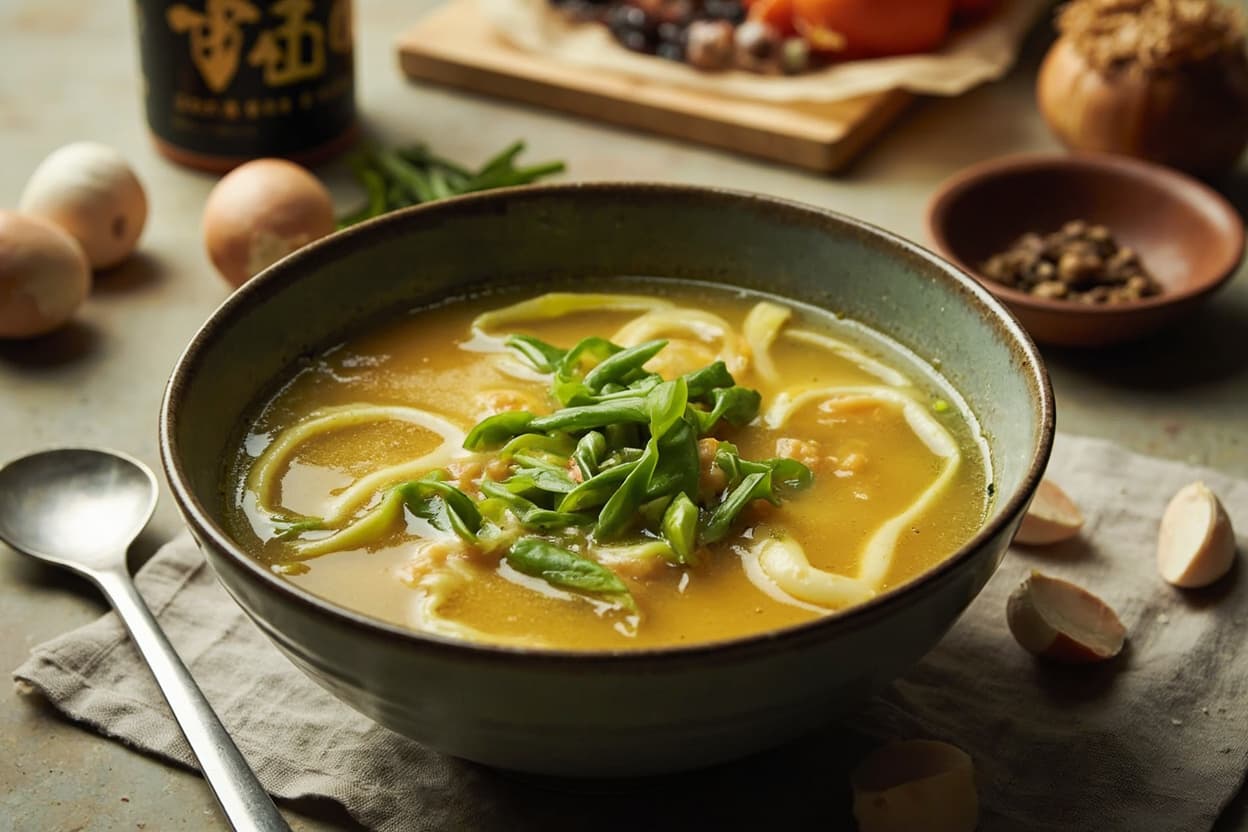
This broth-based soup is simpler than it sounds and more satisfying than it has any right to be — garlic bloomed in the base builds an aromatic foundation, edamame adds a clean, grassy sweetness, and eggs drizzled in at the last moment create silky ribbons throughout. A hit of soy and a scatter of chives close it out. Serve it as the warm, hydrating counterpoint to a spicier main.

Prep
10 min
Cook
20 min
Total
30 min
Method
Create Broth
3
Pour in 6 cups of water and add 2 tablespoons soy sauce. Bring to a gentle boil over medium-high heat.
4
Add frozen edamame and simmer for 5 minutes until tender but not mushy.
Add Egg Ribbons
6
Serve
8
Ladle soup into bowls. Garnish with fresh parsley and toasted sesame seeds.
9
Serve immediately with steamed rice on the side.
Grade pending
Nutri-Score
Estimated nutrition
Grade pending · 100% ingredient coverage
Calories
266
per serving
High in salt · 1636mgHigh in protein · 20gHigh in fibre · 19g
Protein
20g
Carbs
17g
Fat
14g
Sat. fat
5g
Fiber
19g
Sodium
1636mg
Gluten FreeDairy FreeHeart HealthyDiabetes FriendlyAnti InflammatoryHigh ProteinLow Saturated FatBalanced Macros
Nutri-Score is a general nutritional-balance guide, not medical or dietary advice.
A
Environmental impact
Very low impact
A–E · lower is better · includes estimates
kg CO2e
0.4
per serving
ACarbonAEU all-round· both agree
Water
0.1m³
Runoff
0.05g P
Egg drives 46% of this recipe’s estimated footprint.
Carbon from Poore & Nemecek 2018; water, land & runoff from Agribalyse — modelled averages for comparing recipes, not a measurement of your groceries.
Flavor Profile
7
Umami
4
Sweet
6
Salty
1
Sour
2
Bitter
3
Spicy
Textures
TenderSilkySmoothCreamy
Aromas
PungentSavoryWarm SpicedHerbalNutty
Kitchen Equipment
Safety & Storage
Allergen Warning
Clearly label this dish as containing soy, eggs, sesame, and gluten. For soy-free version, use tamari or coconut aminos instead of soy sauce. For egg-free version, omit egg ribbons or use starch slurry for similar texture.
High Risk Population
This dish poses significant risk to individuals with soy allergy, egg allergy, sesame allergy, or celiac disease/gluten intolerance. Immunocompromised individuals, young children, elderly, and pregnant individuals should ensure all ingredients are fully cooked.
Handling
When adding egg ribbons, ensure soup is at gentle simmer (180-195°F) - too high heat will make eggs rubbery and can cause uneven cooking.
Handle frozen edamame safely - do not refreeze after thawing. If edamame was previously frozen and thawed, use immediately and ensure thorough cooking to 165°F internal temperature.
Cross Contamination
Prevent cross-contamination by using separate utensils for raw eggs and finished soup. Clean and sanitize all surfaces, cutting boards, and utensils that contact raw eggs.
Storage
Cool soup rapidly to 70°F within 2 hours, then to 40°F within 4 more hours. Store in airtight containers. Consume within 3-4 days refrigerated or freeze for up to 2-3 months.
Cooking Temperature
Bring soup base to full boil (212°F at sea level) before adding edamame. Maintain gentle simmer after adding eggs to ensure proper ribbon formation without overcooking.
Egg Safety
When adding raw beaten eggs to soup, ensure broth is at least 180°F but not boiling. Let eggs cook in the hot liquid undisturbed for 30 seconds after adding before stirring to form ribbons safely.
Pro Tips
Technique
For those perfect silky egg ribbons, pour your beaten eggs in a thin, steady stream while stirring the broth in ONE direction only -- never stir back and forth, or your eggs will break into small chunks instead of elegant ribbons.
Substitution
Fresh soybeans in the pod work beautifully if you have them, but frozen edamame is my weeknight shortcut -- just make sure to simmer until tender but still bright green, never mushy.
Flavor Boost
A small spoonful of doenjang (fermented soybean paste) stirred into the broth adds an umami depth that elevates this from good to unforgettable -- it's the secret my mother never told anyone.
From the chef
The broth here is built on garlic and ginger bloomed in oil, then opened up with soy before the edamame goes in to simmer until tender and grassy-sweet. Eggs drizzled in at the very end — slowly, in a thin stream while you stir in one direction — create those silky ribbons that make the whole bowl feel substantive without being heavy. Sesame seeds and fresh parsley close it out. Serve this as the calm, hydrating counterpoint to a spicier main, or eat it on its own over rice when you want something quick and genuinely satisfying.
TagsKorean InspiredEasyQuickHealthyProtein RichEgg Drop SoupComfort FoodLight MealGarlicSesameWeeknight Dinner
AllergensSoyEggsSesameGluten
Source: generated · May 30, 2026