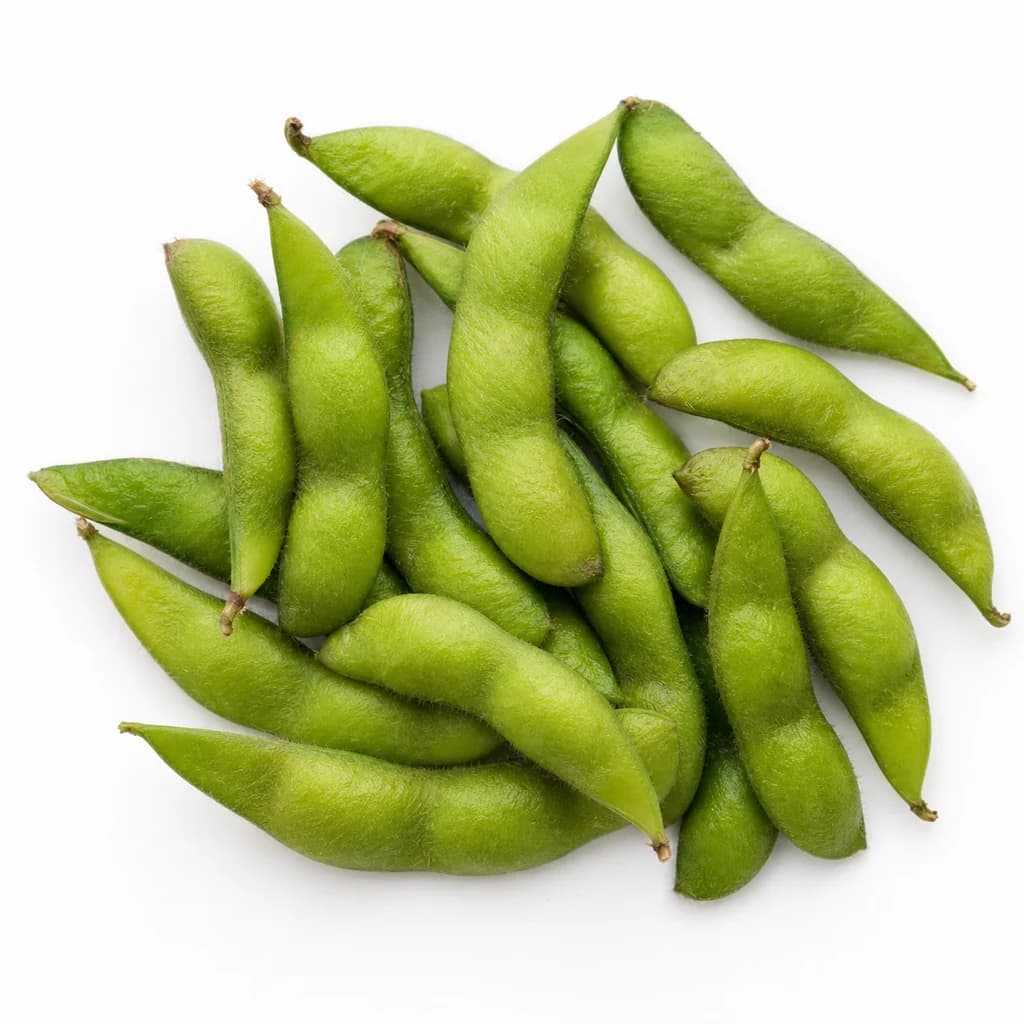
Natural form
Fresh edamame pods: bright green, fuzzy-surfaced, with two or three visible bean bulges.
Shows the defining physical form — the intact green pod with visible bean bumps — so readers can identify raw edamame at a glance.
Legumes & Beans
Edamame
Young soybeans in the pod — a bright, snackable protein
Tender young soybeans, steamed in the pod and sprinkled with salt for a snack or shelled into salads and stir-fries. Keep them frozen until you need them.
Edamame are young, green soybeans harvested while still soft and sweet, before they harden into the mature beige beans pressed for oil and tofu. The name means 'beans on a branch' in Japanese, and they're eaten as a vegetable — bright, tender, faintly sweet and grassy, with a satisfying pop. Boiled or steamed in their fuzzy pods and showered with flaky salt, they're the quintessential izakaya snack: you squeeze the beans straight into your mouth and discard the pod. Shelled, they go into stir-fries, salads, rice bowls, and dips, bringing a fresh green color and a serious protein hit — like all soybeans, edamame is a complete protein, which makes it a star of plant-forward eating. They're sold fresh in season but mostly frozen, which keeps them at their peak.
- Measured in
- g
- Storage
- Freeze
Allergens
Find it in
Types & varieties
Whole fuzzy pods — boiled and salted as a snack; you eat the beans, not the pod.
Beans only — convenient for stir-fries, salads, and bowls.
Seasonal, on the branch — sweetest at peak; rare outside soy-growing regions.
How to cook
Edamame cooks in minutes — boil or steam the pods until the beans are tender but still bright green and poppy. Frozen edamame is already blanched, so it just needs warming through. Salt the pods generously while hot.
- In-pod: boil in well-salted water 4–6 min, drain, toss with flaky salt
- Shelled: boil or steam 3–5 min until tender and bright
- From frozen: a quick boil, steam, or even a microwave warms them through
- Don't overcook — they dull in color and lose their snap
How to serve
As a snack, the salted whole pods are the point — squeeze the beans out with your teeth. Shelled, edamame is a versatile green protein you can scatter almost anywhere.
- Snack: salted pods, served warm or room temp
- Toss shelled beans into stir-fries, fried rice, and noodle bowls
- Add to salads and grain bowls for color and protein
- Blend shelled edamame into a bright green dip or hummus
Common uses
Tips & pitfalls
- Salt the pods while they're hot so the seasoning clings.
- Don't eat the fibrous pod — squeeze out the beans and discard the shell.
- Frozen edamame is already blanched; just warm it, don't boil it to death.
- Toss with chili, garlic, and sesame for a punchier snack.
- Blend shelled edamame into a vivid green dip for a fun hummus alternative.
Nutrition
Energy
456 kJ · per 100 g
Where the calories come from
Protein
11.2g
22% DV
Carbs
7.6g
3% DV
Fat
4.7g
6% DV
Fiber
4.8g
17% DV
Sugars
2.5g
of which
Sodium
6mg
0% DV
Source · USDA FoodData Central · approx. Edamame, frozen, unprepared
View on FDC →In the shops
Matched grocery products
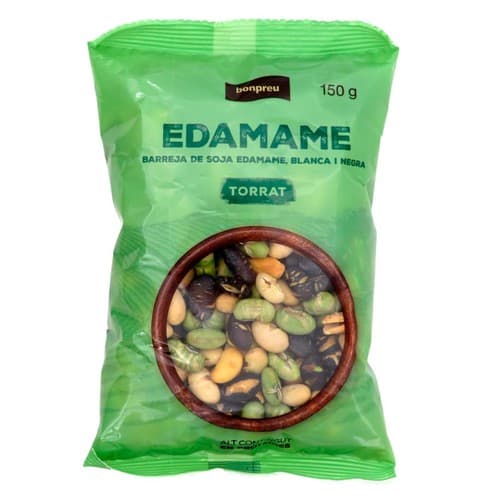 €1.55
€1.55Roasted White and Black Soy Edamame
BONPREU · kg · Bonpreu
Good to know
- Flavor & texture
- Sweet, grassy, fresh; tender with a firm, satisfying pop
- Cook ratio & time
- Boil or steam in pods 4–6 min (3–5 min if shelled); frozen ready fast
- Soak?
- No — boil or steam from fresh or frozen; eat young (don't dry-mature)
- Nutrition
- ~121 kcal/100g; ~11g protein (complete), ~5g fiber; rich in folate & vitamin K
- How to store
- Keep frozen until use, or refrigerate fresh pods 2–3 days; cooked ≤3 days
Related
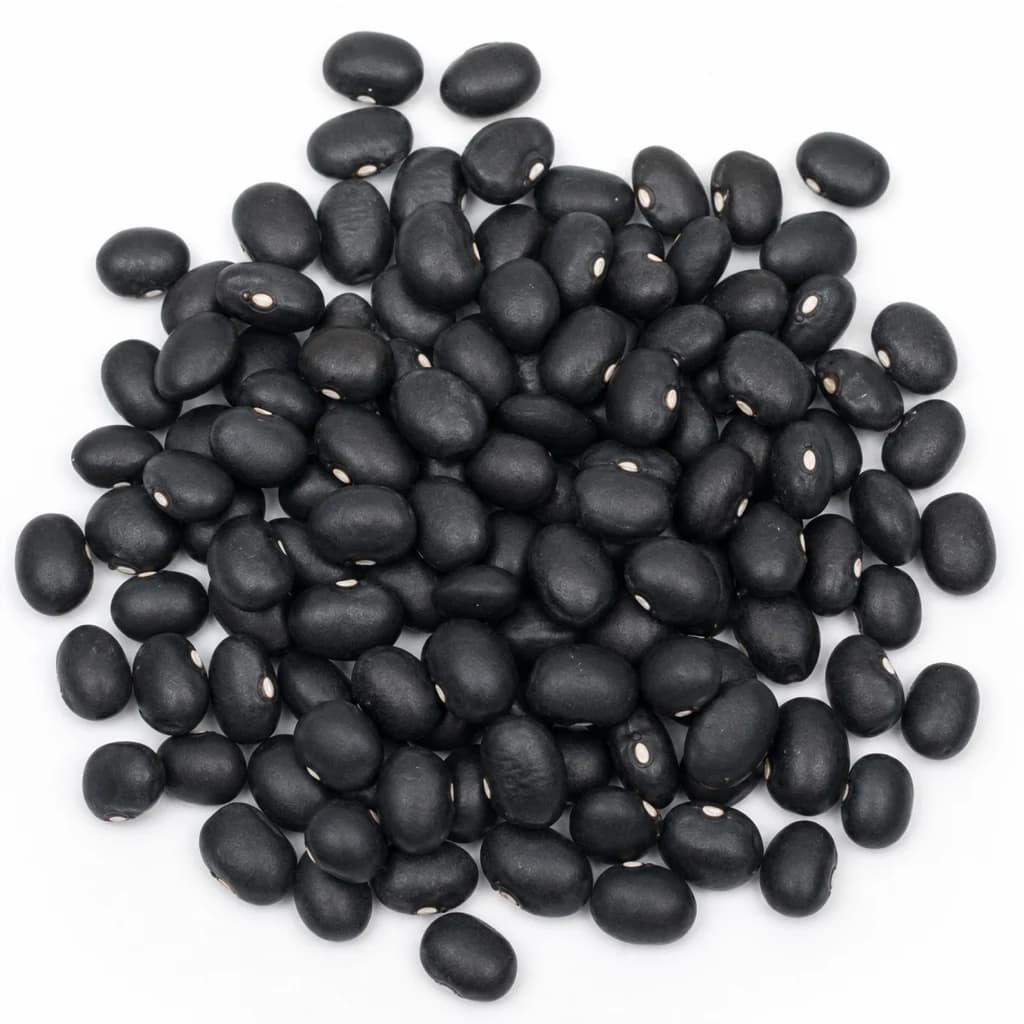
Black Beans
Earthy, creamy beans for bowls, soups, and tacos
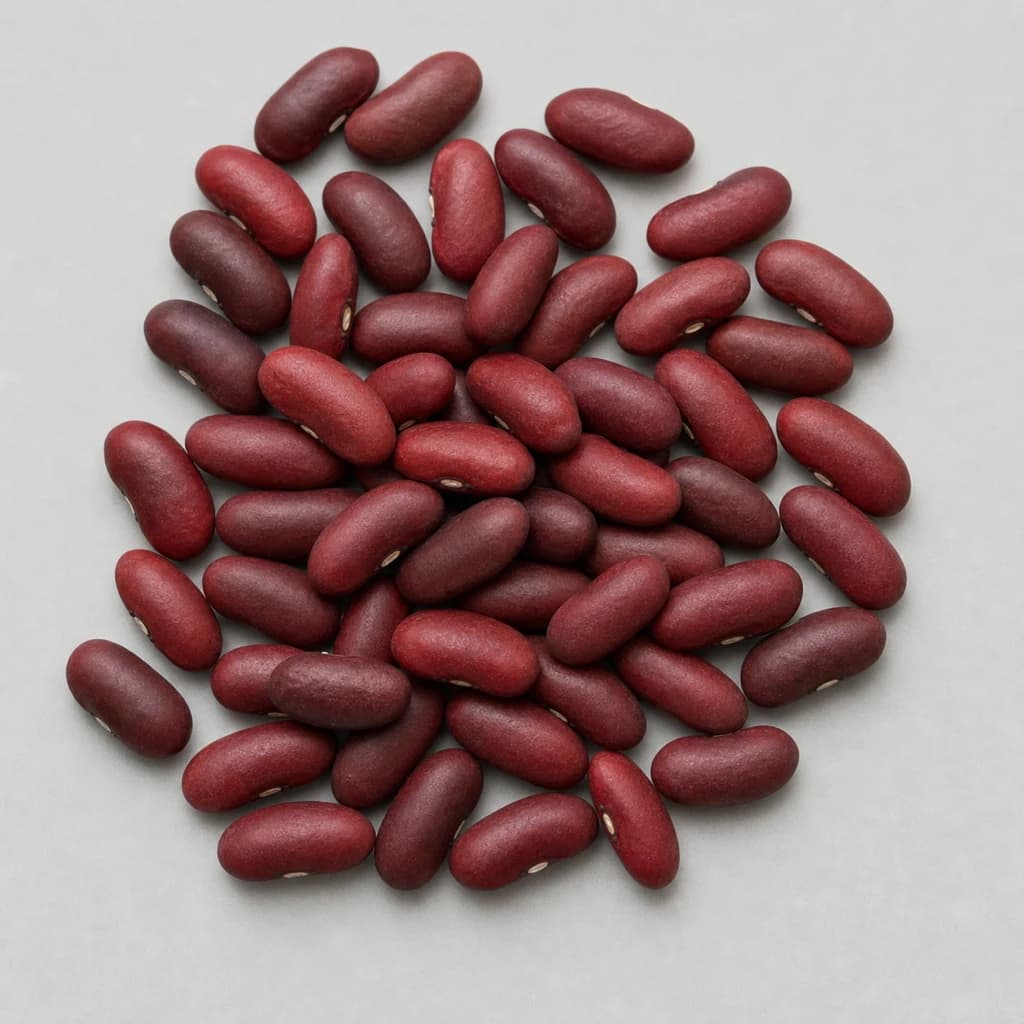
Kidney Beans
Hearty red beans that hold their shape in chili and stews
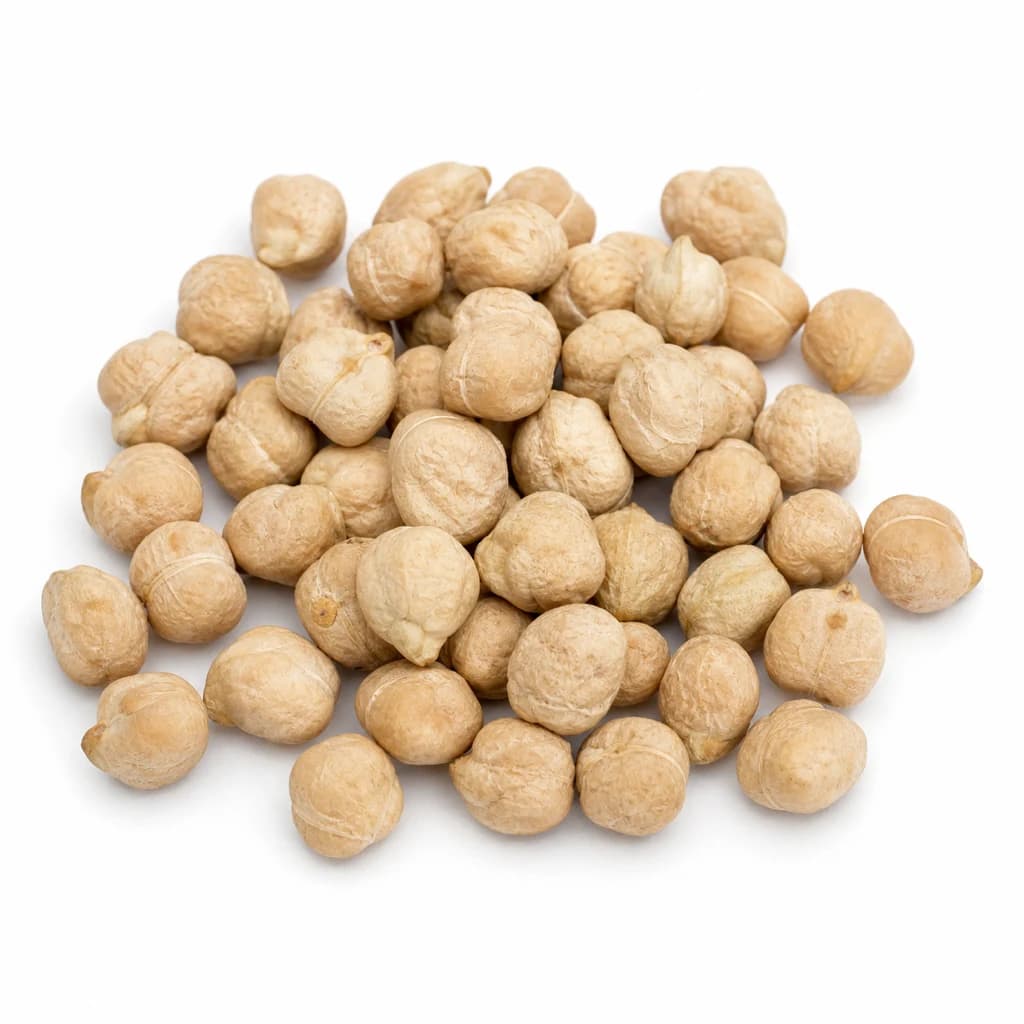
Chickpeas
Nutty, versatile beans for hummus, curries, and roasting
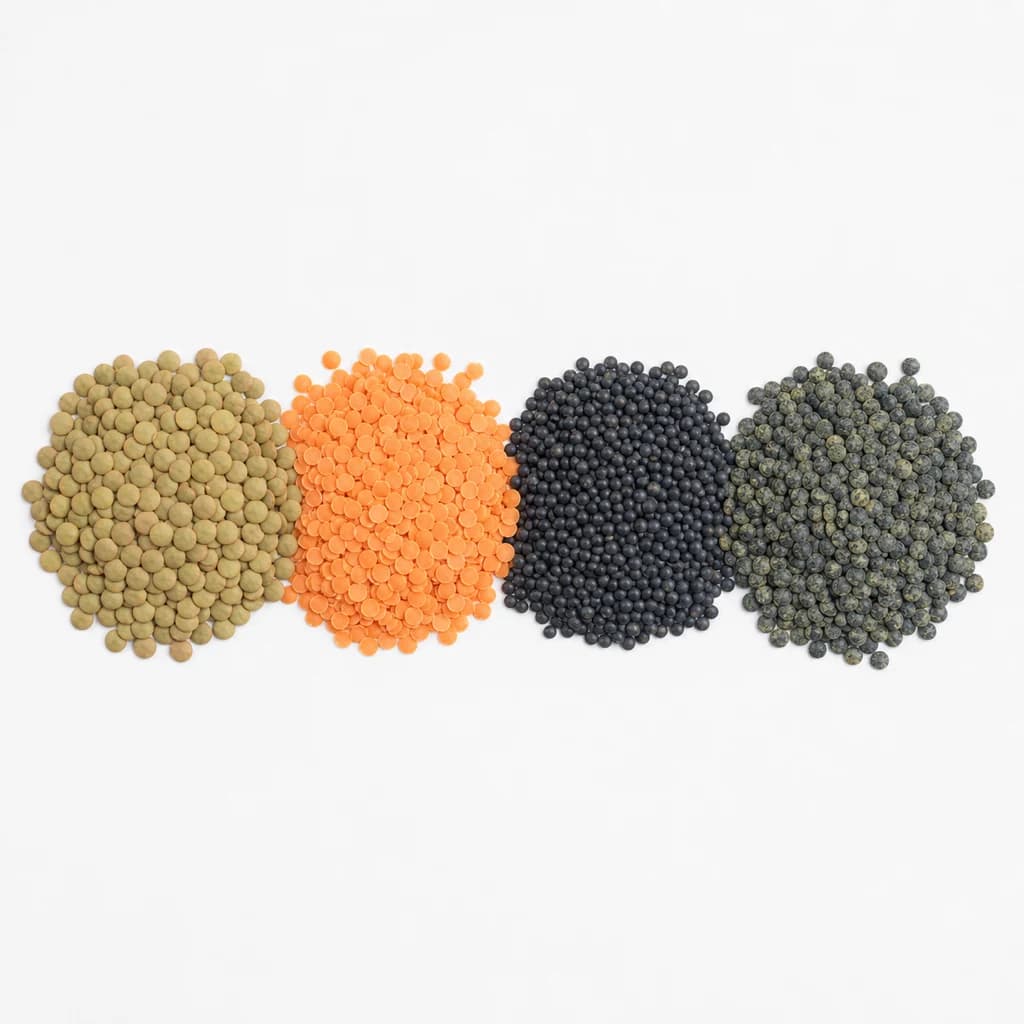
Lentils
Quick-cooking pulses for soups, dals, and hearty salads

White Beans
Creamy, mild beans for soups, stews, and silky purées
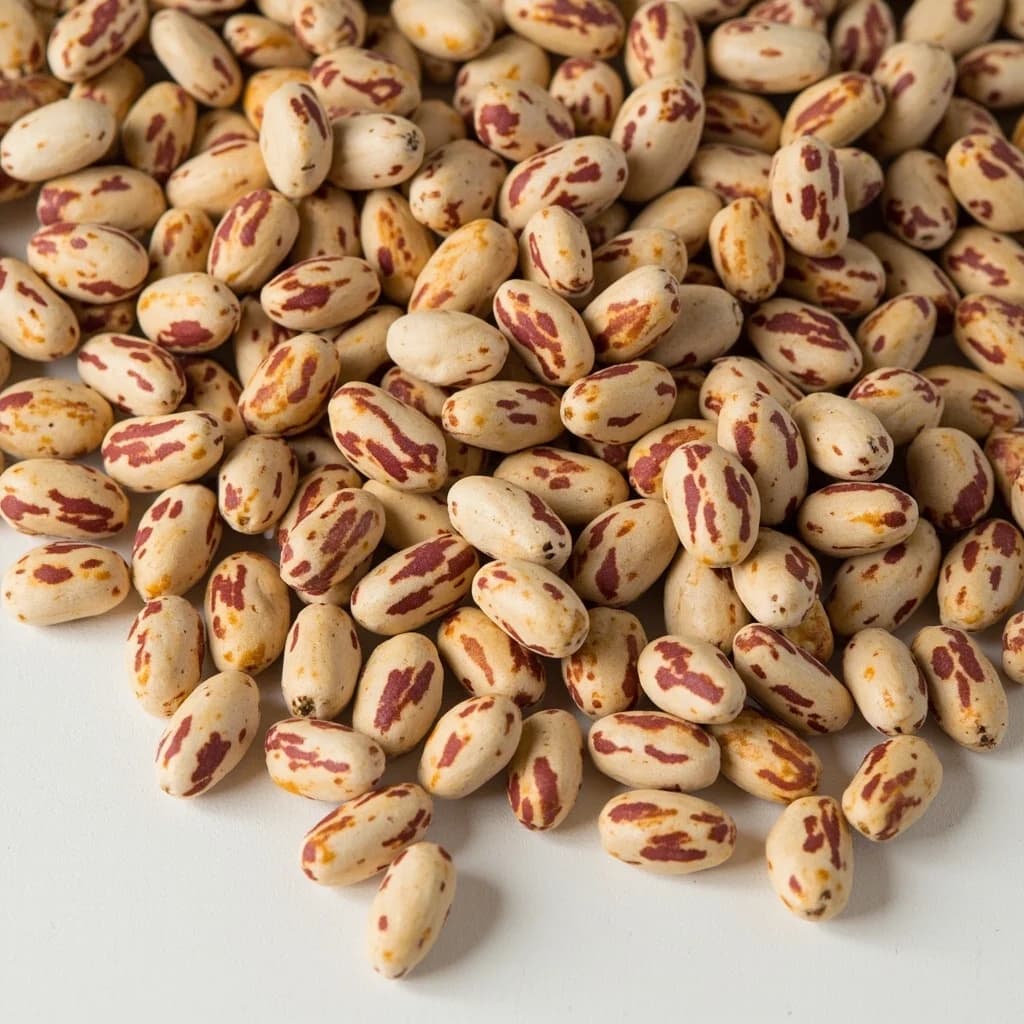
Pinto Beans
Creamy, speckled beans for refried beans and stews

Split Peas
Quick-cooking peas that melt into thick, comforting soups
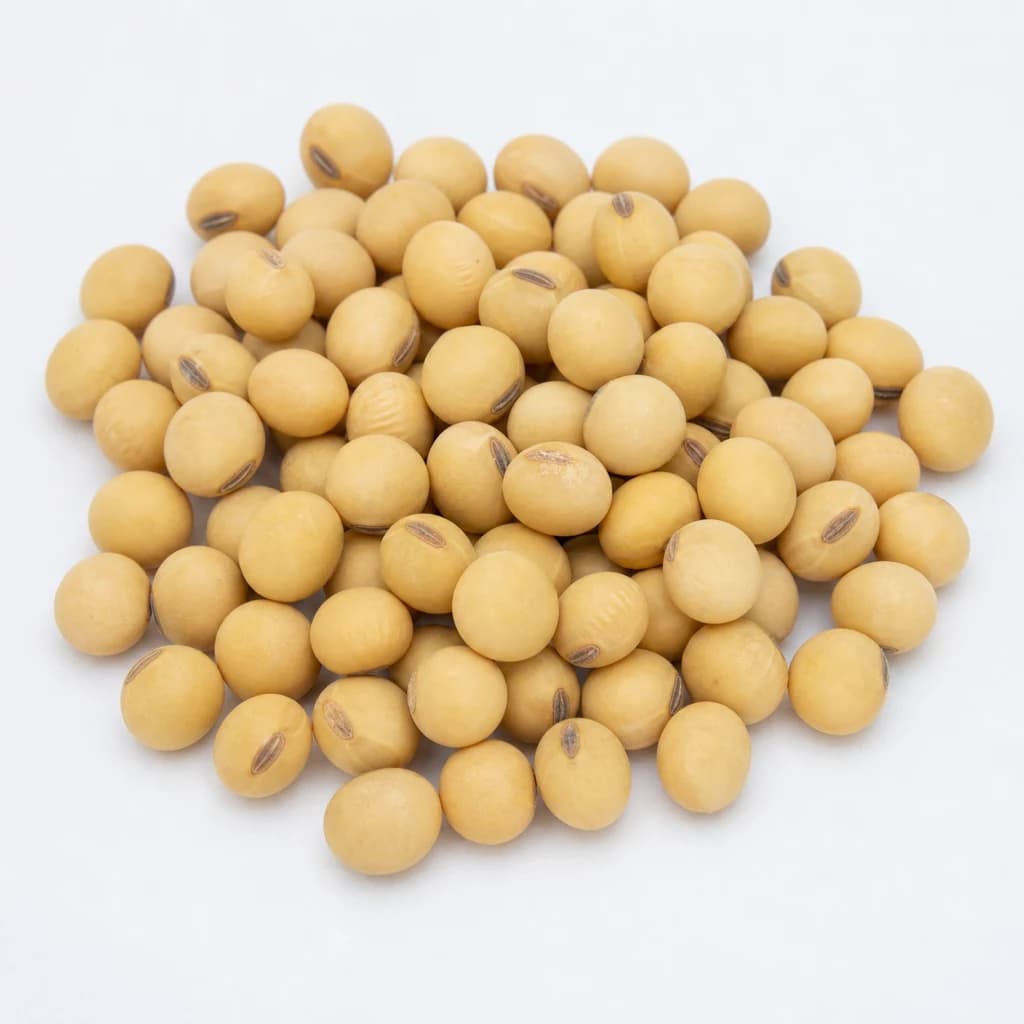
Soybeans
Protein-packed beans, the base for tofu and miso