 Cambodian
Easy · Warm
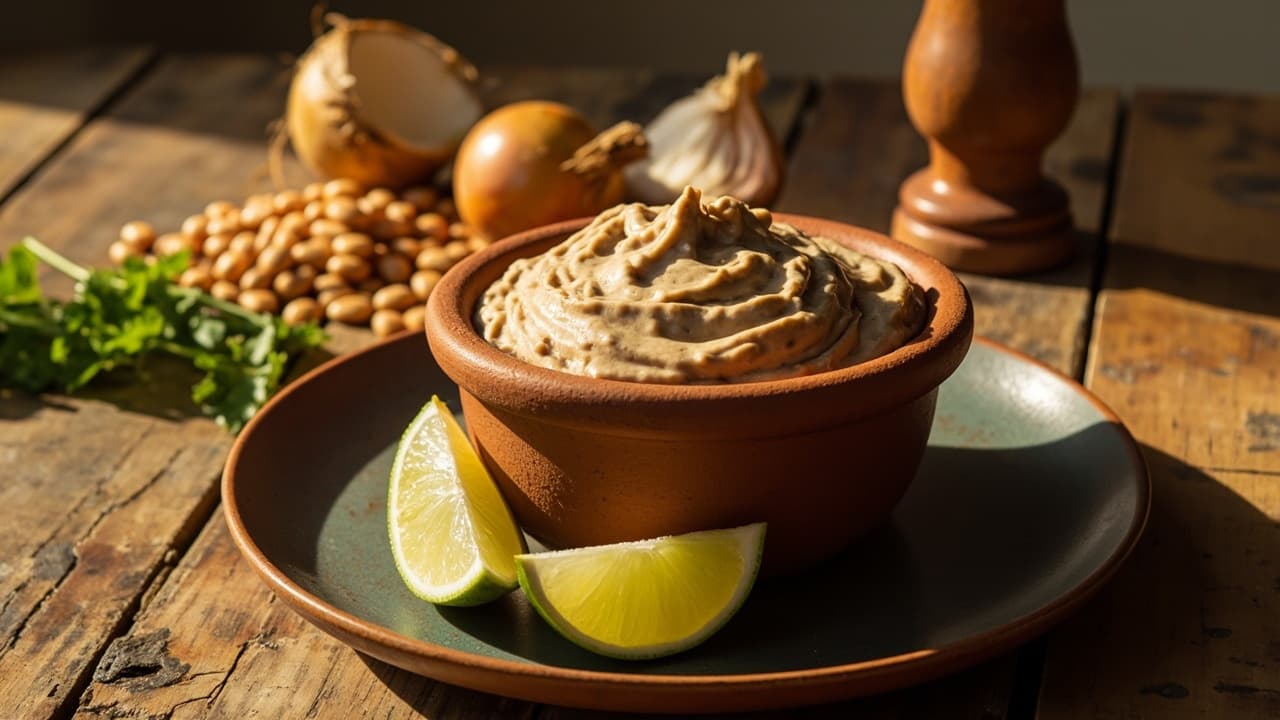
Smoky Pinto Bean Dip with Coconut, Lime and Black Pepper
A velvety bean dip with rich coconut undertones, bright lime, and a generous hit of black pepper. Chef Anh Dao brings her pepper-forward Cambodian sensibility to this smoky, soul-warming dip.

Prep
10 min
Cook
20 min
Total
30 min
Method
1
Dice the yellow onion finely. Peel and thinly slice the garlic cloves. Halve the lime — one half for juicing directly into the dip, the other half cut into wedges for serving.
2
Heat the coconut oil in a medium saucepan over medium heat until it shimmers and is fully melted, about 1 minute.
3
Add the diced onion to the pan. Cook, stirring occasionally, for 5-6 minutes until softened and translucent at the edges.
4
Add the sliced garlic and cook 2 minutes more, until fragrant but not browned.
5
Add the drained pinto beans and coconut water to the pan. Stir to combine with the aromatics.
6
Bring to a gentle simmer, then cover and cook over low heat for 12-15 minutes until beans are very tender and the liquid is mostly absorbed. The beans should break down easily when pressed against the side of the pan.
7
Remove from heat. Use a potato masher or the back of a spoon to roughly mash about half the beans directly in the pan — leaving some whole for texture.
8
Add the smoked paprika, black pepper, and salt directly to the pan. Squeeze in the juice of one lime half (save the other for serving). Stir well to combine.
9
Taste and adjust — add more lime juice for brightness, more black pepper for heat, or a pinch more salt.
10
Transfer the dip to a serving bowl. Drizzle with a touch more coconut oil if desired for shine. Scatter fresh cilantro leaves over the top.
11
Serve warm or at room temperature with lime wedges on the side. Offer extra black pepper for guests who want more.
A
Nutri-Score
Excellent balance
A–E · lower is better · score -5
Calories
347
per serving
High in protein · 18gHigh in fibre · 14gLow sugar · 3g
Protein
18g
Carbs
57g
Fat
6g
Sat. fat
5g
Fiber
14g
Sugar
3g
Sodium
680mg
Dairy FreeGluten FreePlant BasedTree Nut Free CautionVeganAnti InflammatoryDiabetesDigestive HealthHeart HealthyHigh FiberLow SugarPlant Protein
Nutri-Score is a general nutritional-balance guide, not medical or dietary advice.
B
Environmental impact
Low impact
A–E · lower is better · includes estimates
kg CO2e
0.2
per serving
BCarbonAEU all-round· carbon sets the grade
Water
0.2m³
Runoff
0.02g P
Pinto Beans drives 61% of this recipe’s estimated footprint.
Carbon from Poore & Nemecek 2018; water, land & runoff from Agribalyse — modelled averages for comparing recipes, not a measurement of your groceries.
Flavor Profile
7
Umami
4
Sweet
5
Salty
4
Sour
1
Bitter
4
Spicy
Textures
CreamySilkyTender
Aromas
CoconutHerbalPungentSmoky
Kitchen Equipment
Primary Tool
Medium SaucepanSafety & Storage
Cross Contamination
If serving with chips, crackers, or bread, ensure these items are prepared on sanitized surfaces separate from other allergens like wheat or gluten-containing products.
Storage
Refrigerate leftover dip within 2 hours of serving. Store in an airtight container for up to 5 days. Reheat to 165°F before serving leftovers.
Temperature
The dip is safely served warm (above 140°F) or at room temperature. Avoid leaving at room temperature for more than 2 hours total.
High Risk Population
For immunocompromised individuals, pregnant individuals, or young children, ensure beans are cooked until very tender and the dip is served hot or promptly refrigerated.
Allergen Warning
Clearly label this dish as containing coconut. Some guests with tree nut allergies may need guidance on whether they can safely consume coconut products.
Handling
Use clean utensils when serving. If the dip is tasted during preparation, use a clean spoon each time to prevent bacterial introduction.
Pro Tips
Technique
When you crush the beans in the pan, resist the urge to make it perfectly smooth. Leave some whole beans visible — this texture is where the dish lives, giving each bite something to discover.
Make Ahead
This dip actually improves after sitting for an hour. The flavors marry overnight in the refrigerator, and the coconut oil firms slightly, making it wonderful spread on crusty bread the next day.
From the chef
In Cambodia, we believe every meal should wake the senses — not with heat alone, but with layers that unfold as you eat. This dip carries that philosophy: coconut oil coaxing sweetness from the beans, lime cutting through at the end, and black pepper — always black pepper — because my mother taught me that pepper is the soul of any dish worth remembering. It is simple food made intentional, the kind of thing we would gather around the clay pot for on quiet evenings.
TagsCoconutBlack PepperLimeSmokedSpicyGluten FreeVeganEasyWeeknightMeal Prep
AllergensTree Nuts
Source: generated · June 13, 2026