 Asian Fusion
Medium · Hot
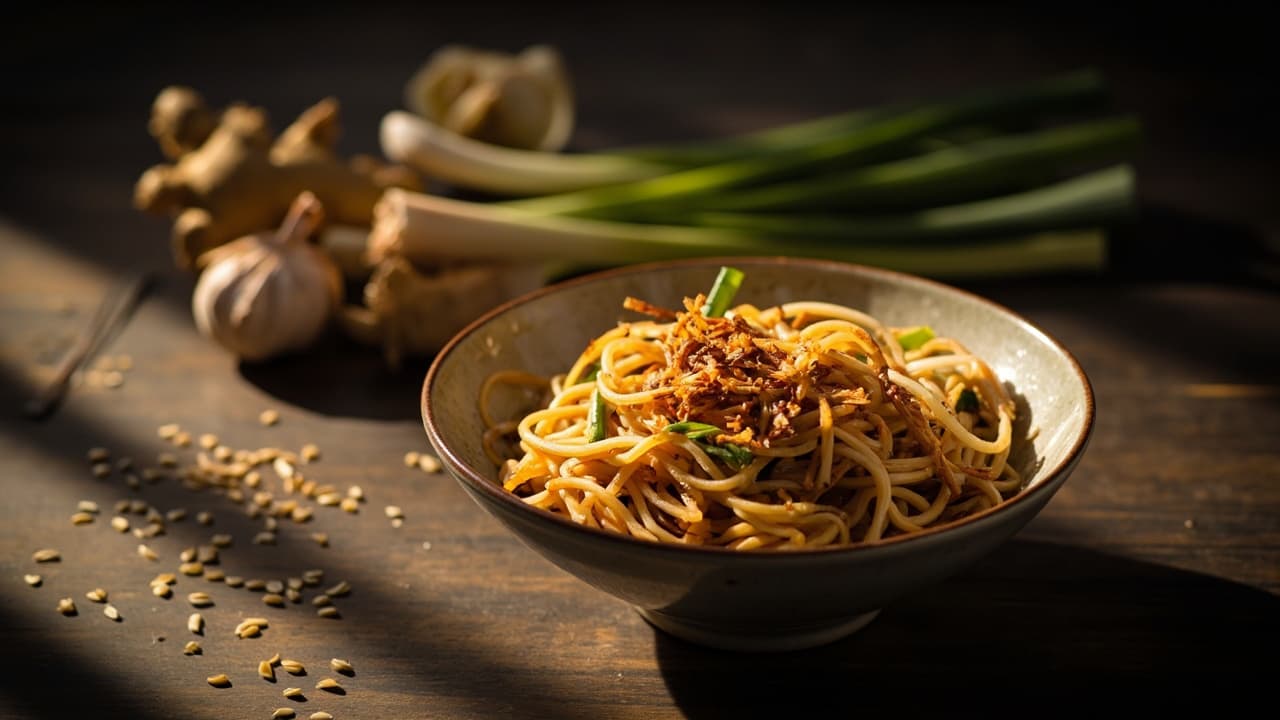
Sesame Ginger Noodles with Crispy Shallots
Kenji-style sesame ginger noodles tossed in a savory umami-rich sauce, topped with golden crispy shallots and a sprinkle of sesame seeds. This dish bridges the gap between familiar comfort food and bold Asian flavors.

Prep
15 min
Cook
15 min
Total
30 min
Method
Prepare Sauce
1
Mince the garlic cloves and grate the fresh ginger. In a medium bowl, whisk together sesame oil, soy sauce, honey, grated ginger, minced garlic, and black pepper until well combined. Set aside.
Make Crispy Shallots
2
Peel and thinly slice the shallots into rings. Heat sunflower oil in a large skillet over medium-high heat until shimmering.
3
Add the sliced shallots to the hot oil in a single layer. Fry, stirring occasionally, for 5-7 minutes until golden brown and crispy.
4
Using a slotted spoon, transfer the crispy shallots to a plate lined with paper towels. Set aside and reserve the remaining infused oil in the pan.
Cook Noodles
5
Bring a large pot of salted water to a boil. Cook spaghetti according to package directions until al dente, about 8-10 minutes.
6
Drain the noodles, reserving 1/2 cup of pasta water. Add the hot noodles directly to the skillet with the reserved shallot-infused oil over low heat.
Finish and Serve
7
Pour the prepared sesame ginger sauce over the hot noodles. Toss well to coat, adding splashes of reserved pasta water if needed to achieve your desired sauce consistency.
8
Divide the noodles among serving bowls. Top each portion with crispy shallots, sliced scallions, and a sprinkle of sesame seeds. Serve immediately.
A
Nutri-Score
Excellent balance
A–E · lower is better · score -4
Calories
635
per serving
Calorie-dense · 635 kcalSource of fibre · 7gLow saturated fat · 3gLow salt · 17mg
Protein
16g
Carbs
96g
Fat
22g
Sat. fat
3g
Fiber
7g
Sugar
15g
Sodium
17mg
Dairy FreeEgg FreeDiabetes FriendlyHeart HealthyBalanced MealEnergy Sustaining
Nutri-Score is a general nutritional-balance guide, not medical or dietary advice.
A
Environmental impact
Very low impact
A–E · lower is better · includes estimates
kg CO2e
0.3
per serving
ACarbonAEU all-round· both agree
Water
0.1m³
Land
32Pt
Runoff
0.1g P
Spaghetti drives 61% of this recipe’s estimated footprint.
Carbon from Poore & Nemecek 2018; water, land & runoff from Agribalyse — modelled averages for comparing recipes, not a measurement of your groceries.
Flavor Profile
7
Umami
4
Sweet
6
Salty
1
Sour
1
Bitter
3
Spicy
Textures
CrispyTenderSilkyChewy
Aromas
HerbalNuttyPungentSmoky
Kitchen Equipment
Primary Tool
Large SkilletLarge PotLarge SkilletChef KnifeCutting BoardGraterMedium BowlSlotted SpoonMeasuring SpoonsPaper TowelsTongs
Counter FootprintMedium
Safety & Storage
Cooking Temperature
Maintain oil temperature around 350°F when frying shallots. Oil that is too hot may cause smoking or burning; oil that is too cool will result in soggy shallots.
Cross Contamination
If preparing for individuals with food allergies, use dedicated utensils and cutting boards to prevent cross-contact with other allergens.
Storage
Store leftover noodles in an airtight container in the refrigerator for up to 3 days. Reheat thoroughly before consuming.
Handling
Use caution when handling hot oil for frying shallots. Never leave hot oil unattended and keep a lid nearby to smother any grease fires.
Allergen Warning
This dish contains wheat, soy, and sesame allergens. Inform guests of allergen content before serving. Individuals with sensitivities should avoid this dish or modify ingredients.
Equipment Safety
Use a sturdy slotted spoon or spider strainer when removing fried shallots from hot oil to prevent splashing and potential burns.
Pro Tips
Technique
When frying your shallots, resist the urge to rush them. Think of it like making bacon—you're rendering out moisture slowly to achieve that golden crunch. Toss them once, give them space, and let the oil work its magic. Burnt shallots taste bitter, not delicious.
Substitution
No spaghetti on hand? No problem. Udon noodles or even thick rice noodles work beautifully here and will hug that sesame ginger sauce even tighter. It's like how you can substitute flour tortillas for bread—same job, slightly different character.
Flavor Boost
Add a few drops of fish sauce directly into your sauce mixture. Don't worry—it won't make your noodles taste fishy. It'll make them taste more like everything. It's the same principle behind why we add Parmesan to pasta—unlocking that fifth flavor dimension.
From the chef
These noodles are my bridge between late nights at my grandparents' table and lazy Sunday dinners in my own kitchen. The sauce is everything I love about Asian cooking concentrated into one bowl—ginger that wakes you up, sesame that wraps you in warmth, and soy sauce doing its quiet, powerful umami work. The crispy shallots? Those are my American side showing through. Because honestly, what's more satisfying than something golden and crunchy on top of something soft and silky? It's like the best parts of onion rings met good noodles and decided to collaborate.
TagsWeeknight DinnerQuickVegetarianComfort FoodUmami RichCrispy ToppingEasyMeal Prep Friendly
AllergensWheatSoySesameGluten
Source: generated · June 10, 2026