 Catalan
Medium · Hot
Garlic Shrimp with Saffron Potato
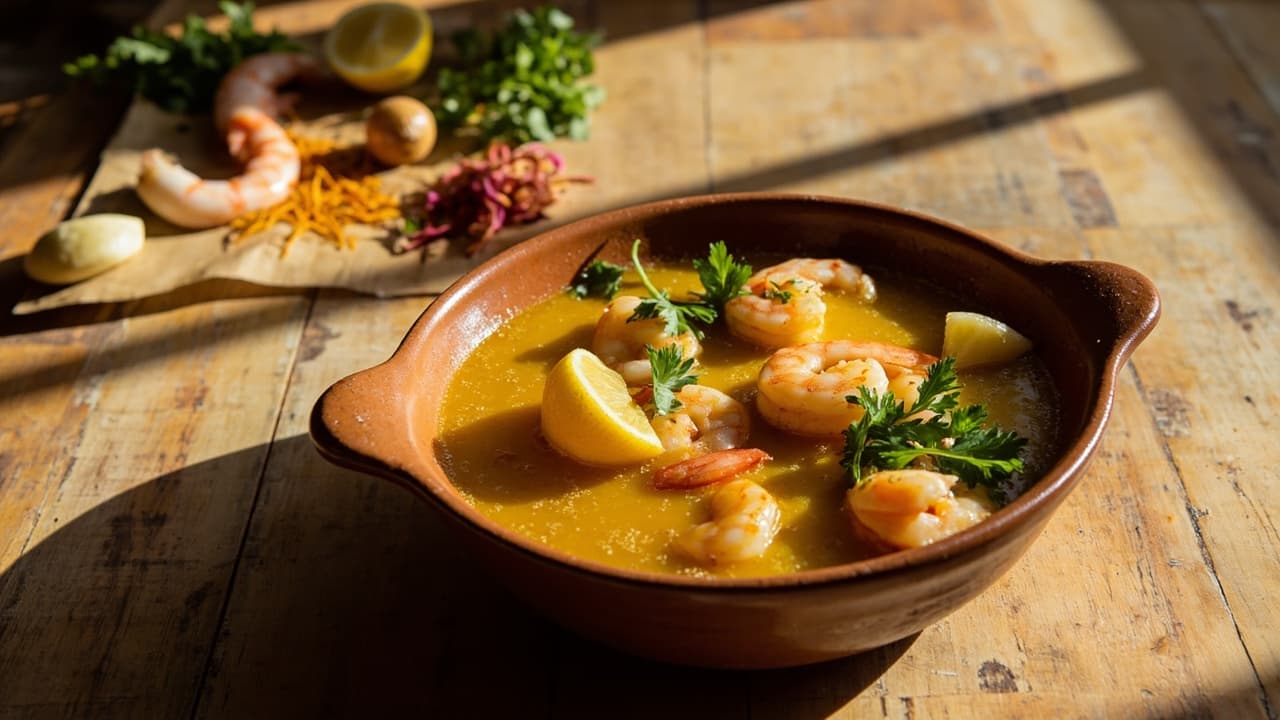
Suquet-style shrimp and potato in a saffron-stained broth with a garlic-almond picada, finished with lemon and parsley.
Prep
20 min
Cook
25 min
Total
45 min
Method
Prepare the saffron broth
1
Warm the chicken broth until barely simmering. Remove from heat and steep the saffron threads for 10 minutes until the liquid turns deep amber-gold.
Cook the potatoes
2
Peel and cut the potatoes into 2 cm chunks. Heat 2 tbsp olive oil in a Dutch oven over medium heat.
3
Add the potatoes and cook, stirring gently, for 3 minutes to coat them in oil.
Build the garlic shrimp
5
6
7
Cook undisturbed for 2 minutes until the bottoms are golden. Flip and cook 1 minute more until just opaque. The shrimp should be tender, not rubbery.
Make the picada and finish
8
9
Stir the picada into the potato broth. Simmer gently for 2 minutes to thicken slightly and meld the flavors.
10
A
Nutri-Score
Excellent balance
A–E · lower is better · score -2
Calories
419
per serving
High in protein · 35gLow sugar · 2gLow saturated fat · 3g
Protein
35g
Carbs
25g
Fat
22g
Sat. fat
3g
Fiber
5g
Sugar
2g
Sodium
1288mg
Gluten FreePescatarianMediterraneanDairy FreeLow CarbHeart HealthyDiabetes FriendlyAnti InflammatoryHigh ProteinBalanced MacrosOmega 3
Nutri-Score is a general nutritional-balance guide, not medical or dietary advice.
E
Environmental impact
Very high impact
A–E · lower is better · includes estimates
kg CO2e
3.5
per serving
ECarbonBEU all-round· carbon sets the grade
Water
23m³
Land
50Pt
Runoff
1.1g P
Shrimp drives 95% of this recipe’s estimated footprint.
Carbon from Poore & Nemecek 2018; water, land & runoff from Agribalyse — modelled averages for comparing recipes, not a measurement of your groceries.
Flavor Profile
7
Umami
4
Sweet
5
Salty
3
Sour
1
Bitter
1
Spicy
Textures
TenderSilkySaucy
Aromas
HerbalNuttyBrinyCitrus
Kitchen Equipment
Primary Tool
Dutch OvenCounter FootprintMedium
Techniques
Safety & Storage
Allergen Warning
Clearly label and communicate the presence of shellfish (shrimp) and tree nuts (almonds) to all diners. Even trace contamination from shared equipment can trigger severe reactions in allergic individuals.
Cooking Temperature
Shrimp must reach an internal temperature of 145°F (63°C) to ensure safety. Cook until flesh is opaque and pink throughout, approximately 2 minutes per side over medium-high heat. Undercooked shrimp poses risk of Vibrio bacteria.
Cross Contamination
Use separate cutting boards, utensils, and serving dishes for raw shrimp and almonds to prevent cross-contact between these allergens and other ingredients. Clean and sanitize all surfaces thoroughly between uses.
Handling
Keep raw shrimp cold at 40°F (4°C) or below until ready to cook. Do not let shrimp sit at room temperature for more than 2 hours total (1 hour if ambient temperature is above 90°F/32°C).
Storage
Store leftover suquet promptly in airtight containers. Refrigerate within 2 hours of cooking at 40°F (4°C) or below. Consume within 2-3 days. Reheat leftovers to 165°F (74°C) until steaming hot throughout.
High Risk Population
Shellfish allergy reactions can be severe and potentially life-threatening (anaphylaxis). This dish is NOT suitable for individuals with shellfish or tree nut allergies. Pregnant women, elderly, young children, and immunocompromised individuals should only consume fully cooked shrimp.
Shelf Life
Fresh raw shrimp should be used within 1-2 days when refrigerated. The saffron broth with potatoes can be made ahead and refrigerated for up to 2 days; add cooked shrimp only when serving to prevent texture degradation.
Pro Tips
Technique
The picada should be rough, not smooth — you want small pieces that give the broth body, not a paste that disappears into nothing.
Substitution
If good saffron is out of reach, a small pinch of sweet paprika works in a pinch, though the broth will lack that deep golden hue and the quiet floral notes that make this dish what it is.
From the chef
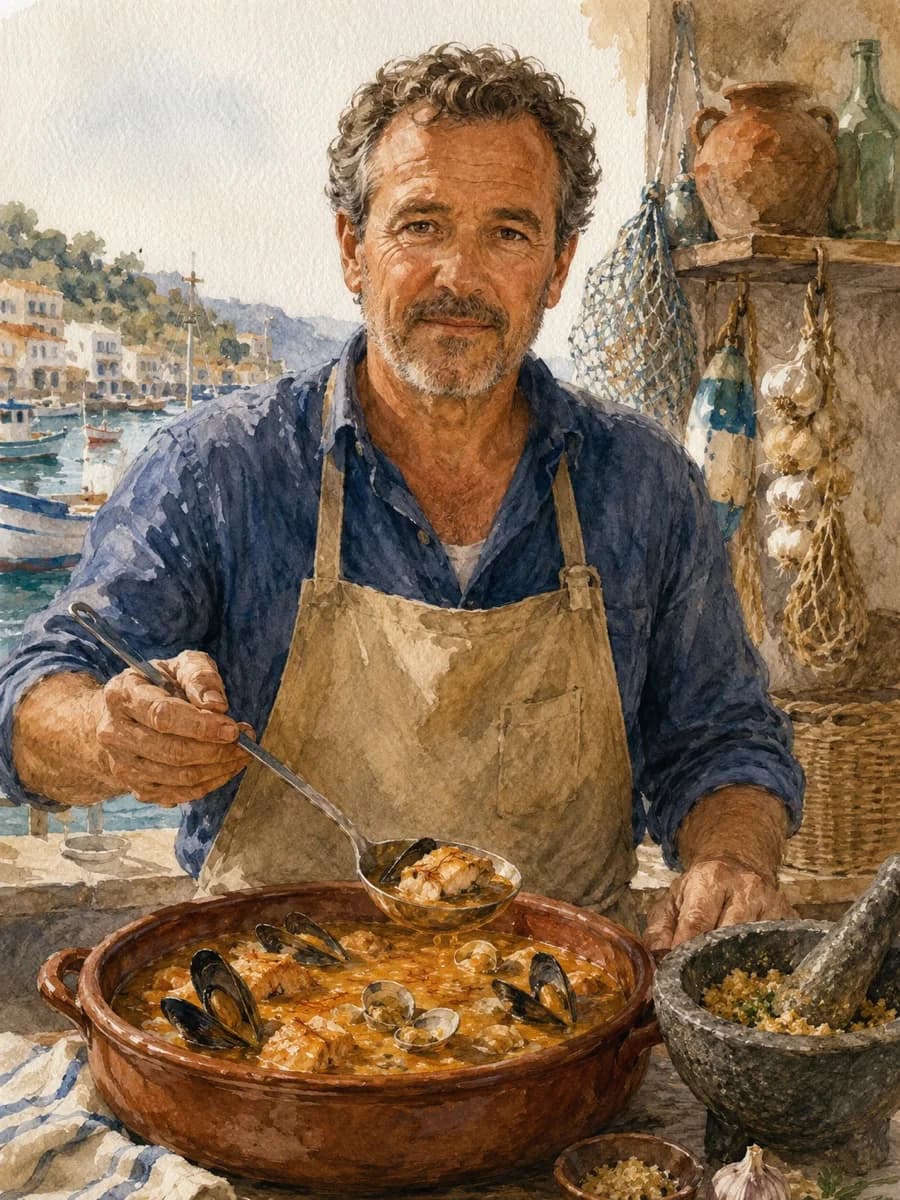
Saffron-steeped broth is the slow engine of this dish — potatoes cut into even chunks and left to simmer in the golden liquid until they have drunk it in completely. The shrimp are marinated briefly in garlic and olive oil, seared over high heat until just opaque, then folded gently into the broth with their cooking oil. A rough almond-garlic picada, pounded to a coarse paste, goes in last to thicken and bind. The law here is simple: let the potato drink slowly, add the picada at the end, and never overcook the shellfish. A squeeze of lemon finishes it.
TagsSeafoodSaffronPotatoPicadaTraditionalOne PotGarlicLemon
AllergensShellfishTree Nuts
Source: generated · June 10, 2026