 Asador
Medium · Hot
Duck Breast with Charred Beets and Rosemary
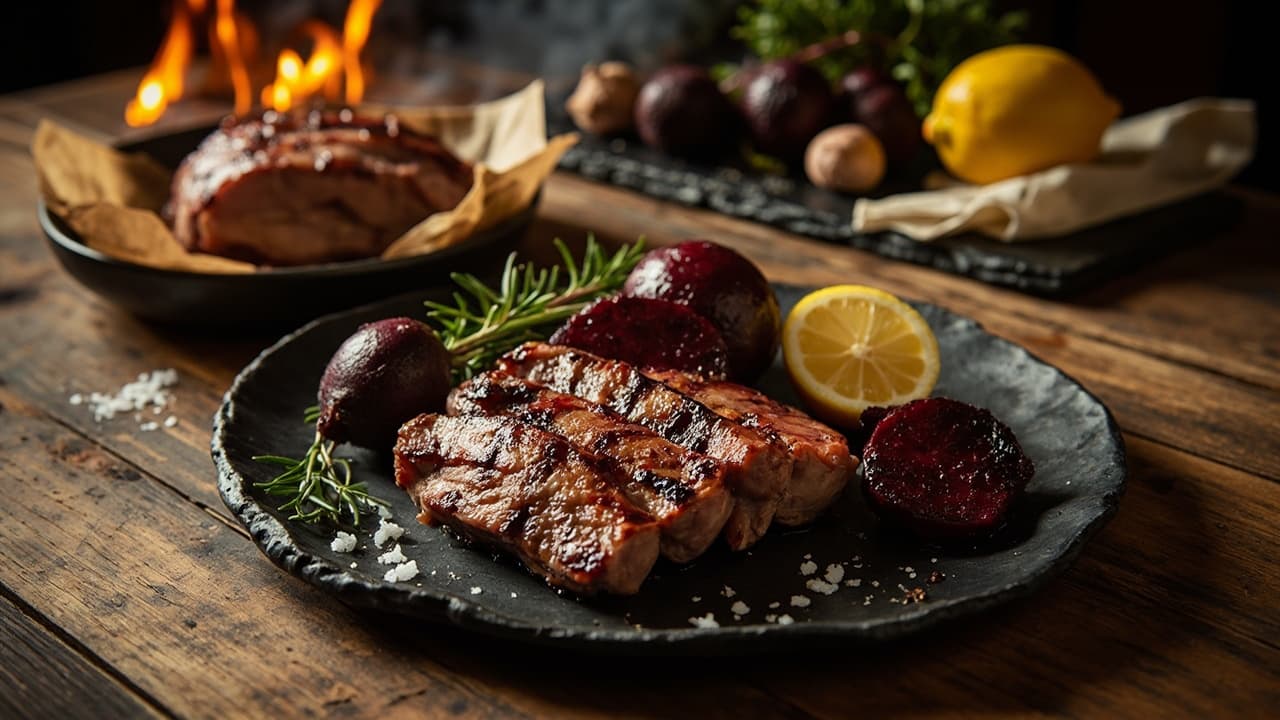
Duck breast seared skin-side down until the fat renders into a crackling crust, rested and sliced over smoky charred beets kissed by rosemary and bright lemon. A primal, precise plate where fire is the star.

Prep
15 min
Cook
30 min
Rest
5 min
Total
50 min
Method
Prepare the Fire
1
Build a hot coal bed in your grill or prepare your cast iron skillet over high heat. You want active embers or a screaming hot pan—this is where the char begins.
Prepare the Duck
2
Score the skin of each duck breast in a crosshatch pattern, cutting through the fat but not into the flesh. Season generously with salt, pressing it into the scored skin.
Prepare the Beets
Char the Beets
Sear the Duck
5
Place duck breasts skin-side down in the hot cast iron skillet or directly on the grill grates. Render the fat over medium-high heat, pressing gently with tongs. The skin should render slowly, turning golden and crisp, 6-8 minutes.
6
Flip the breasts and cook the meat side for 3-4 minutes for medium-rare. The internal temperature should read 130°F for rosy pink center.
Rest and Finish
7
Transfer duck to a cutting board and rest for 5 minutes. This is not optional—resting is where the juices redistribute.
8
9
Slice the duck breast against the grain into 1/2-inch medallions. Fan across the plate and nestle the seasoned charred beets alongside. Finish with a final squeeze of lemon and flaky salt.
Grade pending
Nutri-Score
Estimated nutrition
Grade pending · 100% ingredient coverage
Calories
121
per serving
Protein
2g
Carbs
14g
Fat
7g
Sat. fat
1g
Fiber
3g
Sugar
10g
Sodium
625mg
Gluten FreeDairy FreePaleoWhole30Heart HealthyDiabetes FriendlyLow GlycemicAnti InflammatoryHigh ProteinLow CarbBalanced FatFiber Rich
Nutri-Score is a general nutritional-balance guide, not medical or dietary advice.
Grade pending
Environmental impact
Estimated footprint
Grade pending · 100% ingredient coverage
kg CO2e
0.1
per serving
Water
0.5m³
Land
5.5Pt
Runoff
0.01g P
Olive Oil drives 41% of this recipe’s estimated footprint.
Carbon from Poore & Nemecek 2018; water, land & runoff from Agribalyse — modelled averages for comparing recipes, not a measurement of your groceries.
Flavor Profile
7
Umami
4
Sweet
5
Salty
3
Sour
2
Bitter
0
Spicy
Textures
CrispyTenderSilkyChewy
Aromas
SmokyHerbalEarthyFattyPungent
Kitchen Equipment
Primary Tool
Cast Iron SkilletCounter FootprintMedium
Safety & Storage
Cooking Temperature
Duck breast must reach 165°F internal temperature for safe consumption. Use a calibrated meat thermometer to verify. Undercooked poultry poses serious foodborne illness risk from Salmonella and other pathogens.
Grill or cast iron skillet must be screaming hot before searing duck to achieve proper render on fat layer and develop crispy skin without burning.
High Risk Population
All individuals including pregnant individuals, elderly, young children, and immunocompromised persons must ensure duck is cooked to 165°F for food safety.
Handling
Score duck skin carefully—cut through fat only, not into flesh—to prevent knife slip injuries. Use firm grip and point knife away from hand.
Cross Contamination
Raw duck juice can harbor bacteria. Use separate cutting boards for raw meat and vegetables, or sanitize between uses. Never place cooked duck on surfaces that held raw meat.
Equipment Safety
Active coals and open flame present burn risk. Use long-handled tongs rated for high heat. Keep fire extinguisher or water nearby when cooking with live fire.
Cast iron skillets retain extreme heat after cooking. Allow to cool completely before handling or cleaning. Never place hot cast iron on wet surfaces to prevent thermal shock.
Storage
Refrigerate raw duck breast at 40°F or below within 2 hours of purchase. Use within 1-2 days for best quality.
Cooked duck leftovers must be refrigerated within 2 hours and consumed within 3-4 days. Reheat to 165°F before serving.
Shelf Life
Charred beets are best consumed within 3-5 days when refrigerated. Visual signs of spoilage include slimy texture, mold, or off odors.
Let duck rest 5 minutes after cooking—this redistributes juices and allows internal temperature to rise slightly. Cutting too early causes significant juice loss.
Wear gloves when handling beets directly from hot grill or coals to prevent burns. Skins retain internal heat even when exterior appears cooled.
Pro Tips
Technique
The crosshatch score on the duck skin is not decoration—it's architecture. Those cuts create channels for the fat to escape and render evenly, so your skin becomes a crackling crust instead of a chewy band of fat.
Substitution
No fresh rosemary? Dried works in a pinch, but use half the amount—the flavor is more concentrated. Thyme is also a beautiful swap if you want something slightly more delicate.
From the chef
Duck breast wants two things: a hot surface and patience. You lay it skin-side down and let the fat render slowly until that skin crackles like parchment — six, seven, eight minutes without touching it. While it rests, the beets go directly onto the coals, rotating until the skins blacken and the flesh goes tender and sweet underneath. Peel them, toss them with rosemary, smashed garlic, and lemon. The acid cuts straight through the duck fat. Slice the breast against the grain, fan it over those smoky beets, finish with flaky salt, and you have a plate where fire did exactly what fire does best.
TagsLive FireCharredDuckBeetsSmokyRosemaryLemonPrimalNo SauceSingle Protein
Source: generated · June 10, 2026