 Italian American
Medium · Hot
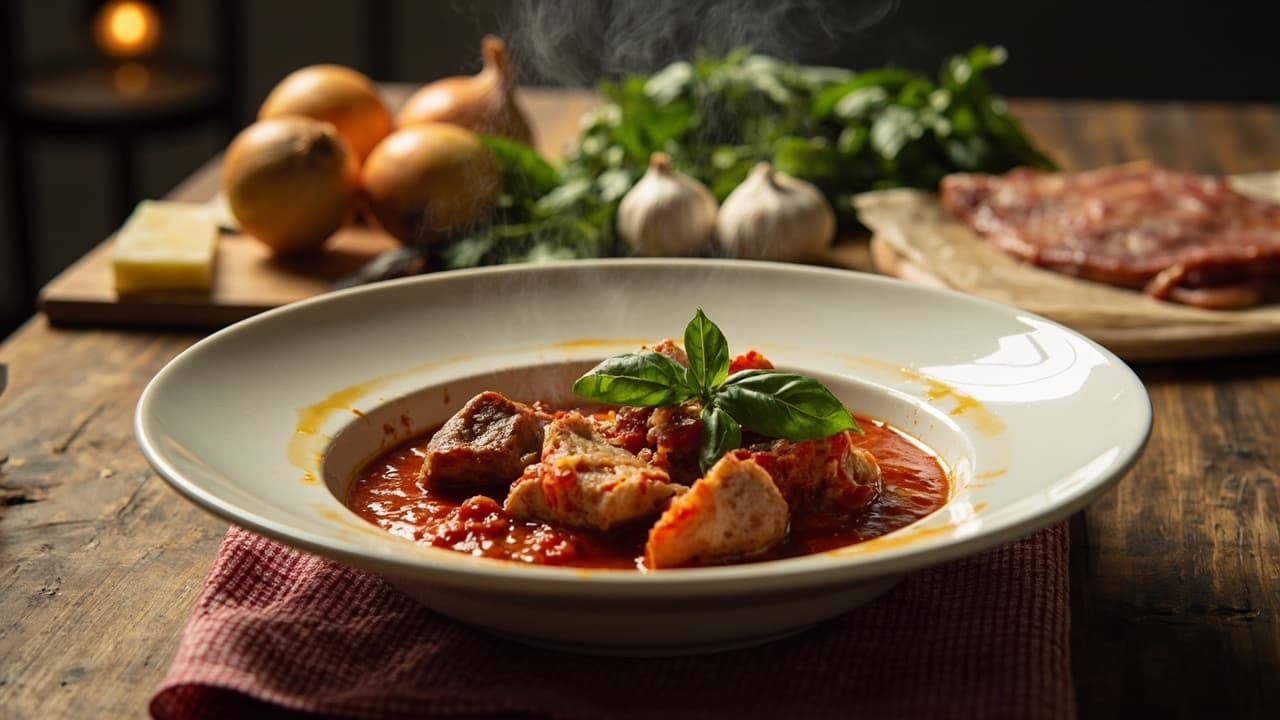
Pork Belly Braised in Tomato Sauce with Garlic and Basil
Tender chunks of pork belly slow-braised in a rich, garlicky tomato sauce and finished with fresh basil. The kind of dish that fills your kitchen with warmth and makes everyone gather around the table.

Prep
20 min
Cook
2h 30m
Rest
15 min
Total
3h 5m
Method
Prep the Pork Belly
1
Cut the pork belly into 1.5-inch cubes. Pat each piece dry with paper towels and season generously with 1 teaspoon salt and 0.5 teaspoon black pepper. Let it sit at room temperature for 15 minutes while you prep everything else.
Build the Foundation
2
Heat 2 tablespoons olive oil in your Dutch oven over medium-high heat until it shimmers. Add the pork belly cubes in a single layer, leaving space between each piece. Sear for 3-4 minutes per side until deeply golden and crispy on all sides. Work in batches if needed — don't crowd the pan or you'll steam instead of sear. Transfer to a plate and set aside.
3
In the same Dutch oven with all that beautiful pork fat, add the chopped yellow onion. Cook over medium heat for 5-6 minutes until softened and translucent. Add the 6 cloves of minced garlic and cook for another minute until fragrant.
Braise to Perfection
4
Pour in the tomato sauce and chicken broth. Stir everything together, scraping up any browned bits from the bottom of the pot — that's where all the flavor lives. Season with 1 teaspoon salt and 0.5 teaspoon black pepper. Bring to a gentle simmer.
5
Nestle the seared pork belly cubes back into the pot, making sure they're mostly submerged in the sauce. Reduce heat to low, cover with a tight-fitting lid, and let it braise for 2 hours. Check halfway through and give it a gentle stir. The pork should be melt-in-your-mouth tender.
Final Finish
6
7
Fold in the fresh basil leaves, letting them wilt naturally into the sauce. Taste and adjust seasoning with extra salt or black pepper if needed. The braise should be rich, slightly sweet from the tomatoes, and deeply savory.
8
Serve the pork belly braised in its glorious tomato sauce family-style in the Dutch oven, with crusty bread or over a bowl of pasta. Finish with a drizzle of good olive oil and extra torn basil on top.
D
Nutri-Score
Needs balance
A–E · lower is better · score 14
Calories
701
per serving
High in saturated fat · 20gCalorie-dense · 701 kcalLow sugar · 6g
Protein
13g
Carbs
11g
Fat
67g
Sat. fat
20g
Fiber
2g
Sugar
6g
Sodium
1396mg
Dairy FreeSodium CautionSaturated Fat CautionHigh ProteinComfort Food
Nutri-Score is a general nutritional-balance guide, not medical or dietary advice.
C
Environmental impact
Moderate impact
A–E · lower is better · includes estimates
kg CO2e
1.7
per serving
CCarbonAEU all-round· carbon sets the grade
Water
0.7m³
Land
52Pt
Runoff
0.1g P
Pork Belly drives 84% of this recipe’s estimated footprint.
Carbon from Poore & Nemecek 2018; water, land & runoff from Agribalyse — modelled averages for comparing recipes, not a measurement of your groceries.
Flavor Profile
9
Umami
4
Sweet
5
Salty
2
Sour
1
Bitter
2
Spicy
Textures
CrispyTenderSilky
Aromas
GarlickyHerbalSavorySmoky
Kitchen Equipment
Primary Tool
Dutch OvenCounter FootprintLarge
Safety & Storage
Cross Contamination
Raw pork belly can harbor bacteria like Salmonella or Yersinia enterocolitica. Use separate cutting boards for raw meat and prep vegetables. Wash all utensils, hands, and surfaces with hot soapy water after handling raw pork.
Cooking Temperature
Sear pork belly to at least 145°F internal temperature, then braise at a gentle simmer (180-200°F) for the full 2 hours to ensure tenderness and safety. Final dish should reach 165°F when checking the thickest piece.
Handling
Do not leave raw pork belly at room temperature for more than 2 hours total (including the 15-minute rest period). Keep refrigerated until ready to cook to prevent bacterial growth.
Storage
Store leftover braised pork belly in airtight containers in the refrigerator for up to 4 days, or freeze for up to 3 months. Reheat to 165°F throughout before consuming.
Allergen Warning
Store-bought tomato sauce and chicken broth may contain hidden allergens such as celery, wheat, soy, or sulfites depending on the brand. Always check ingredient labels if serving to individuals with known food allergies.
High Risk Population
Pork belly is high in fat and sodium. Individuals with heart conditions, hypertension, or cholesterol concerns should consume in moderation. The dish may not be suitable for those on strict sodium-restricted diets.
The rendered pork fat in the Dutch oven can cause severe burns if splashed during searing. Use long tongs to handle pork belly pieces and stand back when adding meat to the hot oil.
Pro Tips
Technique
Listen, that sear on the pork belly isn't just for looks — that's where you build flavor. Get your Dutch oven nice and hot, and don't crowd those cubes or you'll steam instead of sear. That beautiful fond at the bottom of the pot? That's liquid gold going into your sauce.
Substitution
No pork belly? Boneless pork shoulder works in a pinch — just cut it into chunky pieces. Won't have quite the same silky richness, but it'll still be mighty fine with a fork.
Make Ahead
Here's a little secret — this braise tastes even better the next day once the flavors have had time to meld together. Make a big batch on Sunday and you've got easy dinners for the week.
Storage
Keep it in an airtight container in the fridge for up to four days, or freeze it for up to three months. The sauce actually protects the pork during thawing, keeping it tender.
From the chef
There's nothing quite like the smell of pork belly slow-braising in tomato sauce — it fills the house with an aroma that pulls everyone to the kitchen before the meal is even ready. I've been making this dish, or some version of it, ever since my Nona let me stir the pot as a kid. That rich, fatty pork belly transforms in the slow cook — it becomes melt-in-your-mouth tender while drinking in all that garlicky, herby tomato goodness. This is soul food, family style, the way it was meant to be.
TagsSlow CookedBraisedGarlickyHerb FinishedFamily StyleComfort FoodComfortfoodWeekend CookingPork BellyTomato Sauce
Source: generated · June 10, 2026