 South Asian
Medium · Iced Cold
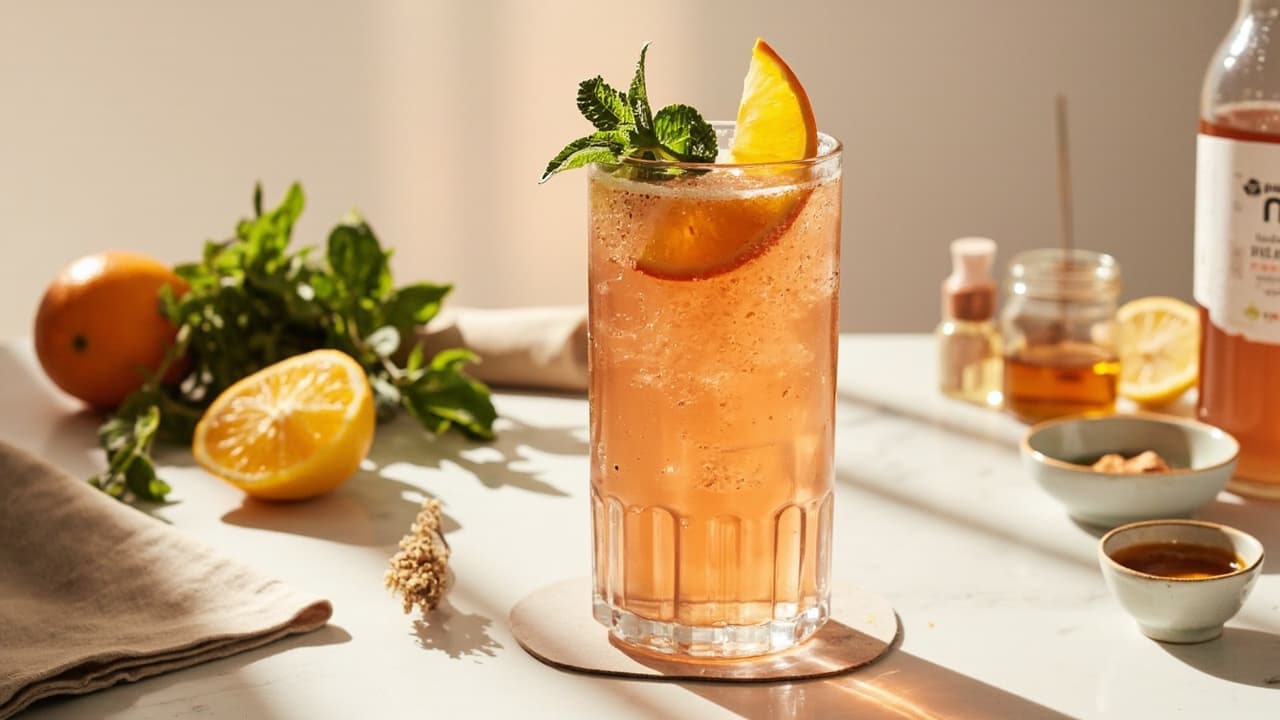
Rose Kombucha Fizz with Orange and Mint
A bright, effervescent fusion of probiotic kombucha with zesty citrus and cooling mint, sweetened with a touch of golden honey. The fizz lifts the aromatic oils from the mint and orange, creating a refreshing, gut-friendly drink that dances between tart, sweet, and herbaceous.

Prep
15 min
Total
15 min
Method
1
In a small bowl, whisk together 3 tablespoons honey with 60 ml warm water until fully dissolved to create a honey syrup. Set aside to cool for 5 minutes. This warm dilution ensures the honey disperses evenly through the cold fizz without sinking to the bottom.
2
Zest the entire lemon directly into a large pitcher using a fine grater, capturing the bright yellow oils. Halve the lemon and squeeze all the juice through a citrus juicer — you need 30 ml. Reserve the zest and juice together.
3
Separate the two oranges into segments. Squeeze the segments through your hands or a juicer to extract 240 ml of fresh orange juice. Set the remaining juicy pulp aside.
4
5
6
Strain the mint infusion through a fine-mesh strainer into a clean vessel, pressing the leaves gently to extract every drop of flavor. Discard the spent mint or reserve for a compostable use.
7
Pour the strained mint-honey base back into the pitcher. Add the fresh orange juice and stir well to fully integrate the flavors.
8
Pour in the kombucha and sparkling water simultaneously — the sparkling water adds an extra effervescence layer on top of the kombucha's natural carbonation. Stir gently once with an upward motion to preserve the bubbles.
9
Fill four tall glasses with ice cubes (the bigger the cube, the slower the melt — Science! Smaller cubes create faster dilution). Pour the fizz evenly across all four glasses.
10
Garnish each glass with a fresh mint sprig and an orange wheel perched on the rim. Serve immediately for maximum sparkle. If you must prepare ahead, keep the mint infusion and citrus separate from the kombucha until the last moment — carbonation is fleeting and the citrus acidity will begin to flatten the bubbles over time.
Grade pending
Nutri-Score
Estimated nutrition
Grade pending · 100% ingredient coverage
Calories
126
per serving
Protein
3g
Carbs
30g
Fat
1g
Sodium
127mg
Dairy FreeGluten FreeLow FatLow ProteinVeganAntioxidant RichGut HealthImmune SupportLow SodiumLow CalorieProbiotic RichRefreshing HydrationVitamin C Rich
Nutri-Score is a general nutritional-balance guide, not medical or dietary advice.
Grade pending
Environmental impact
Estimated footprint
Grade pending · 100% ingredient coverage
kg CO2e
0.3
per serving
Kombucha drives 69% of this recipe’s estimated footprint.
Carbon from Poore & Nemecek 2018; water, land & runoff from Agribalyse — modelled averages for comparing recipes, not a measurement of your groceries.
Flavor Profile
6
Sweet
7
Sour
3
Bitter
Textures
CrispEffervescentLightSilky
Aromas
CitrusFermentedFloralHerbal
Kitchen Equipment
Primary Tool
Large PitcherCitrus JuicerFine GraterFine Mesh StrainerIce Cube TrayLarge PitcherMeasuring SpoonsMuddlerTall GlassesPaper Towels
Safety & Storage
Shelf Life
Serve the fizz immediately after adding kombucha and sparkling water. The carbonation will begin to diminish within 1-2 hours as the citrus acidity reacts with the bubbles. For best effervescence, prepare and serve within 30 minutes.
Storage
Store kombucha refrigerated at all times before use. Once the fizz is assembled, it cannot be stored — the carbonation will escape and the citrus acidity will continue to flatten the bubbles. Keep unopened kombucha bottles at 35-40°F.
High Risk Population
This beverage contains live kombucha cultures and natural bacteria from fermentation. It is not recommended for individuals with severely compromised immune systems, those undergoing chemotherapy, or people with certain chronic health conditions without consulting a healthcare provider first.
Cross Contamination
Ensure all equipment used to prepare the mint infusion, juice extraction, and fizz assembly is thoroughly cleaned. Use separate cutting boards for citrus if also handling other ingredients. Sanitize pitchers, strainers, and glasses to prevent bacterial contamination.
Handling
When pouring kombucha and sparkling water simultaneously, use caution as the effervescence can cause sudden foaming. Pour slowly and use a deep pitcher to prevent overflow. Do not shake kombucha bottles before opening as pressure can cause spray.
Allergen Warning
While this recipe does not contain common allergens, kombucha may contain trace sulfites naturally produced during fermentation. Individuals with sulfite sensitivity should exercise caution. Honey, though not a major allergen, may contain bee pollen for those with bee-related allergies.
Alcohol Content
Kombucha naturally contains trace amounts of alcohol (typically 0.1-2.0% ABV) due to fermentation. While commercially labeled as non-alcoholic, individual products vary. This beverage is not suitable for children, pregnant individuals, or those avoiding alcohol for religious or health reasons without verifying the specific kombucha brand's alcohol content.
Pro Tips
Technique
Tear the mint leaves with clean hands rather than cutting them — tearing bruises the cell walls and releases more essential oils into your honey citrus base, giving you that gorgeous golden-green hue and maximum aromatic impact.
Substitution
If rose kombucha isn't available, any unflavored kombucha works beautifully; you can add a splash of rose water to restore that floral character she loved so much in her summer drinks.
From the chef
This fizz works because honey acts as a molecular shuttle for mint's essential oils — muddle the torn leaves into the warm syrup for a full minute and watch the liquid turn pale gold, fragrant, and genuinely alive. Fresh orange juice and lemon zest build the citrus backbone, and live-culture kombucha adds beneficial bacteria plus a subtle fermentation tang that no synthetic flavor can replicate. Pour the kombucha and sparkling water in simultaneously to double the effervescence, serve immediately over large ice cubes (slower melt, less dilution — science matters here), and let the mint aroma arrive at your nose a full beat before the first sip.
TagsNon AlcoholicRefreshingCitrusMintProbioticHoney SweetenedEffervescentFruit InfusedGut FriendlySummer DrinkSouth Asian InspiredNo CookQuick PrepServe ColdIce Cold
Source: generated · June 13, 2026