 Moroccan
Easy · Warm
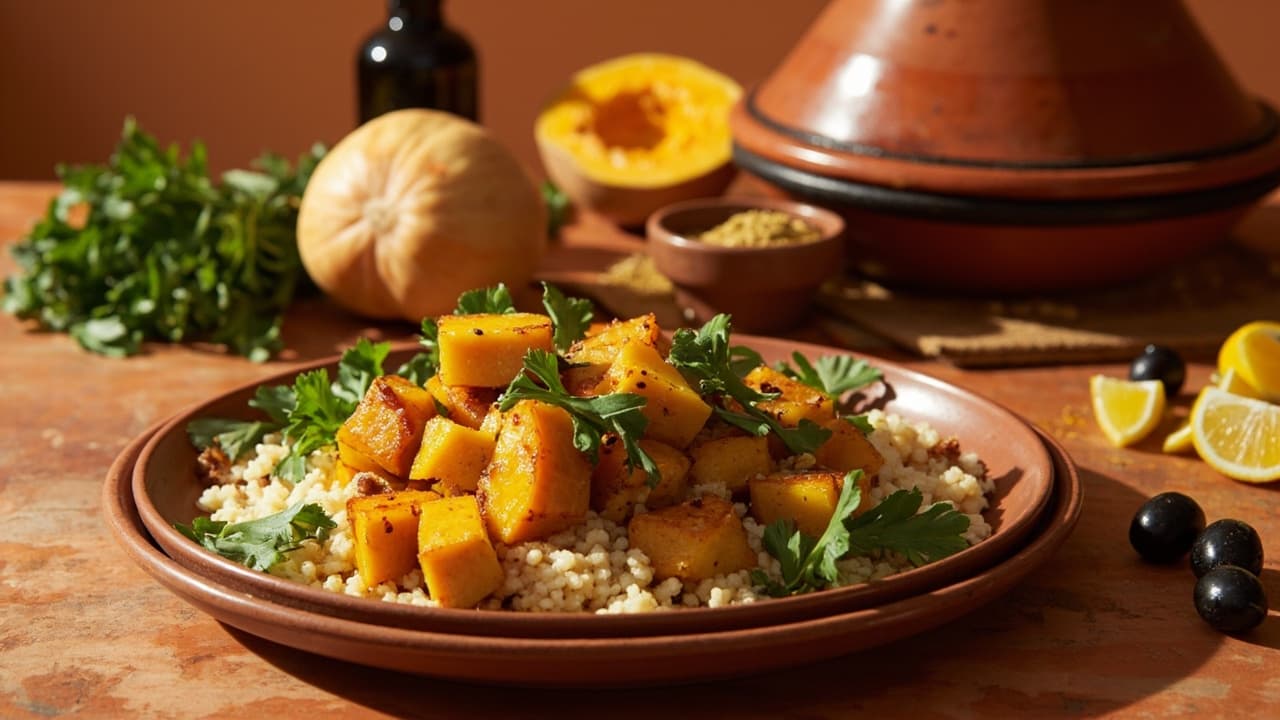
Saffron & Honey Roasted Butternut Squash Bites
Golden butternut squash cubes kissed with fragrant saffron and drizzled with honey, roasted until caramelized at the edges — a sweet-savory Moroccan-inspired bite.

Prep
10 min
Cook
28 min
Total
38 min
Method
1
Preheat your oven to 200°C (400°F). Line a large baking sheet with parchment paper.
2
Place cubed butternut squash on the prepared baking sheet. Drizzle with 2 tablespoons of olive oil, then season with salt and black pepper. Toss well to coat evenly, then spread in a single layer without crowding.
3
4
While the squash roasts, crumble the saffron threads into a small bowl. Pour 2 tablespoons of warm water (about 40°C/105°F) over the saffron. Let steep for 5 minutes — the liquid will turn a deep amber-gold and become fragrant.
5
6
Remove the baking sheet from the oven. Drizzle the saffron-honey glaze over the partially roasted squash. Toss gently to coat every piece.
7
8
Let the squash bites cool on the pan for 3 minutes — they will firm up slightly as the glaze sets.
9
Transfer to a serving platter, scatter the chopped cilantro over the top, and serve warm. These are delightful on their own or alongside grilled meats and couscous.
A
Nutri-Score
Excellent balance
A–E · lower is better · score -4
Calories
217
per serving
Source of fibre · 8g
Protein
2g
Carbs
34g
Fat
11g
Sat. fat
9g
Fiber
8g
Sugar
16g
Sodium
307mg
Dairy FreeGluten FreeLow CholesterolVeganAnti InflammatoryHeart HealthyHigh FiberLow FatLow Sodium
Nutri-Score is a general nutritional-balance guide, not medical or dietary advice.
A
Environmental impact
Very low impact
A–E · lower is better · includes estimates
kg CO2e
0.2
per serving
ACarbonAEU all-round· both agree
Water
0.4m³
Land
11Pt
Runoff
0.03g P
Butternut Squash, cubed into 2cm bites drives 54% of this recipe’s estimated footprint.
Carbon from Poore & Nemecek 2018; water, land & runoff from Agribalyse — modelled averages for comparing recipes, not a measurement of your groceries.
Flavor Profile
5
Umami
7
Sweet
4
Salty
2
Sour
3
Bitter
3
Spicy
Textures
ChewyCrispyTender
Aromas
CaramelFloralHerbalSweet
Kitchen Equipment
Primary Tool
OvenSafety & Storage
Cooking Temperature
Roast at 200°C (400°F). Use oven mitts when removing and returning hot baking sheet to oven to prevent burns.
Equipment Safety
Use parchment paper to line baking sheet; ensure it lies flat and does not overhang to prevent fire risk at high temperatures.
Handling
Bloom saffron in water at 40°C (105°F). This temperature is warm but not scalding—suitable for extracting saffron color and aroma without degrading active compounds.
Cross Contamination
Use clean utensils and cutting boards. If preparing alongside allergen-containing dishes, sanitize surfaces between tasks.
Storage
Store leftover roasted squash in airtight container in refrigerator within 2 hours. Consume within 3-4 days. Reheat to 75°C (165°F) before serving.
Butternut squash cubes should be cut uniformly (2cm) for even cooking. Undercooked squash poses no pathogen risk but may affect texture and palatability.
Pro Tips
Technique
Never rush the saffron bloom — those five minutes in warm water are where the magic happens. The threads must release their color and fragrance slowly, like a secret being shared. If you pour boiling water over them, you shock the delicate oils and lose that deep amber warmth that makes this dish sing.
Substitution
If fresh cilantro feels too bold for your palate, a handful of toasted pine nuts scattered over the finished bites adds the same textural contrast without the herb's bright notes — and it echoes the Moroccan tradition of adding crunch to sweet-savory dishes.
From the chef
In Fez, my mother would say that saffron is not merely a spice — it is sunlight captured in threads, and when you treat it with patience, it rewards you with magic. These golden butternut squash bites are my modern tribute to that wisdom: simple vegetables transformed by bloomed saffron and honey into something that tastes of Moroccan afternoons, where the air itself seems sweetened by the promise of a long, slow meal yet to come.
TagsVegetarianGluten FreeRoastedSweet SavorySaffronEasyQuickFinger FoodAppetizerVegetable
Source: generated · June 13, 2026