 Mediterranean
Medium · Hot
Mixed Vegetable Skewers with Olive Oil and Lemon
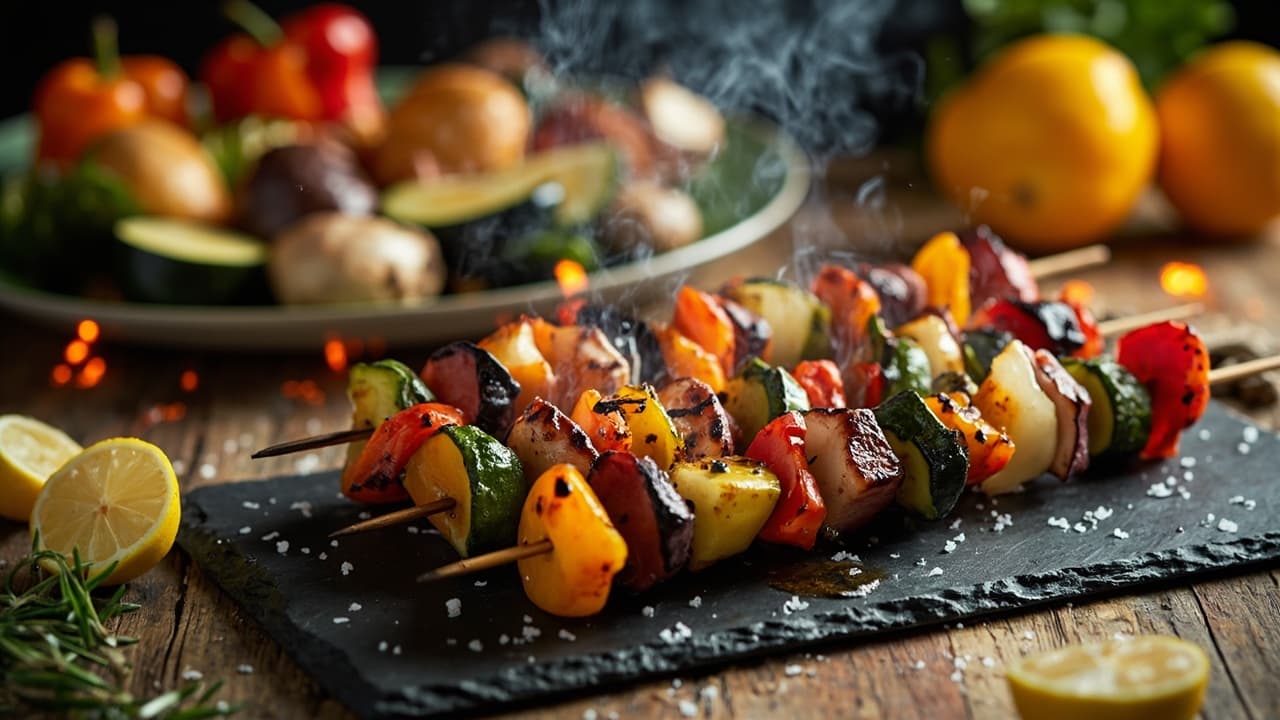
Char-blistered vegetable skewers kissed by flame, finished with bright lemon and garlic-infused olive oil. A live-fire side that holds its own next to any protein.

Prep
20 min
Cook
15 min
Rest
5 min
Total
40 min
Method
Prepare the Vegetables
1
Cut eggplant into half-inch slices.
Build the Marinade
Marinate and Thread
3
Toss all prepared vegetables in the marinade until evenly coated. Let them sit for 10 minutes to absorb flavor while you prepare your skewers. Thread vegetables onto metal skewers, alternating types for visual appeal and even cooking.
Fire and Grill
4
Prepare your grill for direct high heat. You want hot coals or a well-heated gas grill—the vegetables should sizzle the moment they hit the grate. Place skewers over the flame, spacing them apart.
5
6
Continue rotating every few minutes until all vegetables are tender when pierced with a skewer or knife tip, with consistent char across the surface. This should take 12-15 minutes total.
The Finish
7
Transfer grilled skewers to a serving platter. Finish with a final squeeze of lemon juice over the top, a thin drizzle of olive oil, and flaky salt if desired. Let them rest off the heat for 2 minutes before serving.
A
Nutri-Score
Excellent balance
A–E · lower is better · score -7
Calories
283
per serving
Source of protein · 10gLow sugar · 10gLow saturated fat · 3g
Protein
10g
Carbs
25g
Fat
19g
Sat. fat
3g
Fiber
8g
Sugar
10g
Sodium
769mg
Gluten FreeDairy FreeVeganVegetarianPlant ForwardWhole30 CompatibleHeart HealthyAnti InflammatoryDiabetes FriendlyWeight ManagementCancer PreventionDigestive HealthLow Sodium FriendlyLow CalorieHigh FiberPlant BasedMediterranean DietLow Saturated Fat
Nutri-Score is a general nutritional-balance guide, not medical or dietary advice.
A
Environmental impact
Very low impact
A–E · lower is better · includes estimates
kg CO2e
0.3
per serving
ACarbonAEU all-round· both agree
Water
1.2m³
Land
17Pt
Runoff
0.04g P
Olive Oil drives 32% of this recipe’s estimated footprint.
Carbon from Poore & Nemecek 2018; water, land & runoff from Agribalyse — modelled averages for comparing recipes, not a measurement of your groceries.
Flavor Profile
5
Umami
4
Sweet
5
Salty
4
Sour
2
Bitter
0
Spicy
Textures
CrispyTenderCharred
Aromas
SmokyHerbalCitrus
Kitchen Equipment
Primary Tool
GrillCounter FootprintMedium
Techniques
Safety & Storage
Cooking Temperature
Preheat grill to high heat (450-500°F) before placing skewers. Vegetables should sizzle immediately upon contact with the grate to achieve proper char rather than steaming.
Handling
Use long-handled tongs to turn skewers and avoid burns from flare-ups. Allow grill grates to cool completely before cleaning or handling.
Cross Contamination
If using metal skewers previously used for protein, thoroughly wash and sanitize before threading vegetables. Use separate cutting boards for raw vegetables.
Storage
Refrigerate leftover grilled vegetables within 2 hours in airtight containers. Consume within 3-4 days for best quality.
High Risk Population
{"classification":"high-risk-population","text":{"text":"Bell peppers and eggplant belong to the nightshade family. Individuals with nightshade sensitivity or solanine allergy should avoid this dish. Note: This recipe does not contain tomatoes or potatoes."}}
Equipment Safety
Soak wooden skewers in water for 30 minutes before grilling to prevent them from catching fire. Alternatively, use metal skewers for direct flame exposure.
Pro Tips
Technique
Let your grill breathe before you cook — I'm not talking about minutes, I'm watching the coal bed glow orange and steady. The moment vegetables hit, you want a violent sizzle, not a timid hiss. If it doesn't sound angry, it's not ready.
Equipment
Metal skewers conduct heat to the center and help vegetables cook evenly throughout. Soak wooden skewers for 30 minutes if you must use them, though they won't give you the same internal heat transfer.
Substitution
No fresh rosemary? Dried works — use half the quantity and crush it between your palms to wake up the oils before mixing into the marinade.
From the chef
Bell pepper, zucchini, eggplant, mushroom — everything that takes char well goes on the skewer. The key is a marinade of garlic, lemon, rosemary, and olive oil that soaks in for ten minutes before the heat hits, then high direct fire and the discipline not to move them too soon. You want blistered char marks on every side, not steamed-gray softness. Rotate every few minutes, work each face against the coals, and pull when the vegetables yield to a knife tip but still hold their shape. A final squeeze of lemon and a thin drizzle of oil at the end — the smoke is already there; the acid just makes it audible.
TagsGrilledVegetablesSkewersCharredLemonOlive OilGarlicRosemaryLive FireHealthyVegetarian
Source: generated · June 10, 2026