 Mediterranean
Medium · Hot
Lemon and Herb Oil Flatbread
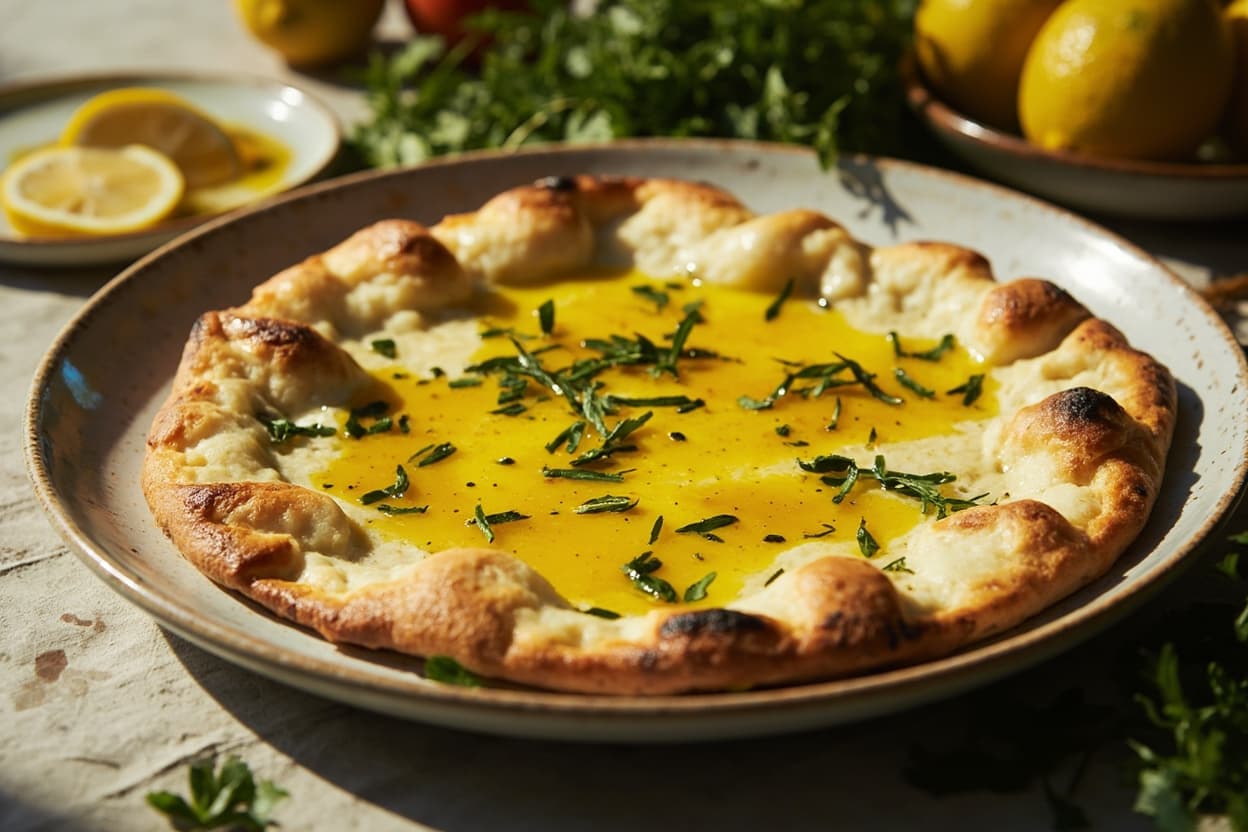
Soft, pillowy flatbreads brushed with a vibrant lemon and herb oil that seeps into every warm pocket. These are not a side dish — they are the vehicle, the mission, the point.

Prep
15 min
Cook
15 min
Rest
1h
Total
1h 30m
Method
Make the Dough
2
Pour in olive oil and warm water. Mix until a shaggy dough forms.
3
Knead the dough on a floured surface for 8-10 minutes until smooth and elastic.
4
Place dough in an oiled bowl, cover with a damp towel, and let rise in a warm spot for 1 hour until doubled.
Prepare the Lemon and Herb Oil
5
Zest the lemon directly into a small bowl.
6
Juice the lemon and strain out seeds.
Shape and Cook the Flatbreads
10
Punch down the risen dough and divide into 4 equal portions.
11
Roll each portion into a thin oval or circle, about 1/4 inch thick.
12
Heat a dry skillet or cast iron pan over high heat until very hot.
13
Cook each flatbread for 2-3 minutes per side until charred spots appear and the bread puffs up.
14
Transfer cooked flatbreads to a plate and immediately brush generously with the lemon and herb oil.
Serve
15
Stack flatbreads on a platter and drizzle with remaining herb oil.
16
Serve warm and let everyone tear and drag through the remaining oil on the plate. This is not optional.
A
Nutri-Score
Excellent balance
A–E · lower is better · score -1
Calories
451
per serving
Source of fibre · 8gLow sugar · 2gLow saturated fat · 1g
Protein
12g
Carbs
80g
Fat
9g
Sat. fat
1g
Fiber
8g
Sugar
2g
Sodium
897mg
MediterraneanLow Sodium OptionDairy FreeEgg FreeNut FreeHeart HealthyAnti InflammatoryDiabetes FriendlyPlant ForwardBalanced MacrosWhole GrainsHealthy FatsHerb Rich
Nutri-Score is a general nutritional-balance guide, not medical or dietary advice.
A
Environmental impact
Very low impact
A–E · lower is better · includes estimates
kg CO2e
0.3
per serving
ACarbon
All-Purpose Flour drives 58% of this recipe’s estimated footprint.
Carbon from Poore & Nemecek 2018; water, land & runoff from Agribalyse — modelled averages for comparing recipes, not a measurement of your groceries.
Flavor Profile
5
Umami
3
Sweet
4
Salty
5
Sour
2
Bitter
0
Spicy
Textures
CrispyTenderPillowy
Aromas
HerbalCitrusBreadySmoky
Kitchen Equipment
Primary Tool
Cast Iron PanSkilletCast Iron PanLarge BowlMixing BowlRolling PinZesterJuicerChef KnifeCutting BoardPastry BrushWhiskDamp TowelFlour For Dusting
Counter FootprintMedium
Techniques
Safety & Storage
Allergen Warning
This recipe contains wheat/gluten from all-purpose flour. Ensure no cross-contact with allergen-free items during preparation and serving.
Storage
Unused lemon and herb oil should be refrigerated. The herb oil is prepared and held at room temperature during cooking, but any remaining oil must be refrigerated within 2 hours to prevent bacterial growth.
Handling
The dough rises at room temperature for 1 hour. This is standard bread-making practice but ensure the bowl is covered and the warm spot is not overly warm (above 80°F) to prevent rapid spoilage.
Equipment Safety
Cast iron or skillet reaches very high temperatures for proper charring. Use dry oven mitts or towel, place hot pan on heat-safe surface, and allow cookware to cool before washing.
High Risk Population
The room-temperature herb oil and yeast-risen dough may pose foodborne illness risk for immunocompromised individuals, pregnant individuals, elderly, or young children. Consider refrigerating the herb oil if serving these populations.
Cross Contamination
Use separate cutting boards for fresh herbs and bread. Wash hands, utensils, and surfaces thoroughly after handling raw dough and before handling ready-to-eat items.
Garlic Safety
The tip recommends adding a smashed garlic clove to the herb oil held at room temperature. Garlic-in-oil mixtures held at room temperature present a risk for botulism (Clostridium botulinum). If garlic is added, the herb oil must be refrigerated immediately after cooking and consumed within 1 week, or frozen for longer storage.
Pro Tips
Technique
When you roll these flatbreads, resist the urge to make them thick. You want that char and puff, and that only happens when they're thin enough to blister quickly — about 1/4 inch. Thick bread is sad bread, and sad bread cannot hold sauce properly.
Flavor Boost
This herb oil is not a garnish — it is the point. Add a smashed garlic clove to the lemon oil while it sits at room temperature. The garlic will gently infuse and give you that sharp, emulsified quality that makes you close your eyes when you drag the bread through. Do not skip this.
Equipment
Get your skillet screaming hot before you lay the dough down. A properly preheated cast iron or heavy pan is non-negotiable — you need that aggressive heat to create the charred bubbles and puff that make these irresistible. If your pan isn't hot enough, you'll get pale, soft flatbreads and nobody wants that.
Substitution
Out of rosemary? Oregano works beautifully here, though it will lean more Mediterranean than Provençal. You can also swap half the basil for mint if you want something brighter and more unexpected. The lemon, however, is sacred — do not substitute.
From the chef
Look, I am not making you flatbreads so you can eat them plain. These pillowy rounds exist for one reason and one reason only — to be the vehicle for that vibrant lemon and herb oil that pools in every warm pocket and brown spot. In my grandmother's kitchen, we would have made four flatbreads and enough herb oil for eight. There is no such thing as too much. There is only not enough bread to drag through the bowl. That is the only mistake I cannot forgive.
TagsLemon HerbOlive OilYeastedMediterraneanFlatbread
AllergensWheat
Source: generated · June 9, 2026