South America
Chifa (Peruvian-Chinese)
Also: Cocina Chifa, Peruvian-Chinese cuisine, comida chifa
Lima's irreplaceable Cantonese-Andean hybrid — stir-fried, sauced, and spiced in ways neither tradition would have imagined alone.
Chifa is the culinary tradition that arose from Cantonese immigrants (called 'tusán' in Peru) who arrived from the 1850s onward as contract laborers and later settled in Lima and Callao. The word 'chifa' derives from the Cantonese 吃飯 (chī fàn, 'eat rice') and now names both the cuisine and the genre of restaurant. Chifa absorbs wok technique, soy sauce, and Cantonese rice culture into a Peruvian context saturated with ají amarillo, culantro, and Andean ingredients. The result is so deeply embedded in Lima's food culture that dishes like lomo saltado and arroz chaufa are considered quintessentially Peruvian.
The flavour base
Wok hei (breath of the wok) meets Peruvian sazón: soy sauce, oyster sauce, and ginger anchor savory depth, while ají amarillo provides heat and color, culantro adds herbal sharpness, and a quick high-heat stir-fry integrates everything into a unified sauce.
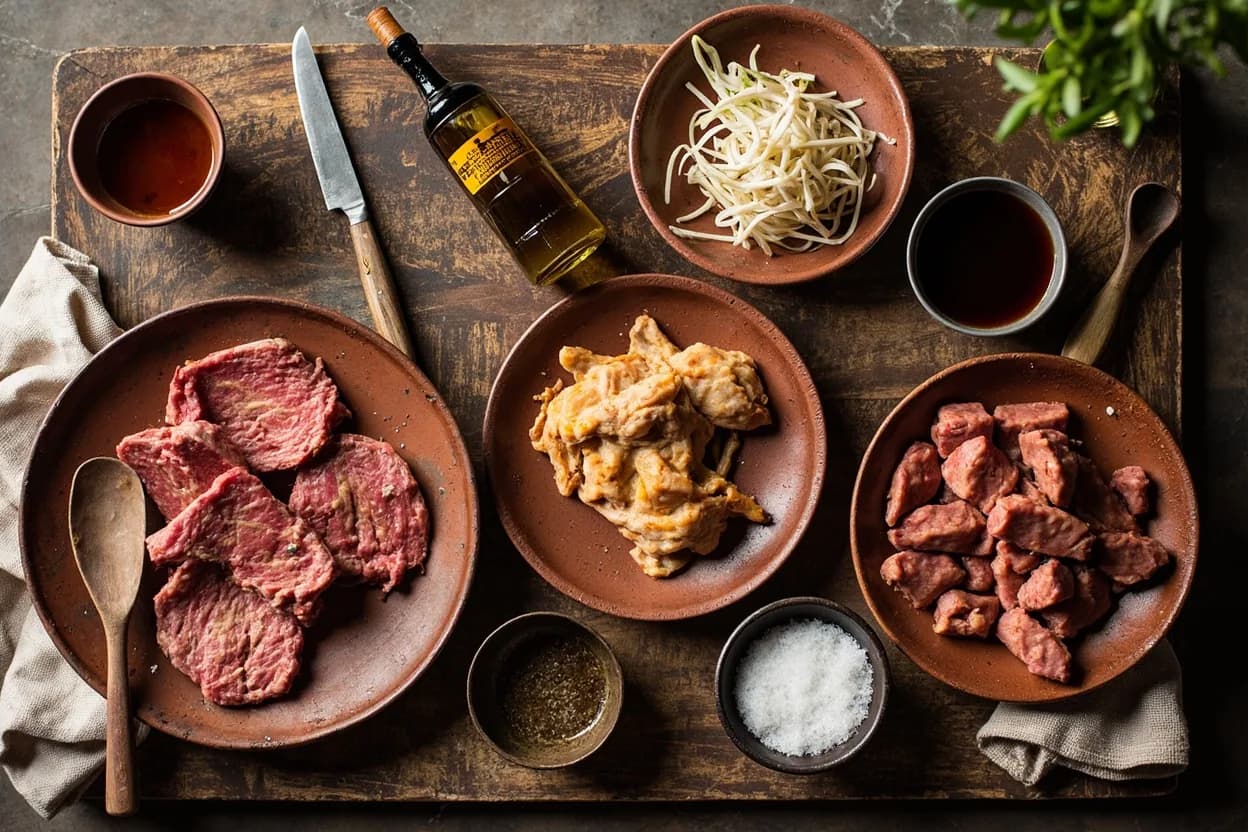
Pantry staples
Key ingredients
Signature techniques
Signature dishes
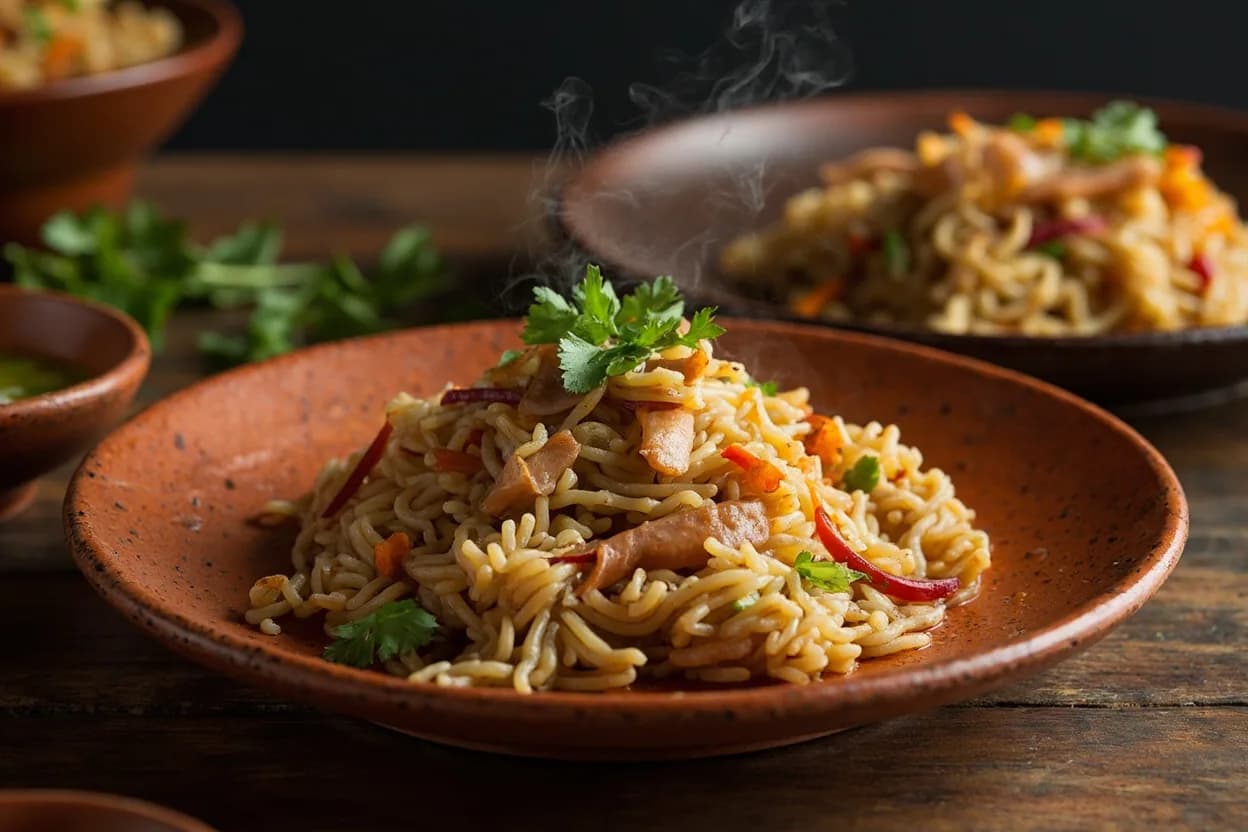
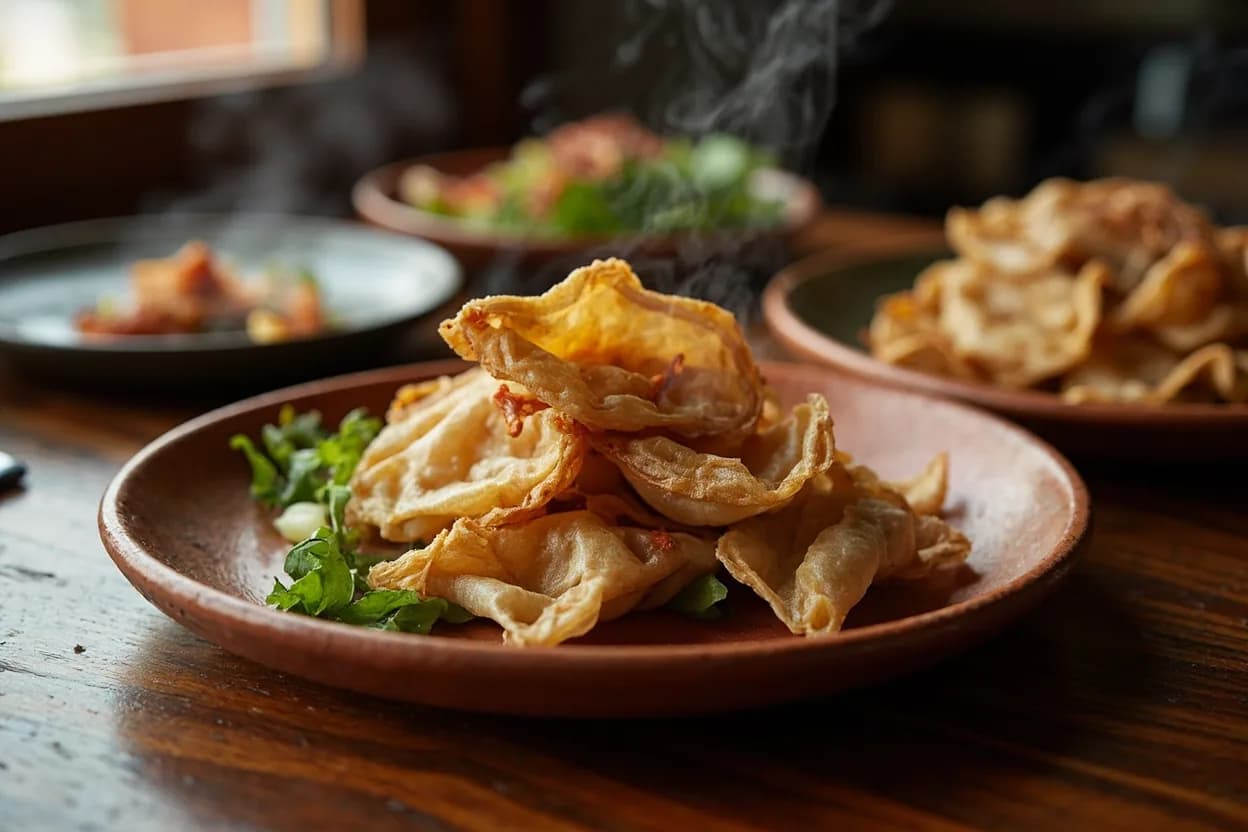
Chifa (Peruvian-Chinese) on the table
At the table
Chifa restaurants (chifas) operate as casual to mid-range shared-table dining. Meals typically begin with fried wontons and soup, move into rice or noodle main dishes with protein stir-fries, and are ordered family-style. A chifa lunch is a standard Lima midday meal for millions of Peruvians across all social classes.
History & context
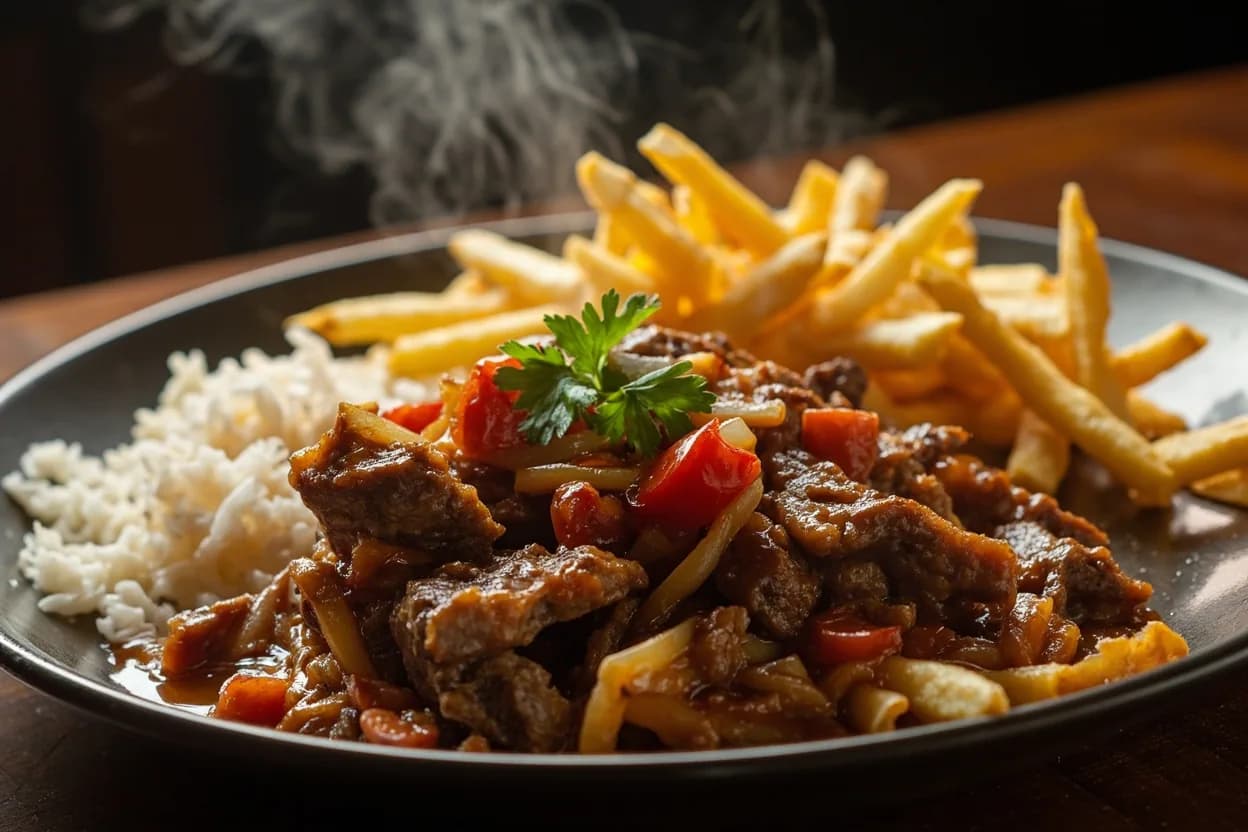
Chinese contract laborers (coolies) began arriving in Peru in 1849, initially bound to coastal sugar and cotton haciendas and guano mines under brutal conditions. After indenture, many settled in Lima's Barrio Chino (Chinatown) around the Calle Capón — still the oldest Chinatown in South America. Cantonese cooks adapted their techniques to local markets: tomatoes replaced water chestnuts, ají amarillo stood in for chili bean paste, Peruvian beef cuts fed the wok. By the 20th century chifa restaurants had spread beyond the Chinatown district to every Lima neighborhood, and chifa cooking had entered home kitchens. Lomo saltado — stir-fried beef with tomatoes, onions, ají, and French fries served over rice — is now considered a pillar of Peruvian national cuisine.
Regional variations
- Lima / Barrio Chino
The historic center: large traditional chifa restaurants with extensive menus including dim sum-adjacent items and specialty Cantonese preparations.
- Provincial chifa
In cities like Arequipa, Cusco, and Trujillo, chifa menus are shorter and further adapted to local produce and tastes, with spicier preparations and local potato varieties incorporated.
- Chifa marino (coastal)
Along the coast, chifa emphasizes seafood: arroz chaufa de mariscos, stir-fried crab, and wonton soups built on a shrimp-bisque base.
Related cuisines
Peru's parallel Japanese-immigrant fusion; both traditions reshaped around Lima's seafood and chili abundance.
Host culture that absorbed chifa techniques; lomo saltado is simultaneously a criollo and chifa dish.
Parent tradition; wok technique, soy/oyster sauce, and rice-centered meals are direct inheritances.
- Chifa (global)
Related but distinct Chinese-immigrant cuisines in Cuba, Jamaica, and Panama follow a similar immigrant-adaptation logic.
Canonical recipes
The dishes that define Chifa (Peruvian-Chinese), documented in the Canon.
References
- 1.Chifa: A Peruvian-Chinese Cookbook — Von Diaz (2020)
- 2.Perú: The Cookbook — Gastón Acurio (2015)
- 3.The Oxford Companion to Food — Alan Davidson (3rd ed., 2014)
- 4.El Barrio Chino de Lima — Humberto Rodríguez Pastor (1998)
Confidence: high
Notes
Lomo saltado as national symbol
Lomo saltado is arguably the most emblematic example of chifa's cultural assimilation: beef strips and vegetables tossed in a wok with soy sauce and ají amarillo, then plated over white rice and alongside French fries. The fusion of French fries (a Spanish-colonial influence), wok technique, soy sauce, and Peruvian chili has become so normalized that most Peruvians do not register it as 'foreign' at all.
Tusán identity
The descendants of Chinese immigrants in Peru are called tusán (土生, native-born). Tusán identity is distinct from recent Chinese immigration; tusán families often speak Spanish as their first language, maintain Cantonese culinary traditions as family heritage, and regard chifa as their own cuisine rather than a foreign one.