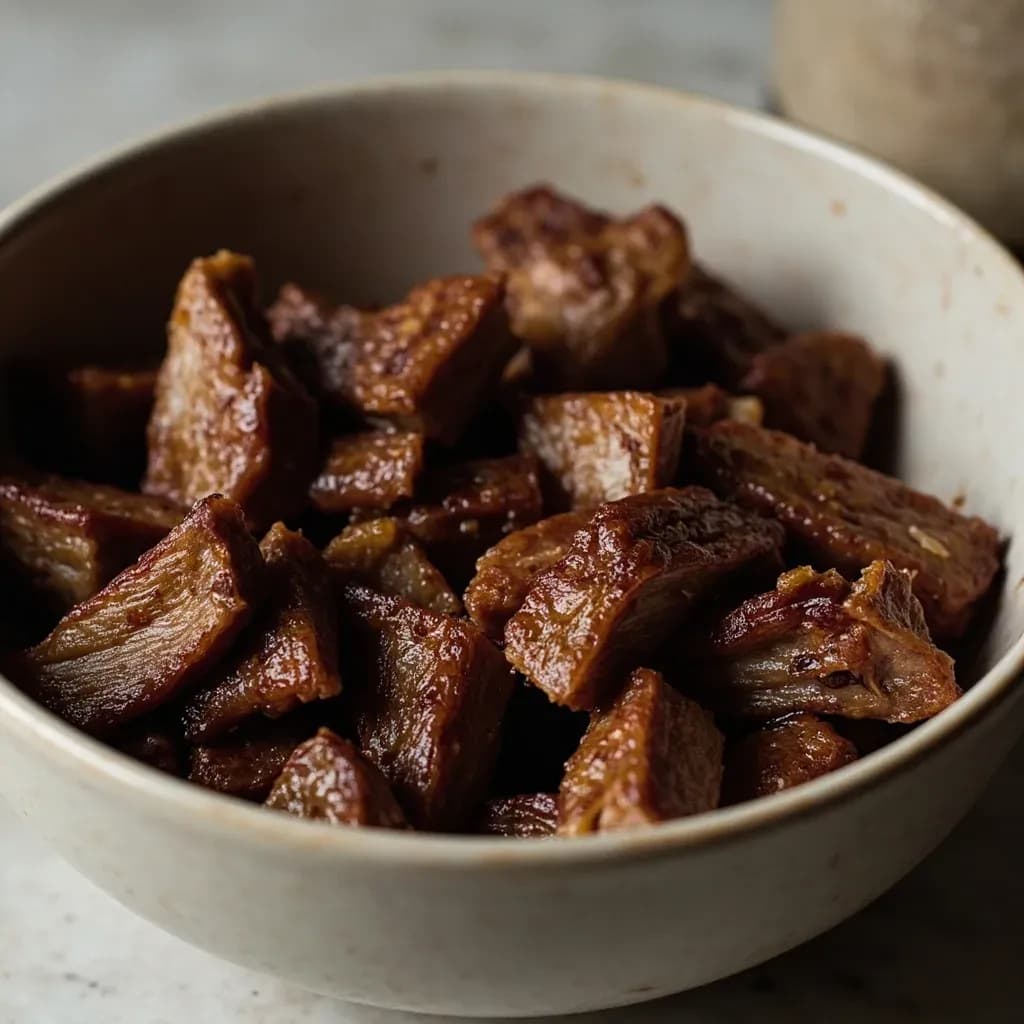
Proteins
Agouti (Grasscutter)
Wild rodent game meat from West Africa and the Caribbean, prized smoked or in spicy pepper soups.
Agouti, also called grasscutter or cane rat, is a large rodent whose meat is a sought-after bush meat across West Africa, the Caribbean, and parts of South America. It is typically smoked and then stewed in richly spiced pepper soups, curries, and braises, where its lean, dark, gamey flesh absorbs the seasoning. It is considered a delicacy in many of these regions.
Agouti and grasscutter are wild rodent game meats from two distinct but related animal families, both prized in their native regions for centuries. In West and Central Africa, 'grasscutter' (Thryonomys swinderianus) is the most economically important bushmeat species, while 'agouti proper' (Dasyprocta spp.) refers to the Central and South American relatives introduced during the colonial era. Despite the nomenclature confusion in English-language sources, both animals share a remarkably similar culinary profile: lean, firm, fine-grained meat with an intensely gamey, slightly sweet flavor darker than rabbit. The grasscutter dominates West African cuisine, particularly in Nigeria and Ghana where it is considered a delicacy with supposed restorative properties, while Caribbean and Guianese cooks prepare agouti much as they would rabbit, often in French-influenced preparations. Both animals reward bold seasoning and low-and-slow cooking methods that compensate for their leanness, making them versatile and sustainable protein sources for cooks willing to seek them out.
- Measured in
- g
- Storage
- Freezer
Types & varieties
Thryonomys swinderianus; largest species, primary source in West Africa; up to 8 kg; the grasscutter of Nigerian and Ghanaian cuisine
Thryonomys gregorianus; smaller (up to 4 kg); found in East and Central Africa; less commercially significant
Dasyprocta punctata; found in Mexico through Panama; introduced to Caribbean islands; common in Dominican Republic and Haiti cuisine
Dasyprocta leporina; native to northeastern South America; introduced to Caribbean; significant in French Caribbean and Guianas
Dasyprocta cristata; found in Brazil; local consumption in Amazonian regions
Grasscutter vs. Agouti: Clarifying the Confusion
English-language culinary sources frequently conflate these two animals, but they are taxonomically distinct and geographically separate. Grasscutter (Thryonomys) are large rodents native to African grasslands, reaching up to 8 kg and forming the backbone of West African bushmeat cuisine. Agouti proper (Dasyprocta) are smaller American rodents introduced to the Caribbean during the colonial period. Both belong to the Hystricomorpha suborder, explaining their similar eating qualities, but they should not be considered interchangeable terms. When sourcing either, clarify with your supplier whether you are working with African grasscutter or Caribbean agouti, as sizes and available cuts may differ.
- Grasscutter: African, larger, primary for West African cooking
- Agouti: Caribbean/South American, smaller, often prepared like rabbit
- Both have similar culinary properties and can substitute for each other
Preparation: From Whole Carcass to Cookpot
Whether working with a whole grasscutter or a smaller agouti, proper preparation is essential. The skin must be thoroughly cleaned of all hair—singe over an open flame or use a blowtorch, then scrub with coarse salt to remove any remaining residue. Rinse well and pat dry. Like rabbit, the entire carcass yields edible meat; do not discard the darker leg and shoulder meat, which contains the most intense flavor. For pepper soup preparations, the meat is typically jointed into serving pieces; for grilling, the animal may be split and splayed flat. Soaking in salted water or buttermilk for 2–4 hours before cooking reduces gamey intensity and adds moisture to the lean flesh.
- Singe all hair off over open flame or with torch; scrub with coarse salt
- Use the entire carcass; dark meat is the most flavorful portion
- Soak in salted water or buttermilk before cooking to tenderize
Common uses
Tips & pitfalls
- Singe thoroughly over open flame or use a blowtorch to remove all hair; scrub skin with coarse salt afterward
- Soak in salted water or buttermilk for 2–4 hours before cooking to reduce gamey intensity and add moisture
- Marinate overnight in an acidic medium (lemon or lime juice, or wine) to tenderize the lean meat
- Cook low and slow—high heat rapidly dries out this lean meat; braising at 150–160°C is ideal
- Add fat during cooking—palm oil, coconut milk, or bacon fat—to compensate for the meat's leanness
- Smoke at low temperature (60–80°C) for several hours; mesquite and fruitwood pair well
- Rest meat after cooking for 10–15 minutes to allow juices to redistribute
- Common mistake: overcooking—the lean meat becomes dry and tough; use a thermometer and remove from heat at 65–70°C internal temperature
Nutrition
Nutrition
No USDA FoodData Central match for Agouti (Grasscutter) yet. We surface a per-100 g profile once a generic whole-food entry is matched and verified.
In the shops
Matched grocery products
No matched grocery products for Agouti (Grasscutter) yet.
Good to know
- Scientific name
- Thryonomys swinderianus (grasscutter); Dasyprocta spp. (agouti)
- Flavor profile
- Rich, gamey, slightly sweet; darker and more intense than rabbit
- Texture
- Lean, firm, fine-grained when cooked properly; dries out easily if overcooked
- Protein content
- 21–23 g per 100 g raw meat (comparable to chicken breast)
- Fat content
- 3–5 g per 100 g (very lean; add fat during cooking)
- Typical yield
- 50–55% edible meat after dressing
- Weight range
- Grasscutter: 4–8 kg; Agouti: 1–3 kg
- Traditional preservation
- Smoking over wood; refrigerate fresh meat 1–2 days, freeze up to 6 months
Substitutes
- Rabbit — Closest texture and cooking behavior; less gamey; increase seasoning and extend marinating time when substituting
- Wild boar — Similar gamey depth and richness; higher fat content means adjust cooking time and temperature downward
- Squirrel — Very similar flavor, texture, and size; excellent direct substitute in any preparation
- Guinea pig — Comparable flavor intensity and lean quality; similar cooking methods from Andean cuisine
- Veal or young goat — Milder flavor; useful in stews and braises when gamey notes are not desired; increase seasoning
Pairs with
Also called
Grasscutter (Agouti) · Agouti (Cane Rat / Bush Meat) · Cane Rat · Grasscutter
Related
Egg
The kitchen's everything ingredient — bind, leaven, enrich, or fry
Chicken Breast
Lean, quick-cooking white meat for everyday dinners

Ground Beef
Versatile minced beef for burgers, ragù, tacos, and meatballs
Pork Loin
Lean, tender roasting cut that stays juicy with care
Salmon
Rich, rosy fish that roasts, grills, or cures beautifully

Egg White
Pure protein that whips to airy peaks for meringue and more
Egg Yolk
Rich, golden yolk for custards, mayonnaise, and pasta

Quail Egg
Tiny, speckled eggs for garnishing and elegant bites