Proteins
Banga Mary
A soft white river-and-sea fish from the Guianas, fried or stewed in pepperpot dishes.
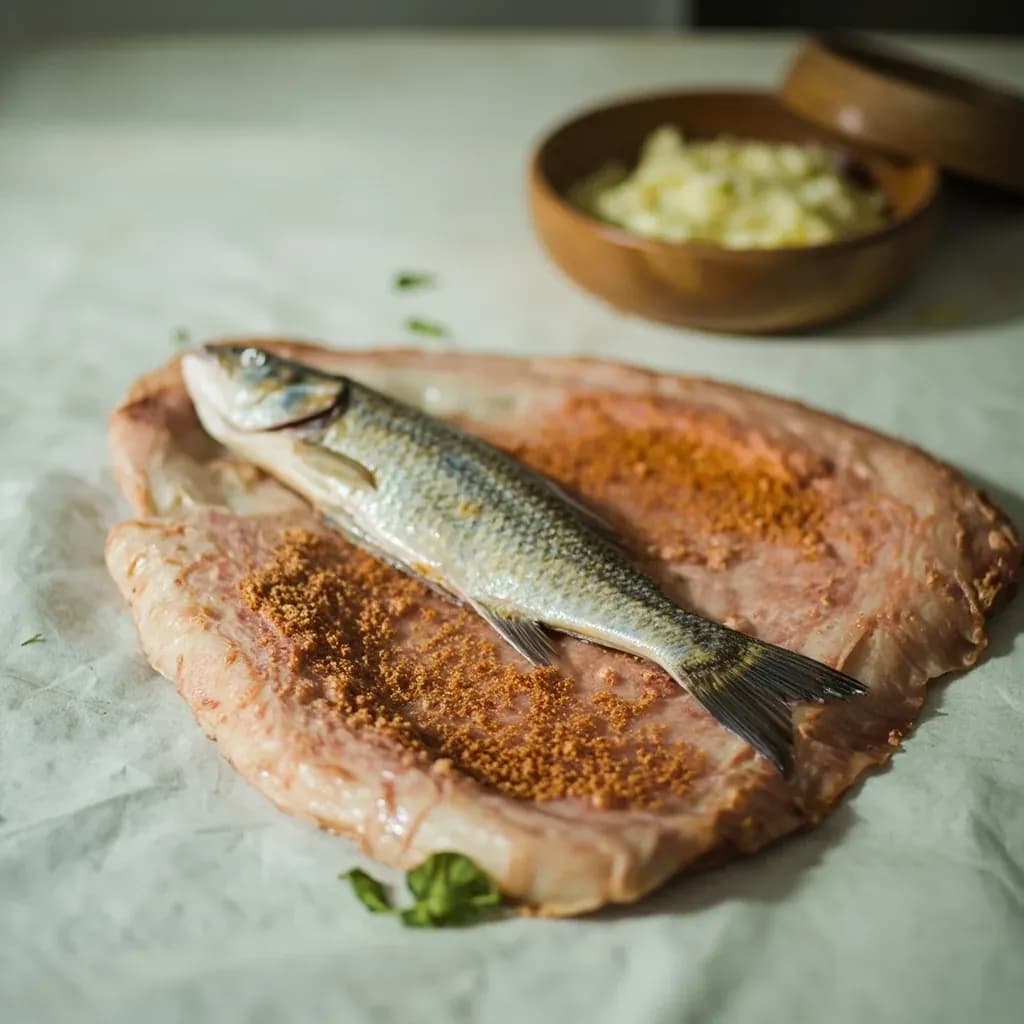
Banga Mary is a small whitefish (a sea catfish/croaker relative) common to the coastal waters and rivers of Guyana and Suriname. It has tender, mild flesh that is typically scaled, seasoned, and pan-fried whole, or simmered in curries and pepper soups. It is an everyday market fish in Guyanese home cooking.
Banga Mary is a small soft-fleshed white fish native to the rivers and coastal estuaries of the Guianas—Guyana, Suriname, and French Guiana. While the exact species varies by location and local naming conventions, the fish shares a consistent character: delicate, mild, and slightly sweet flesh that flakes easily when cooked. This neutrality is not a culinary limitation but rather the defining feature that makes Banga Mary so central to the region's cooking. It functions as a canvas for the bold seasonings that define Guianas cuisine—cassareep, wiri wiri peppers, coconut milk, and cassia—absorbing these flavors while providing clean protein and body to stews and sauces.
In Guyana, Banga Mary appears most frequently in pepperpot, the national dish built on cassareep, and in related stews throughout the coastal and riverine communities. Suriname and French Guiana employ the same fish (under various community-specific names reflecting Creole, Hindustani, and Javanese traditions) in coconut-based curries and court-bouillon preparations. Fresh Banga Mary is a fixture of everyday markets in the Guianas; diaspora communities in North America and Europe may find it frozen, salted, or dried in specialty markets. Freshness is paramount—once past its prime, the flesh turns mushy and develops off-flavors that no amount of seasoning can remedy. The fine, small bones are easily managed but worth noting when cooking for children or elderly diners.
- Measured in
- piece
- Storage
- Fridge
Allergens
Types & varieties
Sold whole or filleted; most common form in Guianas markets; use within 24 hours for best quality
Sun-dried and salted; deeper, concentrated flavor; must be soaked 2+ hours before cooking to remove excess salt and rehydrate
Hot-smoked; adds smoky depth to pepperpot and related stews; excellent for flavor layering
The Fish's Role in Guianas Cuisine
Banga Mary occupies a unique position in the culinary traditions of the Guianas. Unlike prized center-of-the-plate fishes that are celebrated for their own flavor, Banga Mary is fundamentally a vehicle—a neutral medium through which the region's characteristic bold seasonings express themselves fully. In pepperpot, the fish absorbs the deep, molasses-like cassareep and the heat of wiri wiri peppers while contributing body and protein to the sauce. In coconut milk preparations, it takes on tropical sweetness while lending its own subtle sweetness back to the dish. This reciprocal relationship defines the fish's value: it asks to be transformed rather than showcased.
- In Creole cooking, Banga Mary often anchors simple weeknight stews with onions, garlic, and whatever hot peppers are at hand
- Hindustani communities may prepare it in more spiced, turmeric-forward preparations
- Javanese-influenced Surinamese cooking sometimes uses it in coconut-based dishes with galangal and lemongrass
- The fish appears in fried preparations throughout the region, where its neutral character balances starchier accompaniments like plantain and cassava
Buying and Storing
When purchasing fresh Banga Mary, look for clear, bright eyes and a fresh sea smell—not fishy or ammonia-like. The gills should be bright red or pink, and the flesh should be firm and bounce back when pressed. Avoid fish with sunken eyes, dull flesh, or any slimy coating. Because the flesh is soft and perishable, plan to cook fresh Banga Mary within 24 hours of purchase. If that's not possible, wrap tightly in plastic and freeze immediately; properly stored frozen fish maintains good quality for up to three months. Dried and salted Banga Mary keeps indefinitely in a cool, dry place but must be rehydrated before use.
- Fresh Banga Mary deteriorates faster than firmer fish species; treat it as a same-day or next-day ingredient
- Frozen Banga Mary is fine for stews and curries but may be less suited to whole-fry presentations where texture is paramount
- When buying salted/dried fish, check for even drying and absence of moisture—the fish should be firm and slightly translucent, not soft or discolored
Common uses
Tips & pitfalls
- Score the flesh deeply before frying whole, cutting almost to the bone at 2–3 cm intervals; this allows heat to penetrate evenly and prevents the soft flesh from staying raw directly against the spine
- Add Banga Mary to stews only in the last 15–20 minutes of cooking; longer exposure breaks the flesh apart and creates a muddy, overcooked texture
- Soak salted and dried Banga Mary in cold water for at least 2 hours before cooking, changing the water once halfway through; this removes excess salt and rehydrates the flesh
- Use fresh Banga Mary immediately or freeze the same day; once past its prime, the flesh becomes mushy and develops off-flavors that no seasoning can mask
- Remove the small, fine bones before cooking if serving to children, elderly diners, or anyone concerned about bone hazards; alternatively, debone carefully after cooking while the flesh is still warm and yielding
- Avoid overcooking in coconut milk preparations; the mild flesh can disappear into the sauce if cooked beyond the point of flakiness
- When substituting frozen Banga Mary for fresh in stews, thaw it slowly in the refrigerator overnight to minimize textural loss
- If using smoked Banga Mary, add it later in cooking than you would fresh—the smoked flavor intensifies with extended cooking and can overwhelm delicate dishes
Nutrition
Nutrition
No USDA FoodData Central match for Banga Mary yet. We surface a per-100 g profile once a generic whole-food entry is matched and verified.
In the shops
Matched grocery products
No matched grocery products for Banga Mary yet.
Good to know
- Origin
- Rivers and coastal estuaries of the Guianas (Guyana, Suriname, French Guiana)
- Species type
- Small soft-fleshed river and estuary fish; exact species varies by location and local naming conventions
- Flesh color
- White; soft, flaky texture when cooked
- Availability
- Fresh in Guianas markets; frozen, salted, or dried in diaspora specialty markets
- Typical size
- Small to medium, usually under 30 cm
- Flavor profile
- Mild, slightly sweet, neutral; readily absorbs bold accompanying seasonings
Substitutes
- Haddock — Similar mild white flesh and flaky texture; excellent substitute when fresh Banga Mary is unavailable, particularly in stewed preparations
- Tilapia — Comparable soft texture and neutral flavor; widely available frozen, making it a practical substitute for diaspora cooks
- Catfish (US) — Similar texture and river-fish character; works well in stewed and sauced preparations; choose farmed catfish for consistent quality and mild flavor
- Cod — Firm white flesh; suitable for fried applications but less appropriate for delicate stews where Banga Mary's soft texture is an asset
Pairs with
Also called
Banga Mary (Local Fish) · Bangamary
Related
Egg
The kitchen's everything ingredient — bind, leaven, enrich, or fry
Chicken Breast
Lean, quick-cooking white meat for everyday dinners

Ground Beef
Versatile minced beef for burgers, ragù, tacos, and meatballs
Pork Loin
Lean, tender roasting cut that stays juicy with care
Salmon
Rich, rosy fish that roasts, grills, or cures beautifully

Egg White
Pure protein that whips to airy peaks for meringue and more
Egg Yolk
Rich, golden yolk for custards, mayonnaise, and pasta

Quail Egg
Tiny, speckled eggs for garnishing and elegant bites