Natural form
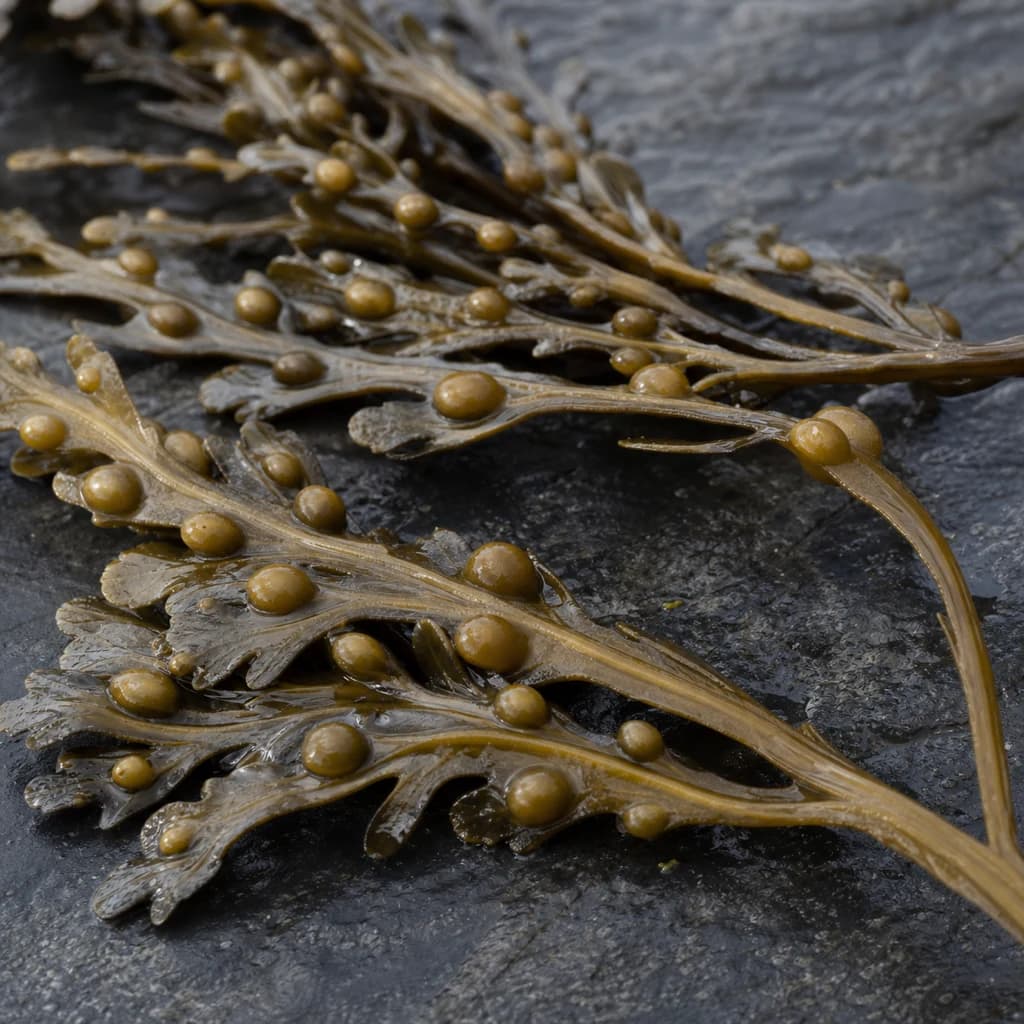
Fresh bladderwrack washed ashore, showing distinctive paired air bladders along olive-brown fronds.
Establishes the plant's unmistakable field identity — the paired bladders and olive-brown color are its defining visual signature.
Produce
Bladderwrack
Brown coastal seaweed used as a briny, mineral-rich edible and seasoning.
Bladderwrack is a brown seaweed with distinctive air bladders found on rocky Atlantic shores, used as an edible sea vegetable and seasoning. It is added to broths, stews, and seafood dishes for a salty, mineral, oceanic flavor, and is also dried for teas and supplements. It is naturally high in iodine and trace minerals.
Bladderwrack (Fucus vesiculosus) is a brown seaweed native to the cold, rocky intertidal zones of the North Atlantic, from the coasts of Britain and Ireland to Atlantic Canada and the northeastern United States. It is one of the most readily identifiable seaweeds, distinguished by paired air bladders running along both sides of its midrib—structures that keep the frond buoyant in shifting tides. The fronds are olive-brown to dark green when fresh, becoming dark brown when dried, with a leathery texture that softens considerably upon rehydration.
In the kitchen, bladderwrack functions as a mineral-rich seasoning and stock base rather than a primary ingredient. Its flavor is assertive and marine-forward: high in iodine and glutamic acid, it delivers a pronounced briny, umami depth that can dominate a dish if used carelessly. Historically, coastal communities from Ireland to Scandinavia incorporated bladderwrack into breads, teas, and preserved foods both for its nutritional density and its practical properties—its fiber was believed to aid digestion of beans and legumes. Today, it appears most often in seafood stocks, chowders, and as a dried, powdered seasoning, valued for the same mineral complexity that made it a dietary staple of North Atlantic fishing villages. The air bladders are fully edible and contribute a pleasant, slightly springy texture when the frond is crushed before cooking.
- Measured in
- g
- Storage
- Pantry
Types & varieties
The most widely harvested species; distinguished by paired air bladders along the midrib. Standard culinary variety.
Twisted fronds without air bladders; similar flavor profile, slightly more tender texture. Found higher on the shore.
Serrated edges, no air bladders; more tender fronds. Used similarly to common bladderwrack but less common commercially.
Technically a different genus; single large air bladder per frond. Widely used in animal feeds and supplements; less common in fine cooking.
Sourcing and Quality
Fresh bladderwrack is highly perishable and rarely found far from coastal areas. Most home cooks will encounter it in dried form—whole fronds, flaked, or ground into powder. When purchasing dried bladderwrack, examine the fronds carefully: discard any showing discoloration, dark spots, or a rancid, overly fishy odor, which indicates improper drying or age. Quality dried bladderwrack should be brittle, dry to the touch, and have a clean, sea-air scent without strong iodine sharpness. If purchasing fresh, look for firm, pliable fronds with a fresh oceanic smell and no visible sliminess or signs of decomposition.
- Buy from reputable suppliers who specify harvest location—iodine content varies geographically
- Avoid dried bladderwrack with any visible moisture or clumping, which invites mold during storage
- Dried whole fronds give you more control over quantity than pre-ground powder
Iodine Sensitivity and Dietary Considerations
Bladderwrack is one of the richest dietary sources of iodine available, with approximately 2–4 mg per gram of dried weight. Iodine is essential for thyroid function, but excessive intake can cause thyroid dysfunction. The amounts typically used in cooking—small quantities of dried frond in stocks or as a seasoning—are generally considered safe for most people. However, those with thyroid conditions, pregnant or nursing women, and anyone consuming seaweed regularly should consult a healthcare provider about appropriate intake levels. Note that iodine content varies dramatically by harvest location, season, and water temperature, making standardized dosing impossible. Concentrated powders or extracts carry significantly higher risk than whole dried frond used sparingly.
- Start with very small amounts when cooking with bladderwrack for the first time
- If using bladderwrack therapeutically, work with a healthcare provider to monitor thyroid function
- Children and pregnant women should consume bladderwrack only under professional guidance
Common uses
Tips & pitfalls
- Always rinse fresh bladderwrack thoroughly in several changes of cold salted water to remove sand, small crustaceans, and debris before use
- Inspect dried bladderwrack carefully before cooking—discard any fronds with discoloration, mold, or a rancid smell indicating improper drying or age
- Start with small quantities when cooking with bladderwrack for the first time; its iodine flavor can dominate a dish if overused
- Do not boil dried bladderwrack vigorously—simmer gently to extract flavor and minerals without creating an excessively fishy, iodine-forward taste
- Crush or break the air bladders before rehydrating for more even water absorption and textural consistency
- Store dried bladderwrack in airtight glass jars with oxygen absorbers if available; plastic bags allow moisture ingress that leads to mold
- For maximum mineral extraction, simmer bladderwrack in liquid for 30–60 minutes when using it for its nutritional properties
- Toast dried fronds briefly in a dry pan over medium heat before using—this mellows the iodine and adds a subtle nutty depth to the finished dish
- Bladderwrack intensifies dramatically during cooking unlike fresh herbs; start with half the amount you think a dish needs, then adjust
- For bladderwrack tea, steep 5–8 minutes maximum—longer steeping extracts excessive iodine leading to a sharp, metallic taste
Nutrition
Nutrition
No USDA FoodData Central match for Bladderwrack yet. We surface a per-100 g profile once a generic whole-food entry is matched and verified.
In the shops
Matched grocery products
No matched grocery products for Bladderwrack yet.
Good to know
- Scientific Name
- Fucus vesiculosus
- Type
- Brown algae (Phaeophyceae)
- Origin
- North Atlantic coasts; native to the coasts of Britain, Ireland, Atlantic Canada, and the northeastern United States
- Key Nutrients
- Iodine (high), potassium, magnesium, calcium, iron, B-complex vitamins, vitamin C, alginates, fucoidan
- Primary Flavor Compounds
- Iodine, glutamic acid (umami), mineral salts
- Forms Available
- Fresh (perishable), dried whole fronds, dried and powdered, as an extract
- Shelf Life (Dried)
- 12–24 months in airtight container away from moisture and light
- Iodine Content
- Approximately 2–4 mg per gram dry weight; varies by harvest location and season
- Yield
- Fresh bladderwrack loses approximately 80–85% moisture when dried
- Rehydration Ratio
- Approximately 1:5 (bladderwrack to water by weight)
- Harvest Season
- Year-round; quality is best in late summer and autumn when iodine content peaks
Substitutes
- Kelp (Laminaria digitata or Saccharina latissima) — Milder iodine flavor with a broader blade suitable for soups and stocks. Use approximately 1.5× the amount of bladderwrack called for.
- Dulse (Palmaria palmata) — Leafy red seaweed with a softer texture and smokier, less iodine-forward flavor. Good in salads and as a garnish; less suited for stocks.
- Wakame (Undaria pinnatifida) — More tender texture with a mild sweet-salty flavor. Better for salads and light dishes; less appropriate for savory stocks.
- Nori (Porphyra species) — Very mild, clean sea flavor. Works as a garnish or in rice dishes; not a direct substitute for stocks or cooked preparations.
- Kombu (Laminaria japonica) — Stronger umami character with lower iodine. Ideal for Japanese-style dashi; rinse before use to remove excess minerals.
Pairs with
Also called
Bladderwrack · Rockweed · Fucus
Related
Tomato
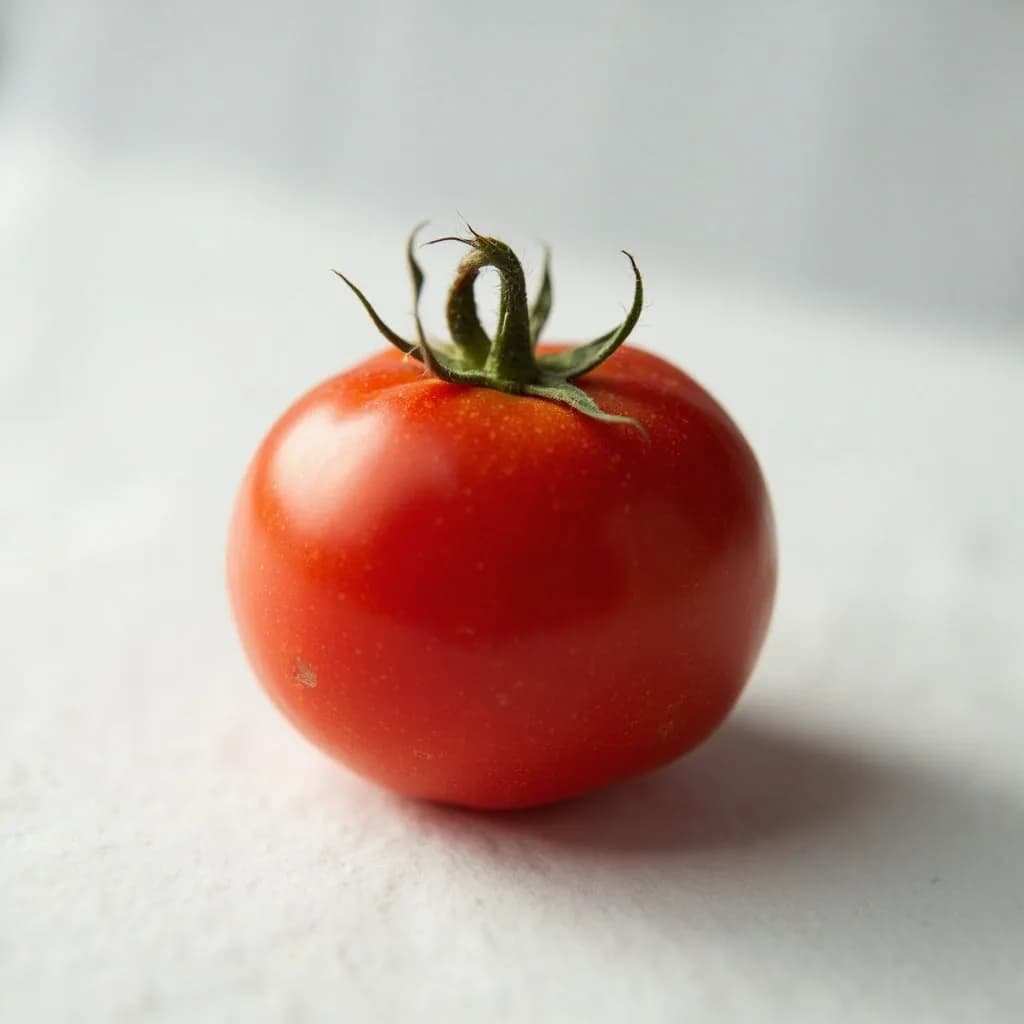
Juicy, sun-sweet fruit for sauces, salads, and slow-cooked depth
Yellow Onion
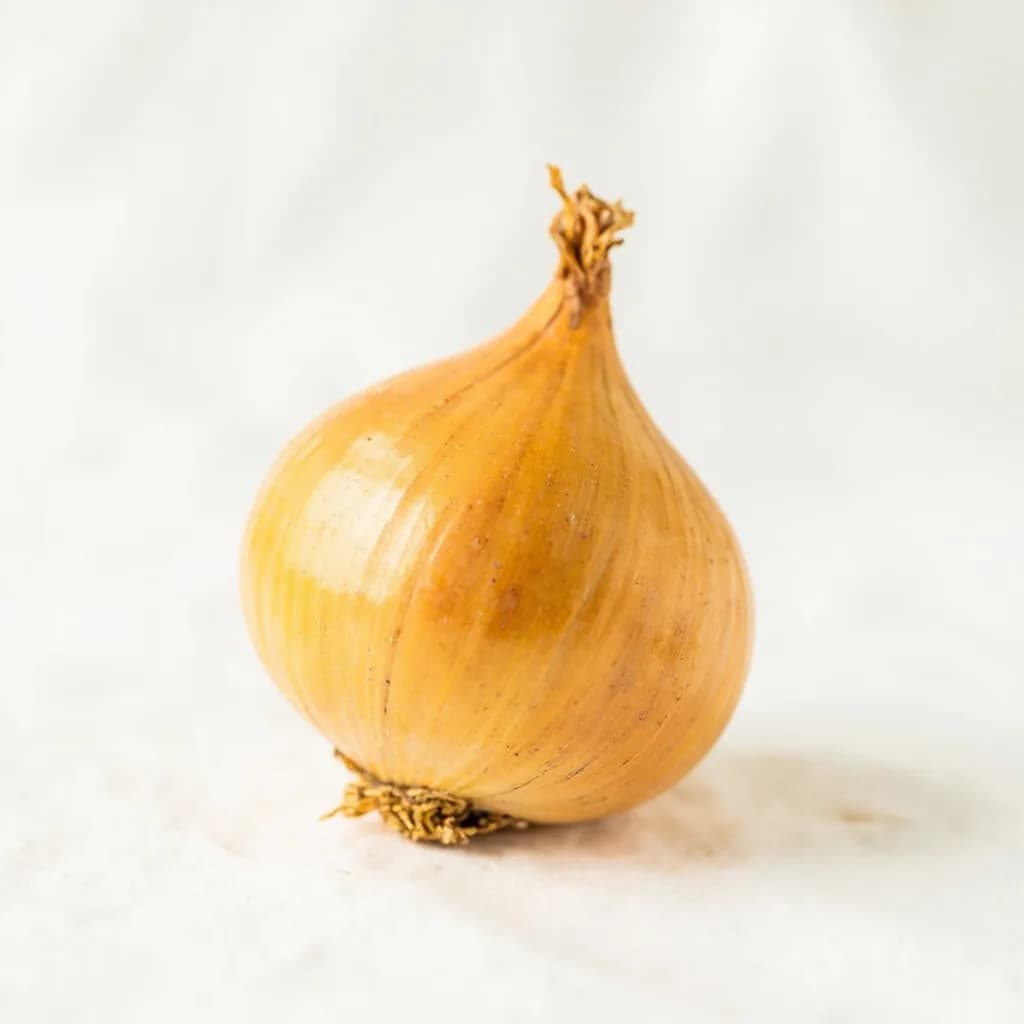
The aromatic backbone of soups, sofritos, and braises
Garlic
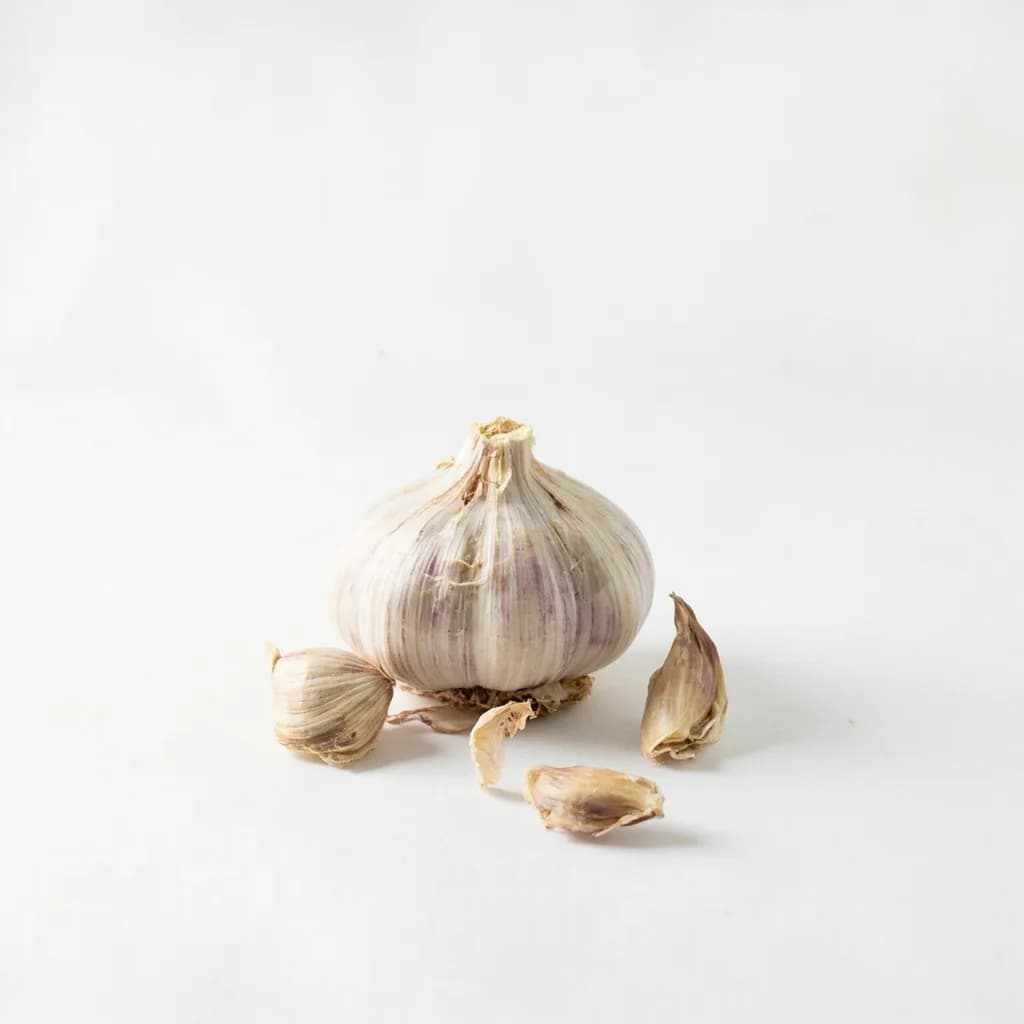
Pungent cloves that perfume nearly every savory dish
Lemon
Bright, acidic citrus that wakes up almost any dish
Potato
Humble, hearty staple — roast, mash, fry, or boil
Carrot
Sweet, crunchy root — raw, roasted, or the base of a sofrito
Cucumber
Cool, crisp, and watery — for salads, pickles, and tzatziki

Lettuce
Crisp leaves for salads, wraps, and a fresh crunch