Oils & Fats
Caul Fat
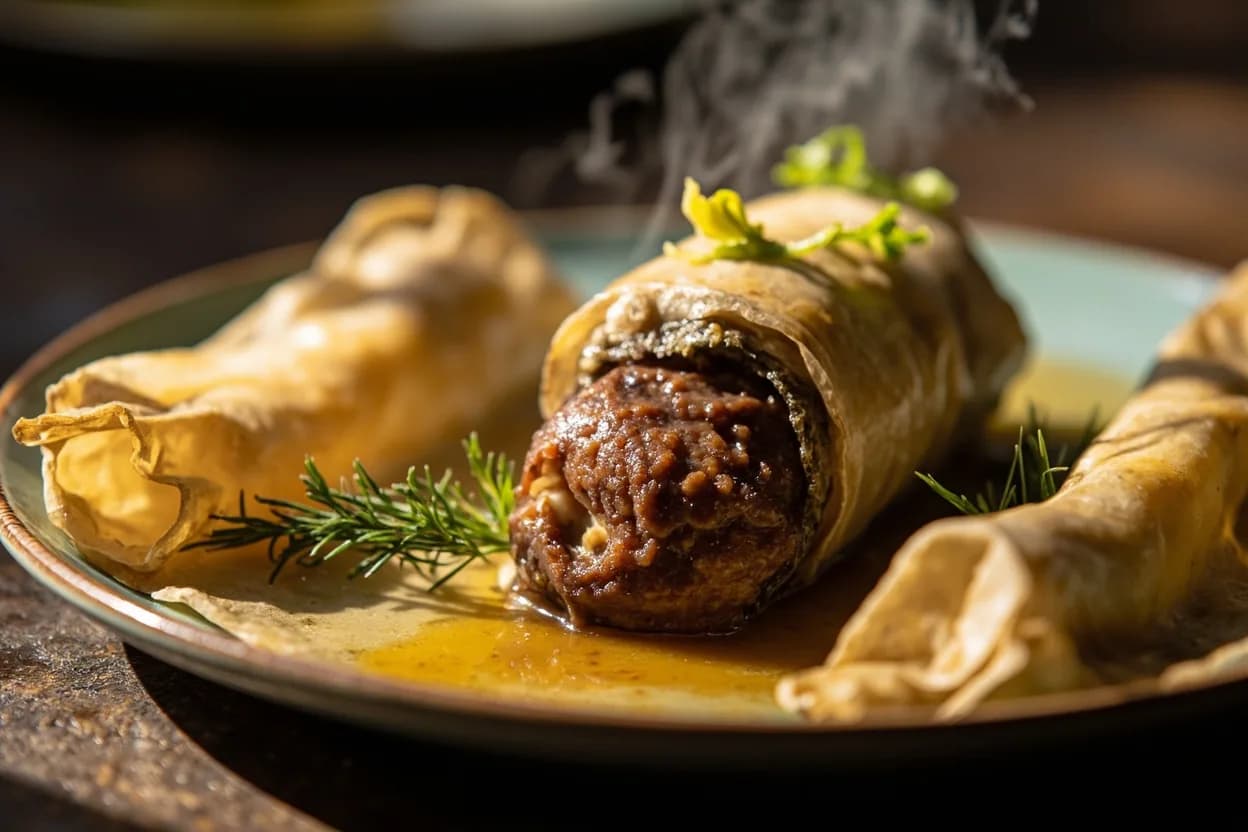
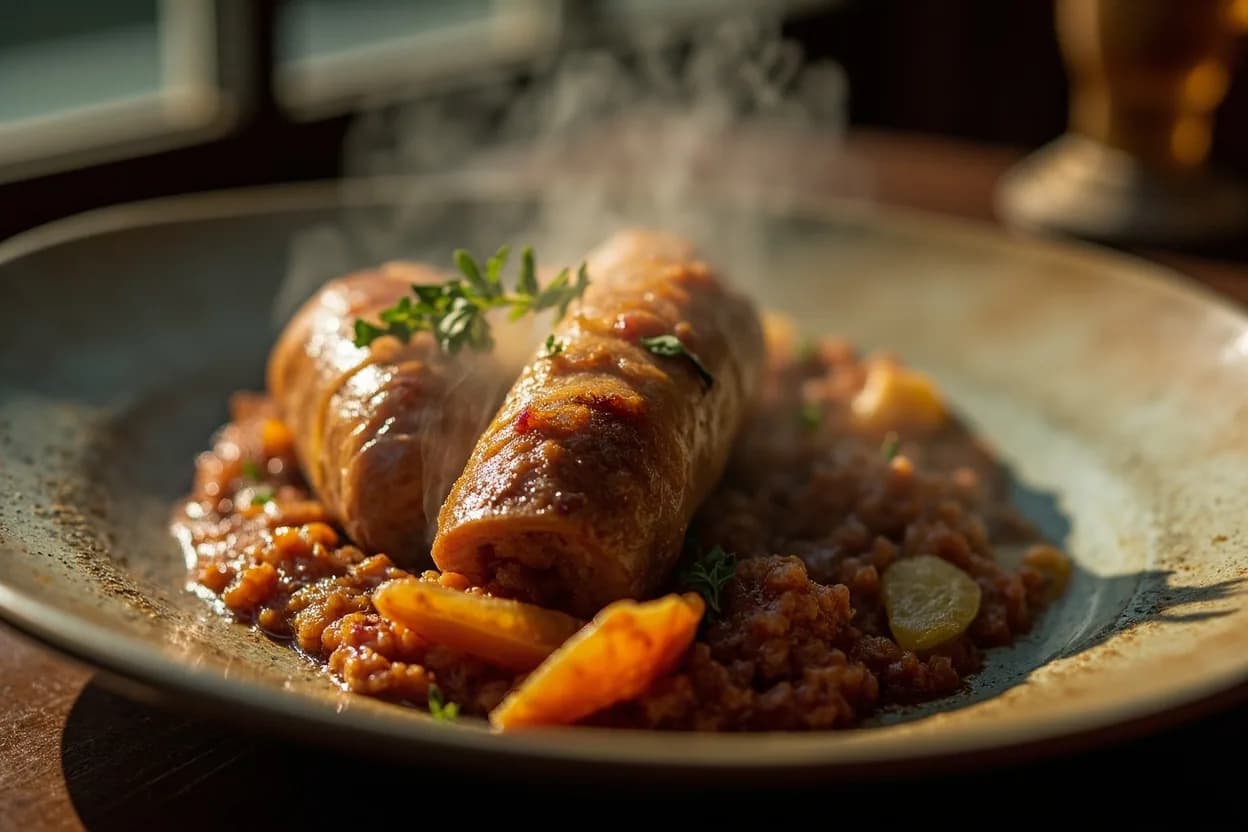
Lacy membrane of fat wrapped around faggots, crépinettes, and pâtés to baste and bind as they cook.
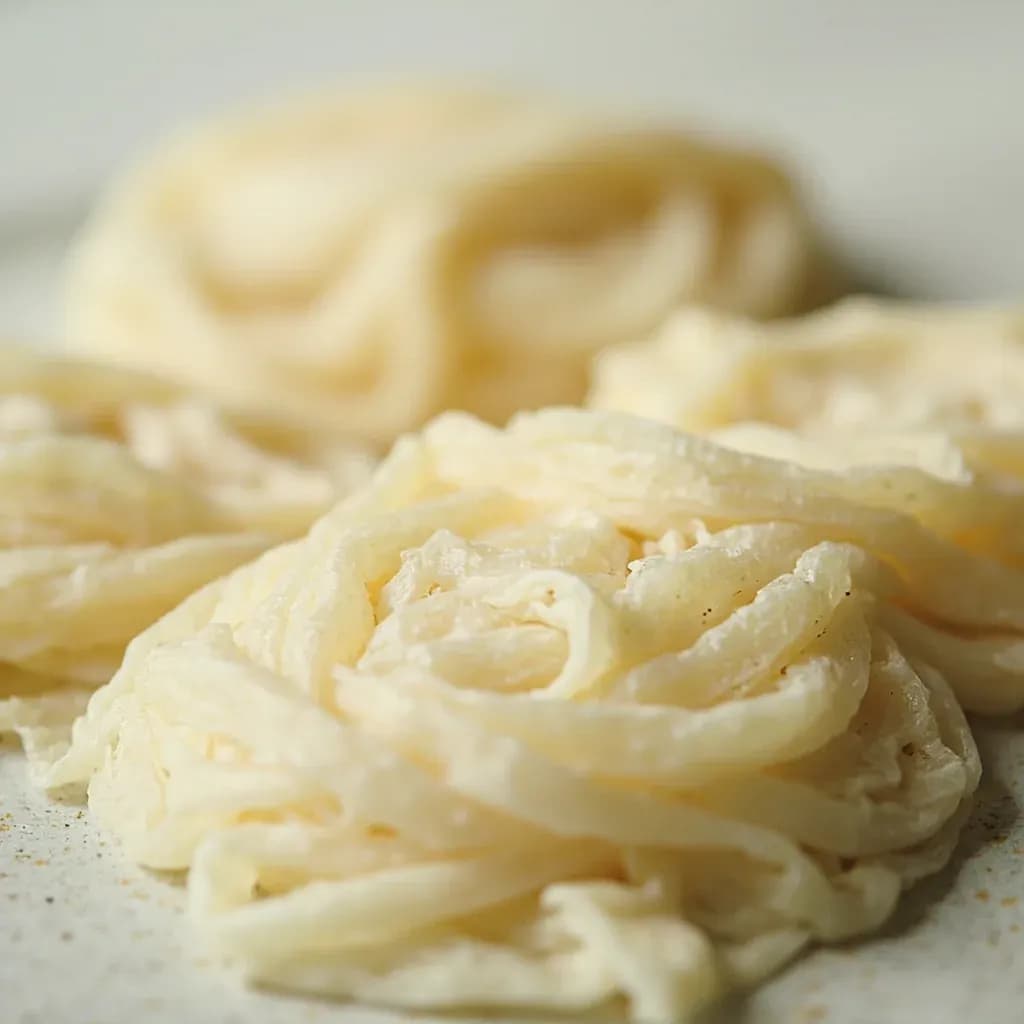
Caul fat (crépine) is the thin, lacy web of fatty membrane surrounding the internal organs of pigs and other animals. It is wrapped around sausages, meatballs (faggots), crépinettes, and pâtés, where it melts during cooking to baste, bind, and crisp the surface. It dissolves almost completely, leaving moist, well-formed parcels.
Caul fat is the omentum—the lacy, translucent membrane of fat that envelops a pig's stomach and intestines within the abdominal cavity. Unlike solid fats, its structure is a loose web of connective tissue interlaced with fat, making it uniquely suited to wrapping. When draped over irregular shapes, it clings without adhesive and conforms to contours that would defeat a sheet of bacon or pastry. As it cooks, the fat slowly renders from within the membrane, basting the food continuously while the web itself crisps to a papery, edible lace. This self-basting, self-adhering quality is what makes caul fat irreplaceable in traditional European charcuterie.
The technique has been central to French, British, and German kitchens for centuries, particularly in preparations where uniform fat distribution and moisture retention matter more than elaborate equipment. Faggots, crépinettes, terrines, and braised organ meats all depend on the caul to deliver a level of basting that no basting spoon or foil tent can replicate. In commercial kitchens, the practice has declined sharply—fresh caul fat is labor-intensive to clean and is a by-product rather than a primary cuts item, so most modern operations substitute bacon, lattice pastry, or twine-wrapped belly fat. This makes sourcing genuine caul fat a task that usually requires a conversation with a whole-animal butcher rather than a supermarket shelf. When you find it, the quality difference is immediate and the technique worth mastering.
Caul fat behaves differently from processed alternatives in one critical respect: it is animal tissue, not an engineered product. It has memory—it will cling, shrink, and render in ways that respond to temperature and handling. Cold it is brittle and tears easily; warm it becomes pliable but loses its grip. Understanding this temperature-dependent behavior is the key to every successful application, from a simple crépinette to a complex terrine lining.
- Measured in
- g
- Storage
- Fridge
Types & varieties
White to cream-colored; most common from whole-animal butchers. Pliable and easiest to work with after soaking in ice-cold water.
Preserved with salt for extended shelf life. Requires 2–4 hours of soaking with 2–3 water changes before use; test for residual salt before proceeding.
Often vacuum-sealed; thaws quickly and retains quality for several months. Treat as fresh once thawed.
How to select and source caul fat
Caul fat is a by-product of whole-animal butchery, not a standard retail cut. The most reliable source is a butcher who breaks down whole pigs regularly. Call ahead and ask—not all butchers stock it routinely, and most will set it aside if you request it. Farmers' markets with on-site butchery are another good source. Online specialty food suppliers offer frozen and salted varieties with reasonable quality, though fresh from a trusted butcher is preferable for most applications. Avoid any product that appears brown, has a strong off-odor, or shows significant remaining blood or tissue—properly cleaned caul fat is pale, nearly odorless, and fairly translucent. If purchasing from a butcher, ask them to clean it or do so yourself thoroughly before use, as store-cleaned product can still retain tissue fragments.
- Ask your butcher to set aside caul fat when they break down a whole pig—it is often discarded if not requested
- Specialty charcuterie suppliers carry frozen and salted options with consistent quality
- Inspect fresh caul fat before purchasing: it should be pale, translucent, and free of blood or tissue debris
- Frozen caul fat is a reliable backup; vacuum-sealed portions thaw in cold water within an hour
Understanding how caul fat cooks
Caul fat performs three distinct functions simultaneously during cooking, and each has implications for how you handle it before and during the process. First, it insulates the food, protecting lean or delicate interiors from direct heat. Second, it bastes—the fat within the membrane migrates outward as it renders, coating the surface continuously without any intervention from the cook. Third, it crisps. Once the fat has rendered, the remaining web becomes a delicate, edible shell.
The timing of these functions varies with temperature and thickness. In a slow braise at low heat, the fat may never fully crisp—instead it melts into the braising liquid, enriching the sauce. In a hot pan-fry, the membrane crisps within minutes while the interior finishes cooking. Understanding which outcome you want guides your choice of cooking method and heat level. The fat is fully rendered when it turns translucent and golden; if it browns quickly before the interior is done, reduce heat and cover briefly.
- Rendered fat bastes continuously—no basting spoon needed
- The remaining membrane after fat has escaped is edible and crisps to a lace-like texture
- In slow braises the caul may never fully crisp; in pan-frying it crisps in minutes
- Watch for the transition from opaque white to translucent gold as the signal that rendering is complete
Common uses
Tips & pitfalls
- Soak fresh caul fat in ice-cold water for at least 30 minutes—cold makes it far easier to handle without tearing
- Return caul fat to the refrigerator if it becomes too warm and pliant; work in short bursts with cold hands
- Rinse salted caul fat thoroughly and soak for 2–4 hours with 2–3 water changes—under-soaked caul will make finished dishes uncomfortably salty
- Pat the caul completely dry before wrapping; wet surfaces prevent proper adhesion and cause uneven browning
- Cut caul fat into workable pieces (15–20 cm squares) before starting, rather than trying to tear or cut it while managing a filling
- Wrap snugly: the fat shrinks noticeably during cooking, so a tight initial wrap ensures complete coverage without gaps
- Place the shiny (smooth) side outward for most uniform browning and a cleaner presentation
- For pan-frying, start in a cold pan over medium-low heat to render the fat gradually and prevent scorching
- The caul is done when it turns translucent and golden; if it browns rapidly before the interior is ready, reduce heat and cover briefly
- Mistake: layering too thick—single or double thickness is sufficient; excess fat creates greasiness and can prevent crisping
- Mistake: not soaking salted varieties long enough, leaving finished dishes excessively salty
- Mistake: cooking at too high a temperature, scorching the fat before the interior is cooked through
- Wash caul fat thoroughly even if sold as cleaned—blood or tissue fragments remain and affect flavor and appearance
- If caul fat tears during wrapping, patch with a small overlapping piece rather than discarding it; it will hold
Nutrition
Energy
3766 kJ · per 100 g
Where the calories come from
Protein
0g
0% DV
Carbs
0g
0% DV
Fat
99.8g
128% DV
Fiber
0g
0% DV
Sugars
0g
of which
Sodium
0mg
0% DV
Source · USDA FoodData Central · approx. Fat, chicken
View on FDC →In the shops
Matched grocery products
No matched grocery products for Caul Fat yet.
Good to know
- Source
- Omentum (fatty membrane) from a pig's abdomen, surrounding the stomach and intestines
- Physical form
- Thin, lacy, translucent web of connective tissue interlaced with fat; flexible when warm, brittle when cold
- Fat content
- Approximately 85–90% fat by weight
- Fresh storage
- Refrigerated up to 2 days; frozen up to 3 months (thaw in refrigerator)
- Salted storage
- Cool, dry place indefinitely; soak 2–4 hours and rinse thoroughly before use
- Yield after cooking
- Shrinks by roughly 20–30% as fat renders; the remaining membrane is edible when crisp
- Fresh preparation
- Soak in ice-cold water 30–60 minutes, then rinse and pat dry before use
- Typical piece size
- Individual sheets of roughly 15–20 cm square are most manageable for wrapping
Substitutes
- Bacon fat (or lardons) — Provides fat content but lacks the lacy, self-adhering structure; must be layered and secured with twine or toothpicks and does not become an edible wrapper.
- Parchment paper tent — Offers coverage and some insulation but provides no fat basting, does not brown, and is not edible.
- Cheesecloth dipped in melted butter — Mimics moisture retention and basting effect but creates neither the edible lace texture nor the structural wrapping quality of caul fat.
- Thinly sliced pork belly fat — Fattier and sturdier than true caul fat; does not drape as finely over irregular shapes and produces a chewier rather than crisp result.
Pairs with
Also called
Crepine · Crépine · Lace Fat
Appears in these dishes
Related
Olive Oil
Fruity, peppery everyday oil for sautéing, dressing, and finishing
Vegetable Oil
Neutral, high-heat oil for frying and all-purpose cooking
Canola Oil
Light, neutral oil for frying, baking, and dressings

Sunflower Oil
Clean, neutral oil for frying and everyday cooking
Sesame Oil
Toasty, aromatic oil — a finishing splash for Asian dishes
Coconut Oil
Fragrant, solid-at-room-temp fat for baking and frying
Peanut Oil
High-heat oil with a faint nutty note — ideal for frying

Lamb Tail Fat
Rich rendered fat from fat-tailed sheep — used as a cooking fat and flavor base in Central Asian and Middle Eastern dishes.