
Natural form
Fresh Chinese chives: long flat green blades with a mild garlic-onion scent.
Shows the defining flat blade shape and vivid green color that distinguishes Chinese chive from hollow Western chive.
Produce
Chinese Chive
Flat garlic-flavored chives used in dumplings, stir-fries and pancakes.
Chinese chives are flat, broad green chives with a pronounced garlic-onion flavor, distinct from the hollow Western chive. They are chopped into dumpling and bun fillings, stir-fried with eggs or meat, and folded into savory pancakes across China and Korea. The flower stems and blanched yellow chives are also used.
Chinese chive (Allium tuberosum) is a perennial herb in the onion family distinguished by its flat, strap-like leaves that grow in clumps rather than the hollow, tubular form of regular chives. Native to China and cultivated across East Asia for over two millennia, it carries a mild garlic-onion flavor that is simultaneously sweeter and less aggressive than ramps or wild garlic. This garlicky character is what sets it apart and makes it indispensable in Chinese, Japanese, and Korean cooking.
Unlike its Western relatives, Chinese chive holds up remarkably well to brief cooking while still being gentle enough for raw applications. The leaves maintain a slight bite when quickly wilted and develop a pleasant sweetness when charred. The plant also produces edible flower stalks in late summer—prized for their tenderness—and the etiolated yellow variety (grown in darkness) offers a more fragile, buttery quality prized in Shanghainese cuisine. Understanding this ingredient's behavior is essential: it is fundamentally not a substitute for regular chives, and its garlicky personality anchors dishes where that flavor is architecturally important.
- Measured in
- g
- Storage
- Fridge
Types & varieties
Standard green variety; most common in commerce. Versatile for both raw and cooked applications.
Harvested before blooms open; more tender and slightly sweeter than leaves. A seasonal delicacy.
Etiolated variety grown in darkness; paler, more fragile, and sweeter. Essential in Shanghainese cooking; requires minimal cooking.
The Garlic Chive Distinction
The most critical point of confusion in Western kitchens is equating Chinese chive with regular chives (Allium schoenoprasum). They share a family name but little else. Regular chives taste of onion only, have hollow tubular leaves, and turn mushy quickly when cooked. Chinese chives bring an unmistakable garlic note, flat leaves that retain some texture, and genuine versatility across the temperature spectrum from raw to wok-tossed. When a recipe calls for Chinese chives specifically, no substitute will deliver that dual garlic-onion character. Swapping in regular chives does not merely mild the dish—it fundamentally changes the flavor architecture the cook intended.
- Regular chives: hollow tubes, onion flavor only, cook quickly to mush
- Chinese chives: flat blades, garlic-onion flavor, hold texture through brief cooking
- This distinction matters most in dumplings, stir-fries, and any dish where garlic is architecturally present
Raw vs. Cooked Applications
Chinese chive's range is remarkable, but timing determines success. In raw preparations—dipping sauces, fresh spring rolls, Korean namul—the leaves need preparation to mellow their intensity. Massage with a small pinch of salt and let rest for five minutes; the salt draws out moisture and softens the cellular structure, transforming sharp raw flavor into something more rounded. For wok cooking, the rule is absolute: high heat, minimal time. Thirty seconds to a minute is sufficient. Extended cooking activates sulfur compounds that produce an unpleasant, lingering odor and reduces the leaves to a dull, limp mess. The difference between properly cooked chives (bright, slightly resilient, fragrant) and overcooked chives (mushy, grayed, pungent) is about thirty seconds of attention.
- Raw: salt-massage for 5 minutes to soften and mellow flavor
- Stir-fried: 30–60 seconds over high heat, add last
- Egg dishes: fold in last moment; eggs protect delicate flavor from direct heat
- Yellow chives: add only in final moments; their fragility makes them the most heat-sensitive variety
Common uses
Tips & pitfalls
- Wash thoroughly and dry completely before cooking — wet chives steam rather than fry, turning mushy
- Cook quickly over high heat or use raw; extended cooking releases sulfur compounds causing unpleasant smell
- Add to egg dishes (dumplings, fried rice) last or in the final moments; eggs coat and protect the delicate garlicky flavor
- Torn by hand rather than cut with a metal knife to preserve cellular structure and flavor compounds
- Yellow chives require even shorter cooking than green; add only in the final moments of stir-frying
- When using in raw applications, massage with a pinch of salt and rest 5 minutes to soften intensity and mellow flavor
- The edible flowers are mildly sweet; separate petals and sprinkle fresh as a garnish over finished dishes
- Store unwashed in a loose plastic bag in the refrigerator crisper drawer; wash just before use to prevent moisture-related decay
- Do not substitute regular chives in dishes where garlic character is essential — the flavor profile is fundamentally different
Nutrition
Energy
126 kJ · per 100 g
Where the calories come from
Protein
3.3g
7% DV
Carbs
4.4g
2% DV
Fat
0.7g
1% DV
Fiber
2.5g
9% DV
Sugars
1.9g
of which
Sodium
3mg
0% DV
Source · USDA FoodData Central · Chives, raw
View on FDC →In the shops
Matched grocery products
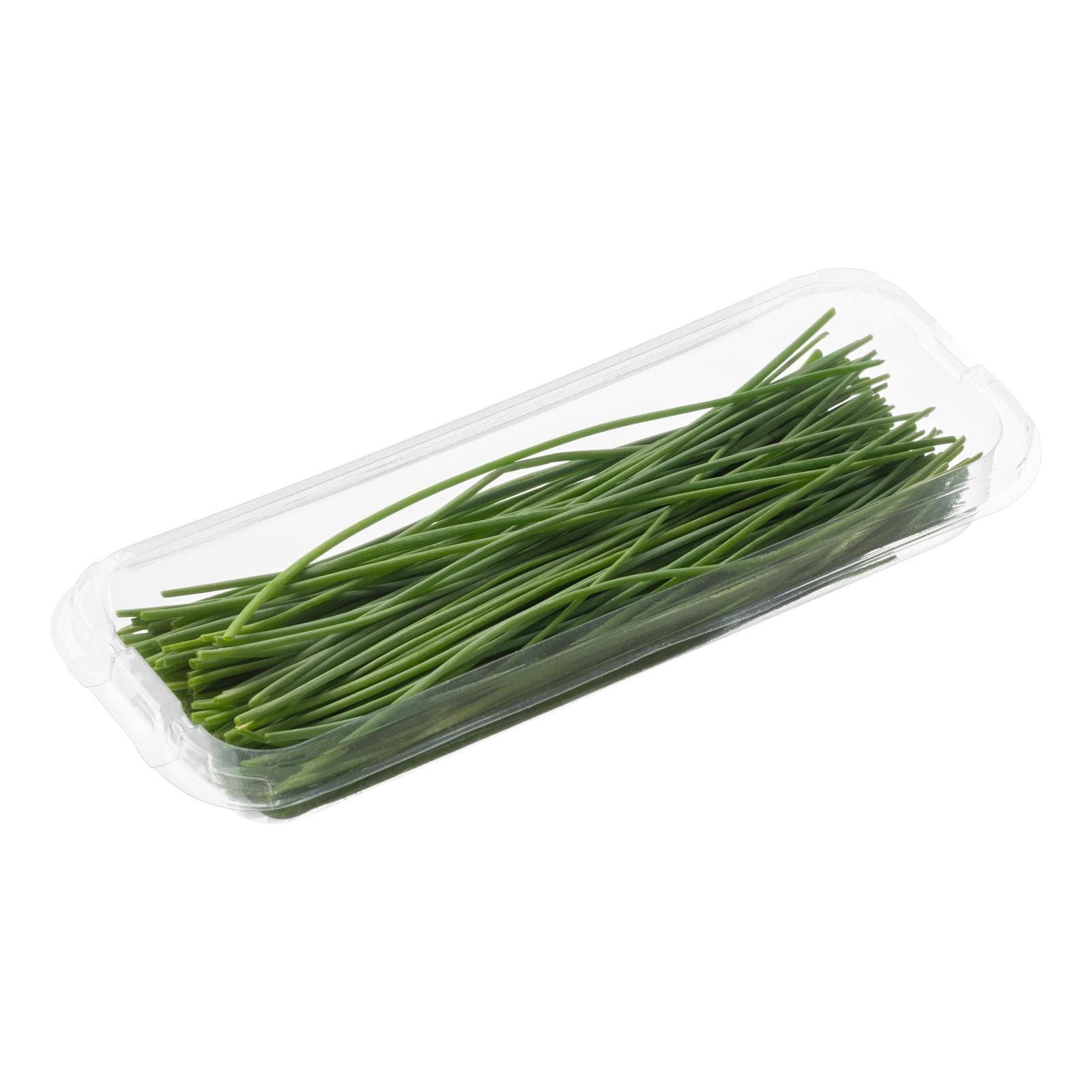 €1.80
€1.80Chives
0.02 100 g · Mercadona
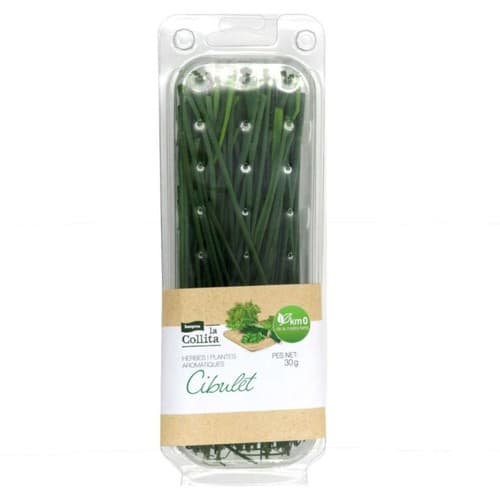 €1.49
€1.49LA COLLITA Chives Km0
LA COLLITA · kg · Bonpreu
Good to know
- Scientific Name
- Allium tuberosum
- Other Names
- Garlic chive, nira (Japanese), jjokpa (Korean)
- Form
- Flat, strap-like leaves; not hollow like regular chives
- Flavor
- Mild garlic-onion; sweeter and less pungent than ramps or wild garlic
- Peak Season
- Spring and early summer; flowers appear in late summer
- Storage
- Refrigerate unwashed in loose plastic bag; use within 5–7 days for best quality
- Yield
- Negligible shrinkage when cooked briefly; significant wilting if overcooked
Substitutes
- Regular Chives — Milder; lacks the garlic note entirely. Acceptable in egg dishes where onion-only flavor is acceptable, not ideal for dumplings or stir-fries where garlic character is expected.
- Ramps (Wild Leeks) — Much stronger garlic flavor; use half the quantity and expect a more aggressive presence. Seasonal (spring only), expensive, and regional.
- Garlic Scapes — More pungent with a different, snappier texture. Best as a substitute in cooked applications only; cannot replicate the mild sweetness of Chinese chive.
- Fresh Garlic + Scallion — Rough approximation in cooked dishes. Add minced garlic first (30 seconds ahead), scatter scallion greens near the end of cooking. Lacks the herbal character of fresh chive.
Also called
韭菜 · Garlic Chive · Jiucai
Related
Tomato
Juicy, sun-sweet fruit for sauces, salads, and slow-cooked depth
Yellow Onion
The aromatic backbone of soups, sofritos, and braises
Garlic
Pungent cloves that perfume nearly every savory dish
Lemon
Bright, acidic citrus that wakes up almost any dish
Potato
Humble, hearty staple — roast, mash, fry, or boil
Carrot
Sweet, crunchy root — raw, roasted, or the base of a sofrito
Cucumber
Cool, crisp, and watery — for salads, pickles, and tzatziki

Lettuce
Crisp leaves for salads, wraps, and a fresh crunch