Baking
Diastatic Malt
Enzyme-active malted barley flour that boosts yeast activity and crust browning.
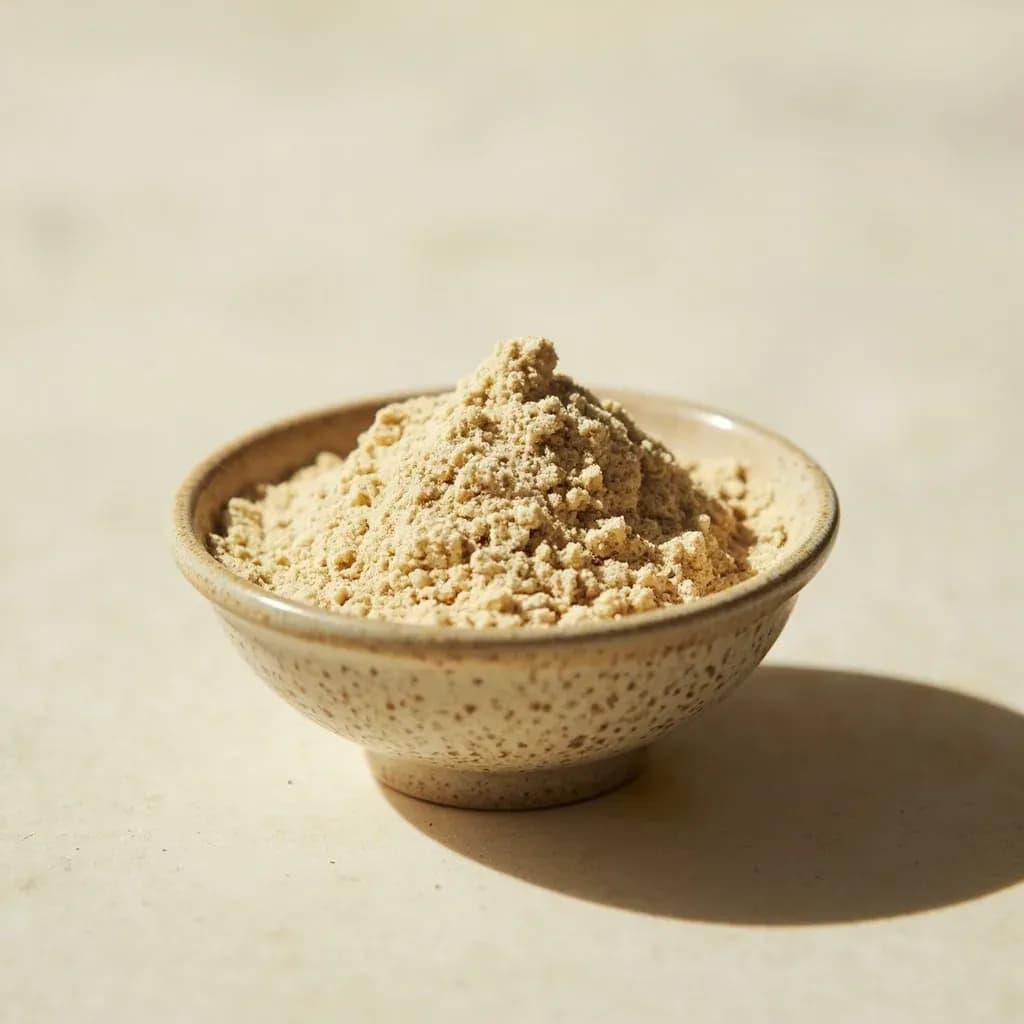
Diastatic malt is finely milled sprouted barley that retains active enzymes which break starch into sugars. Bakers add a small amount to bread and bagel dough to feed yeast, improve rise, and deepen crust color and flavor. It differs from non-diastatic malt, where the enzymes are deactivated and only sweetness remains.
Diastatic malt is a fine powder ground from malted grain—barley, wheat, or rye—with enzymes still active. Those enzymes, primarily amylases, break down starches into the simple sugars yeast craves. In breadmaking this matters enormously: the sugars feed fermentation, producing a more vigorous rise, better gas retention in the gluten network, and ultimately a more open, well-developed crumb. The enzyme activity also generates reducing sugars, which brown more readily in the oven through the Maillard reaction, giving you a deeper, more evenly colored crust without added colorants. This is not a sweetener in the conventional sense—yeast consumes those newly formed sugars during fermentation, so the finished crumb carries only a subtle, background maltiness. The critical specification is diastatic power, measured in degrees Lintner in the United States, which indicates enzyme strength. Higher Lintner values mean less malt powder is needed to achieve the same effect. Home-baking malt typically ranges 20–60 Lintner; commercial versions vary widely. Because enzymes degrade with heat, humidity, and time, store diastatic malt carefully and expect it to perform reliably for 6–12 months sealed, longer if refrigerated or frozen. Old malt may smell malty but will not aid fermentation—it has simply lost its enzymatic punch.
- Measured in
- g
- Storage
- Pantry
Allergens
Types & varieties
Most common variety; high diastatic power; mild malty flavor that integrates seamlessly into most bread formulas
Softer, milder enzyme action; pairs particularly well with wheat flours without overpowering the dough
Contains amylase naturally present in rye; used specifically for rye breads where it complements the grain's own enzymes
Contains malted barley plus milk solids; adds both fermentation boost and richness; common in soft rolls and enriched sandwich breads
Why Diastatic Power Matters
The diastatic power (Lintner value) tells you how potent the malt is. A higher Lintner number means stronger enzymatic activity, so you use less. If you are working with a commercial flour that already has some malted barley added (many bread flours do), adding more diastatic malt may push you over the ideal threshold, leading to dough that ferments too rapidly, over-proofs, or develops a sticky, weak texture. Start at 1% or lower and adjust based on fermentation behavior and final crumb structure. For whole-wheat and dense grain breads, you can push toward 1.5–2% because the bran and germ actively inhibit fermentation and gluten development, and the extra enzymatic help is needed.
- Home-baking malt typically ranges 20–60 Lintner; commercial versions vary
- Check your flour label—if malted barley flour is already listed, reduce added diastatic malt accordingly
- Higher diastatic power does not always mean better; match the malt strength to your formula's needs
Diastatic vs. Non-Diastatic Malt
This distinction is fundamental and frequently confused. Non-diastatic malt has been heat-treated, which inactivates the enzymes. It functions purely as a flavoring agent and a mild Maillard enhancer, useful in pretzels, crackers, or any application where you want malt flavor without altering fermentation dynamics. Diastatic malt, by contrast, is an active ingredient that changes what happens in the dough. Use them interchangeably and you will get dramatically different results—the diastatic version will accelerate fermentation and may destabilize a dough that was designed for steady, slow rise.
- Non-diastatic malt is heat-treated and enzyme-inactive; diastatic is not
- Substitute diastatic for non-diastatic only when you want to alter fermentation behavior
- Read labels carefully—some products labeled simply 'malted milk powder' may be non-diastatic
Common uses
Tips & pitfalls
- Add diastatic malt to the flour before mixing, not directly to the liquid—the enzymes need starch contact during fermentation to be effective
- For most bread, 1–1.5% of flour weight is the sweet spot; exceeding 2% risks excessive gas production, sticky dough, and a crumb that collapses under its own gas pressure
- In high-sugar doughs like brioche, challah, or enriched sandwich breads, diastatic malt is unnecessary—the abundant sugar already present feeds the yeast adequately
- Store in the freezer if keeping longer than 3 months to preserve enzyme potency; activity degrades noticeably even in cool, dry conditions
- For whole-wheat bread, use at the higher end of the range (1.5–2%) to help the enzymes break down bran's compounds that inhibit gluten development and fermentation
- If substituting for fresh yeast, diastatic malt helps compensate for reduced initial fermentation vigor in older dry yeast
- The crust-browning improvement is a secondary benefit, not the primary function—do not expect significant color enhancement without the primary fermentation advantage
- When adding salt to dough, incorporate it separately from the malt or add at a different stage; direct prolonged contact with salt before hydration can reduce enzymatic activity
Nutrition
Nutrition
No USDA FoodData Central match for Diastatic Malt yet. We surface a per-100 g profile once a generic whole-food entry is matched and verified.
In the shops
Matched grocery products
No matched grocery products for Diastatic Malt yet.
Good to know
- Source
- Barley, wheat, or rye grain (barley most common)
- Active Component
- Amylase enzymes that convert starches to fermentable sugars
- Diastatic Power
- Enzyme strength measured in degrees Lintner; higher DP requires less malt to achieve the same effect
- Typical Usage Rate
- 0.5–2% of total flour weight (by mass)
- Form
- Fine powder (dried malted grain flour)
- Shelf Life
- 6–12 months sealed; enzyme activity declines with heat, humidity, and age
- Storage
- Cool, dry, airtight container; refrigeration or freezing preserves potency
- Key Difference from Non-Diastatic Malt
- Diastatic retains active enzymes for fermentation aid; non-diastatic is heat-treated and enzyme-inactive
Substitutes
- Honey — Provides fermentable sugar but contains no enzymes; use roughly 1.5× the malt amount by weight for a comparable yeast-feeding effect; adds a distinct floral sweetness that changes the bread's flavor profile
- Sugar (white or brown) — Simple carbohydrate for yeast food; use about 25% less by weight than malt since malt also contributes some unfermented body to the crumb; provides no enzymatic benefit
- Potato Flour or Mashed Potato — Adds yeast-food carbohydrates from starch; does not replicate the enzyme action that breaks down flour starches; use sparingly to avoid a gummy or dense texture
- Vital Wheat Gluten — Does not substitute the fermentation-aid function but can improve dough when extended enzyme activity has weakened the gluten network in very high-extraction flours
Pairs with
Also called
Malted Barley Flour · Diastatic Malt Powder
Related

All-Purpose Flour
The do-anything flour for bread, cakes, sauces, and dredging

Bread Flour
High-protein flour for chewy, well-risen breads
Whole Wheat Flour
Nutty, whole-grain flour for hearty breads and bakes
Cake Flour
Fine, low-protein flour for tender, delicate cakes
Almond Flour
Nutty, gluten-free flour for macarons and tender bakes

Baking Powder
All-in-one leavener for fluffy cakes, pancakes, and biscuits

Baking Soda
Pure leavener that needs acid to lift — and tenderize
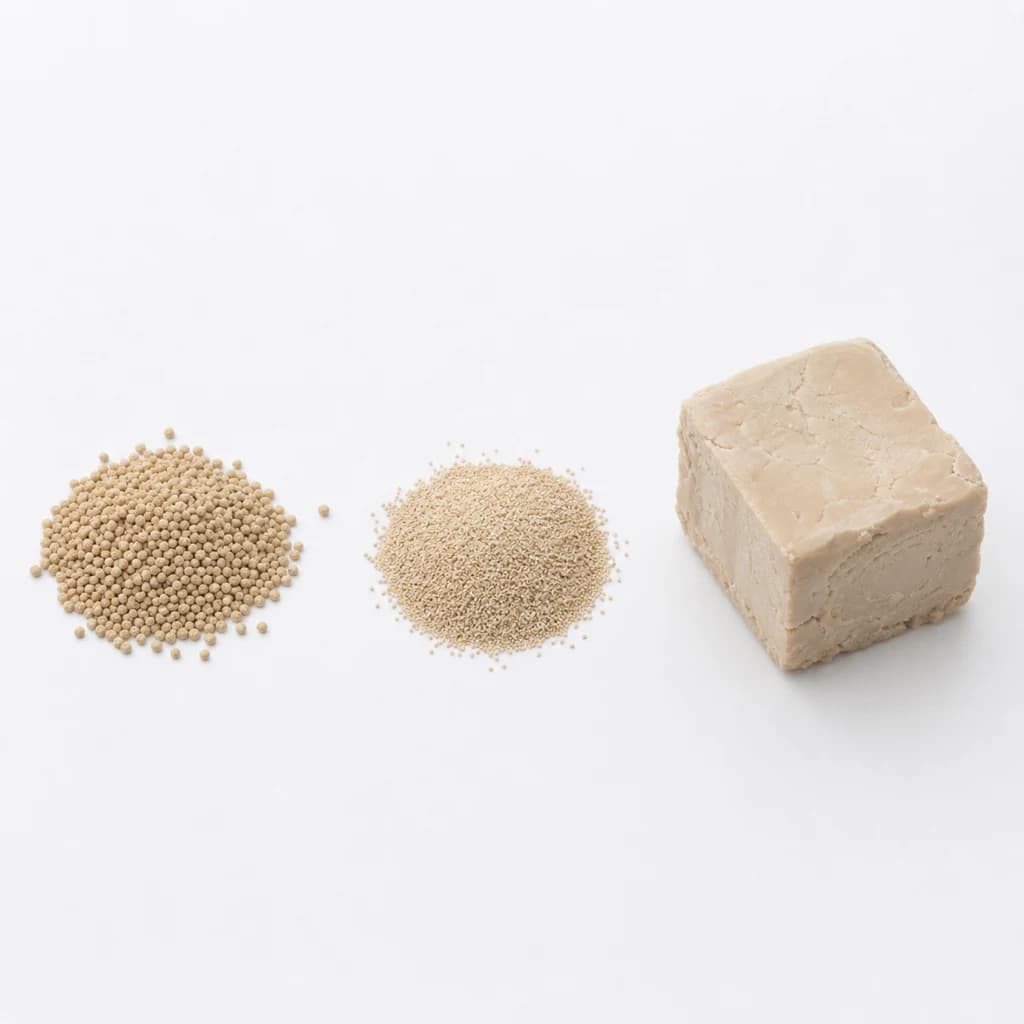
Yeast
Living leaven that makes bread rise and dough come alive