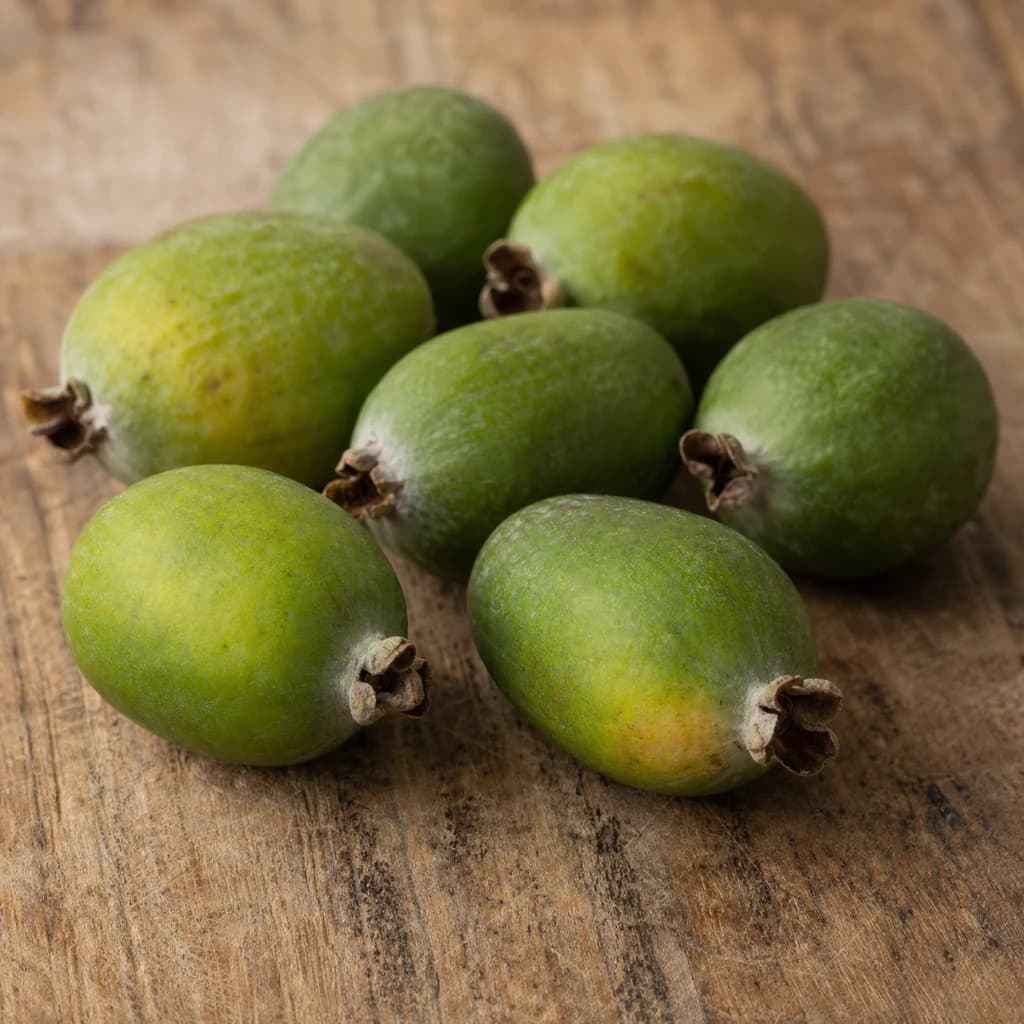
Natural form
Whole feijoa fruits showing their distinctive egg shape and smooth green skin.
Shows the reader the exact appearance and size of the fruit as found in nature or at market, making it unmistakable.
Produce
Feijoa
Egg-shaped green fruit with fragrant, gritty flesh tasting of pineapple, guava, and mint.
Feijoa, or pineapple guava, is a small oval green fruit with translucent, aromatic flesh that tastes like a blend of pineapple, guava, and mint. Popular in New Zealand, Brazil, and Colombia, it is eaten by scooping out the flesh with a spoon and is used in jams, chutneys, and desserts. Its intense perfume fades quickly once cut, so it is best eaten fresh and ripe.
Feijoa (Acca sellowiana) is an egg-shaped tropical fruit native to southern Brazil, Paraguay, Uruguay, and northern Argentina. The waxy green skin—sometimes blushing reddish when ripe—is thick and astringent, making it inedible; the flesh is what you want. Inside, creamy pale-green to jelly-like flesh surrounds dozens of tiny edible seeds, creating a distinctive gritty, granular texture that comes from the fruit's high pectin content. The flavor is deceptively complex: sweet-tart with tropical notes of pineapple and guava, a subtle minty undertone, and occasional hints of passion fruit or cucumber depending on ripeness. A ripe feijoa gives slightly when pressed near the stem end and emits a musky-sweet, distinctly tropical aroma. The fruit is commercially grown primarily in New Zealand and Australia, with smaller operations in California and South America, making it a relative specialty in most markets outside those regions. Its volatile aroma compounds—esters and terpenes—are powerful but diminish quickly with heat, which means raw preparations deliver the most intense feijoa experience, while cooked applications yield milder, more jammy results.
- Measured in
- piece
- Storage
- Fridge
Types & varieties
Most widely planted commercial variety; large fruit with excellent flavor and reliable yield
Very large fruit up to 10 cm long; originated in California; ideal for fresh eating
Compact growth with heavy bearing; medium-sized fruit with mild flavor
Originated in Santa Barbara, California; medium fruit with aromatic flesh
Developed in New Zealand; bright green flesh, sweet flavor, suited for processing
Cold-hardy variety; smaller fruit with intense, concentrated flavor
Modern New Zealand commercial cultivar; uniform size and consistent quality
Understanding Feijoa Ripeness
Getting feijoa ripeness right is critical because the fruit does not continue developing flavor once picked like a banana or avocado does. Underripe feijoas taste flat and vegetal, lacking the aromatic complexity that defines the fruit. Overripe feijoas develop fermented, almost alcoholic notes and mushy texture. The window for optimal use is narrow—1 to 3 days at room temperature after reaching slight yield at the stem end. Once ripe, use immediately or refrigerate.
- Rock-hard feijoas from the store may never ripen properly if picked too early
- Ripe feijoa continues to ripen slightly in the refrigerator but will eventually decline
- Slight browning of cut flesh is cosmetic, not harmful—oxidation affects appearance more than flavor
- Freeze scooped flesh on a tray first, then transfer to bags, for best texture retention in frozen storage
Common uses
Tips & pitfalls
- Select fruit that gives slightly at the stem end when pressed—rock-hard feijoas indicate poor ripeness at harvest and won't develop properly
- Ripen at room temperature for 1–3 days until fragrant and yielding, then refrigerate immediately
- Do not eat the skin—it contains bitter, astringent tannins—though the calyx end (blossom remnant) on New Zealand fruit is normal and harmless
- Scoop flesh immediately before serving; exposed feijoa browns quickly from oxidation, especially if using in salads or fresh applications
- For smoothies or juices, blend the entire interior including seeds for maximum fiber and nutrients; strain only if a smoother texture is desired
- When making jam, cook to gel point (220°F/104°C at sea level)—the natural pectin sets well without commercial thickeners
- Common mistake: using underripe feijoa results in flat, underdeveloped flavor lacking aromatic complexity
- Common mistake: waiting too long—overripe feijoa develops fermented, alcoholic notes and mushy texture beyond usefulness
- Common mistake: discarding the edible seeds—they are tiny and unnoticeable when cooked but contribute valuable fiber
Nutrition
Energy
255 kJ · per 100 g
Where the calories come from
Protein
0.7g
1% DV
Carbs
15.2g
6% DV
Fat
0.4g
1% DV
Fiber
6.4g
23% DV
Sugars
8.2g
of which
Sodium
3mg
0% DV
Source · USDA FoodData Central · Feijoa, raw
View on FDC →In the shops
Matched grocery products
No matched grocery products for Feijoa yet.
Good to know
- Botanical name
- Acca sellowiana (formerly Feijoa sellowiana)
- Also called
- Pineapple guava, Brazilian guava, false guava
- Harvest season
- October–December in Northern Hemisphere; March–June in Southern Hemisphere
- Ripe test
- Gives slightly to gentle pressure near stem end; intensified musky-sweet fragrance
- Refrigerator storage
- 5–7 days once ripe
- Freezer storage
- Scooped flesh freezes up to 6 months
- Key nutrients
- Vitamin C (20–30 mg per 100 g), dietary fiber, vitamin B6, potassium, antioxidants
- Flavor compounds
- Esters and terpenes volatile at high heat; raw preparations preserve maximum aroma
- Plant hardiness
- USDA zones 6–10; tolerates light frosts; coastal California thrives
Substitutes
- Guava (common or strawberry) — Similar tropical sweetness; texture is softer, not gritty; use 1:1 in cooked applications
- Pineapple — Provides similar sweet-tart balance and tropical notes; texture differs (juicier, stringier); best for sauces and smoothies
- Passion fruit — Shares floral, tropical intensity and seediness; more acidic; use less quantity and taste as you go
- Kiwi — Gritty texture is similar; flavor differs but works in desserts and salads; reduce sugar if substituting in sweet preparations
Also called
Pineapple Guava
Appears in these dishes
Related
Tomato
Juicy, sun-sweet fruit for sauces, salads, and slow-cooked depth
Yellow Onion
The aromatic backbone of soups, sofritos, and braises
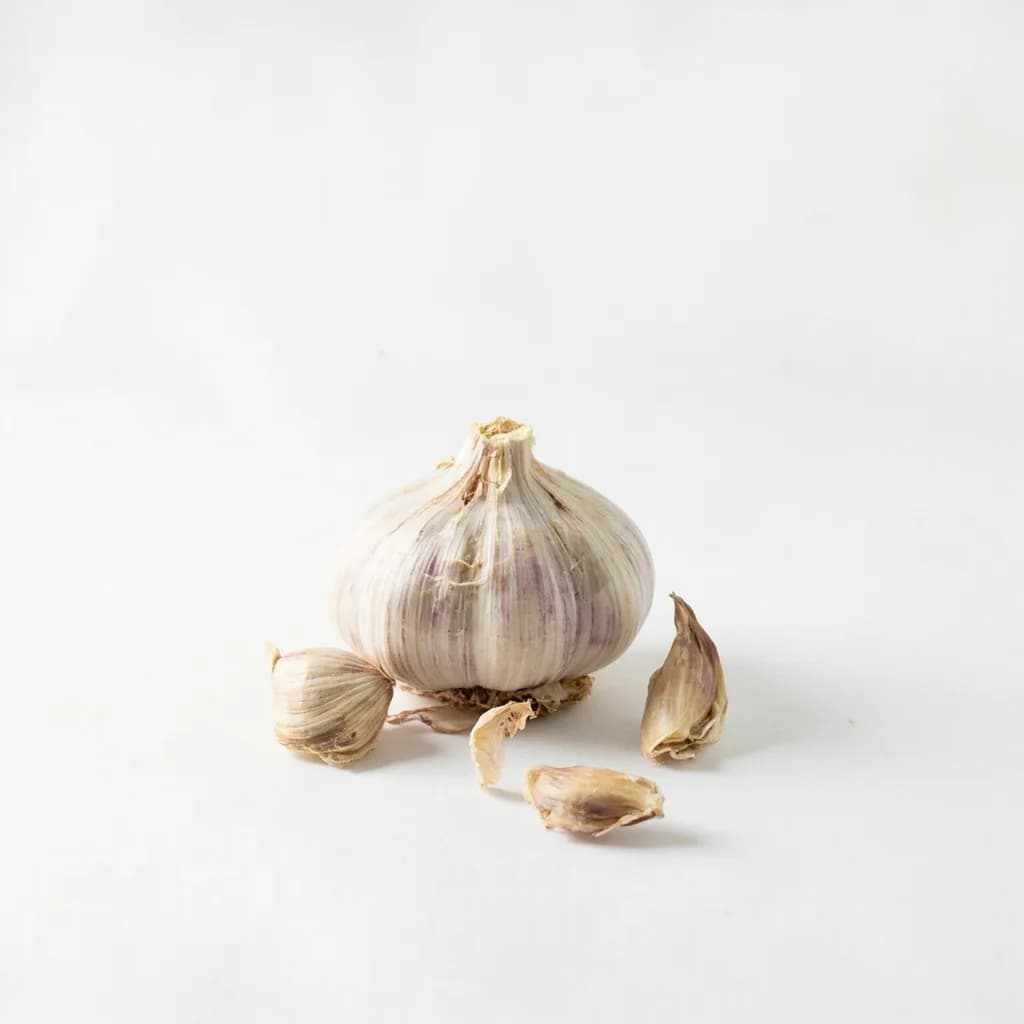
Garlic
Pungent cloves that perfume nearly every savory dish
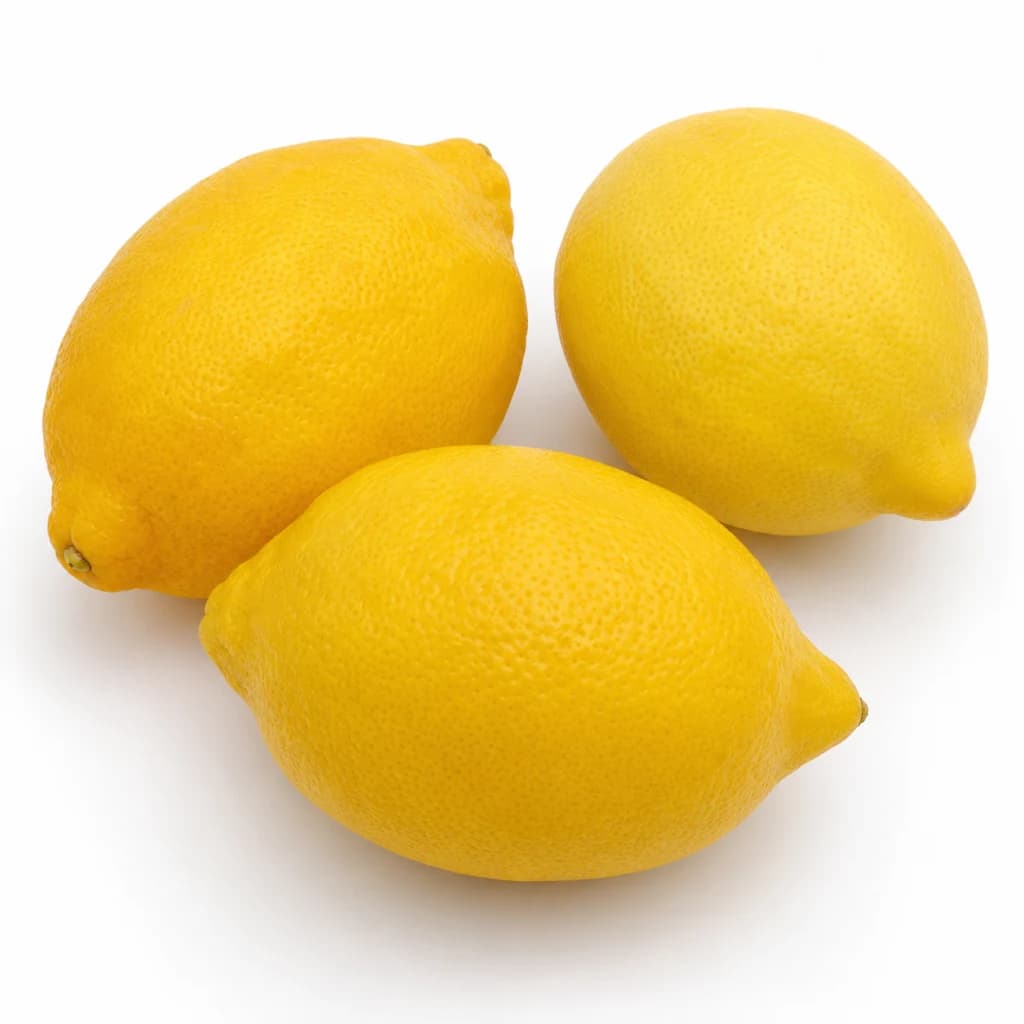
Lemon
Bright, acidic citrus that wakes up almost any dish
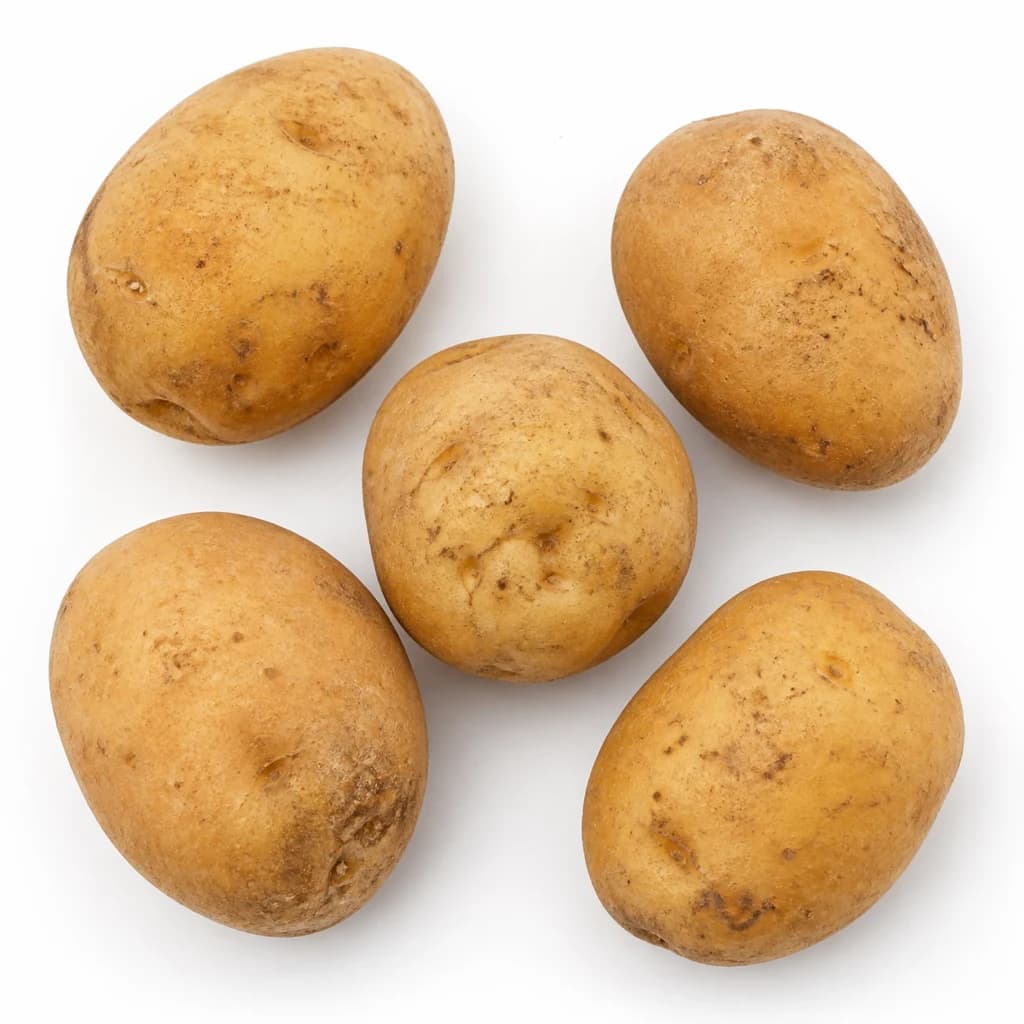
Potato
Humble, hearty staple — roast, mash, fry, or boil
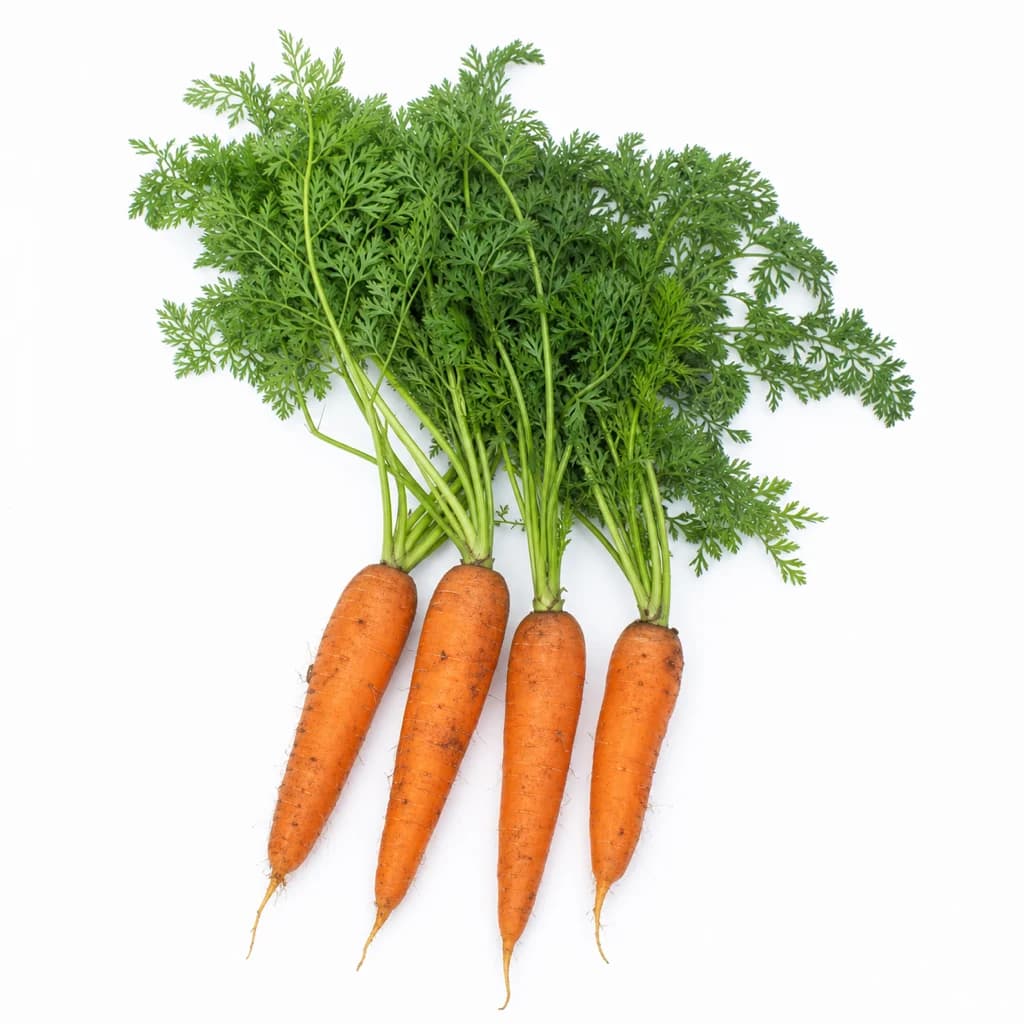
Carrot
Sweet, crunchy root — raw, roasted, or the base of a sofrito
Cucumber
Cool, crisp, and watery — for salads, pickles, and tzatziki

Lettuce
Crisp leaves for salads, wraps, and a fresh crunch