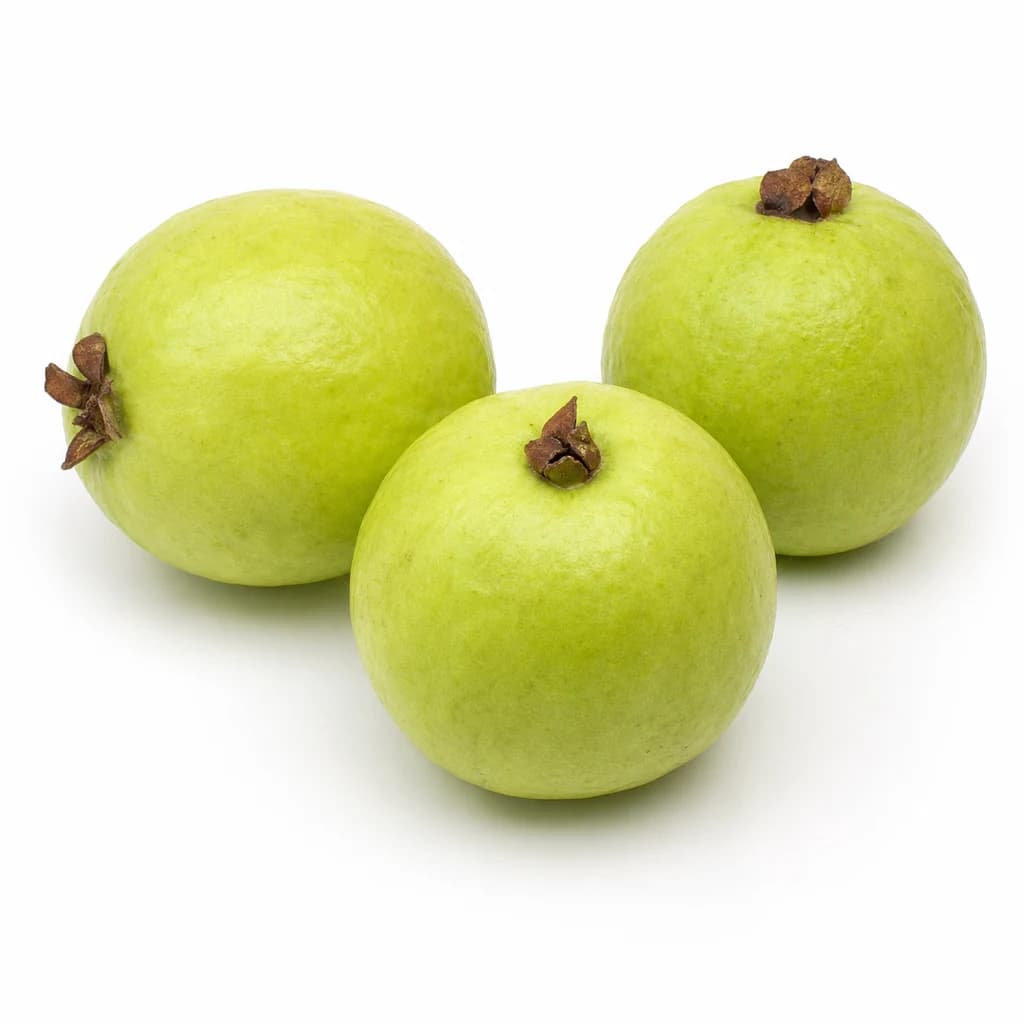
Natural form
Whole guava fruit showing its thin, pale yellow-green skin and round shape.
Establishes the fruit's exterior appearance, size, and color so readers can identify it at a market.
Produce
Guava
Fragrant tropical fruit with pink or white flesh, eaten fresh or cooked into pastes and juices.
Guava is a round tropical fruit with thin edible skin and aromatic flesh that ranges from white to deep pink. It is eaten fresh, blended into juices and nectars, or cooked down into pastes and jellies popular in Latin America and the Caribbean. Its sweet-tart flavor is intensely fragrant and it is rich in vitamin C.
Guava is one of the most aromatic fruits in the tropical world, prized for its intensely floral perfume and its remarkable ability to transform across applications — from yielding fresh slices to dense, glossy pastes. The fruit grows on small evergreen trees and ranges from round to pear-shaped, typically 2–6 inches long, with flesh that can be pink, salmon, red, white, or cream depending on variety. What distinguishes guava from other tropical fruits is its unusual combination of sweetness, subtle tartness, and a floral quality often described as strawberry meets pear meets passionfruit, all anchored by a distinctive seediness that ranges from mildly crunchy to negligible depending on ripeness and variety.
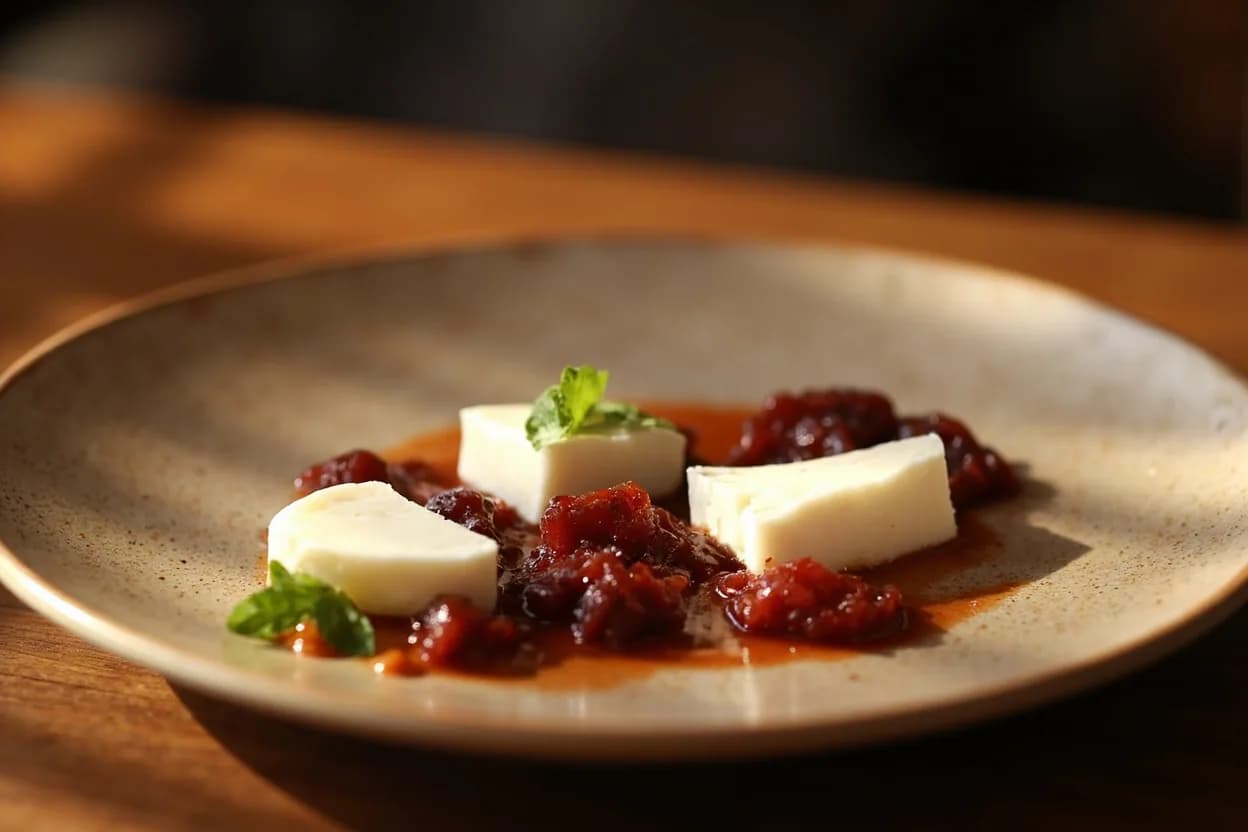
Beyond its fragrance, guava carries significant culinary weight in virtually every tropical cuisine it touches. Latin American kitchens transform it into pasta de guayaba (guava paste) paired with queso fresco, while Southeast Asian and Indian cooks favor it in chutneys, drinks, and sweets. The fruit's enzymes also make it functional: unripe guava contains papain, a proteolytic enzyme cousin to papaya's papain that actively tenderizes meat, making it useful in marinades beyond its flavor contribution.
Guava spoils quickly once ripe — its soft, fragile flesh bruises easily and ferments rapidly at room temperature. This perishability explains why a significant portion of global guava production goes into processed forms: pastes, nectars, canned halves, and preserves that extend the harvest year-round and make the fruit accessible beyond growing regions. Understanding how ripeness affects both flavor and function is the key to working with guava effectively in any kitchen.
- Measured in
- piece
- Storage
- Fridge
Types & varieties
Most common commercial variety; intense pink flesh, strong floral aroma, sweet-tart flavor. Varieties include 'Pink Supreme', 'Ruby', and 'Red Malaysian'.
Cream to white flesh, milder and sweeter than pink types. Popular varieties in India include 'Allahabad Safeda' and 'Lucknow 49'.
Psidium cattleianum; smaller (1–1.5 inches), reddish-purple skin, tarter and less aromatic than true guava (P. guajava).
Small, yellowish fruit with intensely tart, lemony flavor; very aromatic.
Acca sellowiana; technically not a true guava (different genus). Green, oval, mild tropical flavor. Often called 'feijoa' to distinguish.
Pear-shaped varieties common in Hawaii and Southeast Asia; usually white-fleshed and very sweet.
Selecting and Ripening Guava
The single most important skill with guava is judging ripeness. Unlike many fruits, color is unreliable — skin may be green, yellow, pink, or even nearly purple depending on variety while the flesh inside is fully ripe. Press the fruit gently near the stem end: it should yield slightly to palm pressure, similar to a ripe avocado. More importantly, bring the fruit to your nose. A ripe guava emits a powerful floral, perfume-like fragrance at the stem end. If there's no aroma, the fruit lacks the characteristic guava flavor, even if the flesh feels soft. Firm guavas can be ripened at home by placing them in a paper bag with a banana or ripe apple; the ethylene gas these fruits emit accelerates ripening within 1–2 days.
- Avoid guava with broken skin, excessive bruising, or fermented odor — these indicate overripe or damaged fruit
- Supermarket guava is often harvested underripe for shipping; expect to ripen at home for 2–5 days
- Underripe guava is firm, mildly astringent, and lacks floral perfume — acceptable only for cooked applications
Understanding Guava's Enzyme Activity
Guava contains papain, a proteolytic enzyme that breaks down proteins — similar to the papain found in papaya. This enzyme activity is highest in unripe or half-ripe fruit and drops significantly as the fruit ripens and sweetens. For cooks, this means unripe guava is functionally useful as a meat tenderizer: mash or puree firm green guava and work it into marinades for pork, beef, or game. The enzymes begin breaking down proteins within 30 minutes, though overnight marinating yields more noticeable results. Ripe guava has negligible tenderizing power but maximum flavor, so choose your application based on what you need from the fruit. Never cook guava-based marinades for extended periods — the enzymes deactivate with heat regardless of whether they've done their work, so marinate first, then cook.
- Mash unripe guava with a fork or grate it for maximum enzyme contact with meat
- Combine with acid (lime juice) and oil for a balanced marinade base
- Enzyme activity is nearly absent in fully ripe guava — use for flavor, not tenderizing
Common uses
Tips & pitfalls
- Choose guavas that emit a fragrant, floral aroma at the stem end — this is the best indicator of ripeness, not just color
- If your guava is firm and underripe, place it in a paper bag at room temperature with a banana or apple; the ethylene gas will accelerate ripening within 1–2 days
- Refrigerate only fully ripe guava; cold temperatures below 50°F (10°C) halt ripening and damage the flesh
- Peel the skin if you want a milder, less astringent flavor; the skin itself is edible and nutrient-dense (high in fiber and antioxidants)
- To reduce seed texture in sauces or pastes, push cooked flesh through a fine-mesh sieve or food mill
- For marinades, use unripe or half-ripe guava; the higher enzyme activity (papain) helps break down proteins
- Underripe guava is firm, somewhat astringent, and lacks the characteristic floral perfume — avoid using it raw; it works best in cooked applications where sugar can be added
- Guava oxidizes quickly once cut; toss with lime juice if storing cut pieces for more than 30 minutes
Nutrition
Energy
285 kJ · per 100 g
Where the calories come from
Protein
2.6g
5% DV
Carbs
14.3g
5% DV
Fat
1g
1% DV
Fiber
5.4g
19% DV
Sugars
8.9g
of which
Sodium
2mg
0% DV
Source · USDA FoodData Central · Guavas, common, raw
View on FDC →In the shops
Matched grocery products
No matched grocery products for Guava yet.
Good to know
- Scientific name
- Psidium guajava
- Origin
- Tropical Americas (Mexico, Central America, Caribbean); domesticated over 2,000 years ago
- Peak season
- Late summer through early winter in tropical regions; year-round in equatorial climates
- Vitamin C content
- 228 mg per 100g — roughly 4 times the amount in oranges
- Flavor profile
- Sweet to semi-tart, intensely aromatic, floral; strawberry, pear, and passionfruit combined
- Texture cue
- Ripe guava yields slightly to palm pressure; fragrant floral aroma at stem end is the best ripeness indicator
- Shelf life
- Refrigerate ripe guava 5–7 days; store unripe at room temperature until yielding to pressure
- Part used
- Entire fruit — flesh, seeds, and skin (skin is edible; peel for milder flavor)
Substitutes
- Strawberry — Similar sweet-tart berry quality; works in preserves and fresh applications. Lacks guava's tropical floral notes.
- Kiwi — Comparable seediness and texture in fresh preparations; milder flavor. Suitable for salads and desserts.
- Pear (ripe) — Similar soft, juicy texture and subtle sweetness; lacks tropical aroma and complexity.
- Papaya (ripe) — Close tropical fruity profile; enzyme content similar. Texture is softer and less fibrous.
- Persimmon (Fuyu) — Comparable jammy texture when ripe; different flavor. Good for cooked applications.
Pairs with
Also called
Cas · Costa Rican Guava
Appears in these dishes
Related

Tomato
Juicy, sun-sweet fruit for sauces, salads, and slow-cooked depth

Yellow Onion
The aromatic backbone of soups, sofritos, and braises

Garlic
Pungent cloves that perfume nearly every savory dish

Lemon
Bright, acidic citrus that wakes up almost any dish

Potato
Humble, hearty staple — roast, mash, fry, or boil

Carrot
Sweet, crunchy root — raw, roasted, or the base of a sofrito

Cucumber
Cool, crisp, and watery — for salads, pickles, and tzatziki

Lettuce
Crisp leaves for salads, wraps, and a fresh crunch