Proteins
Limpet (Lapas)
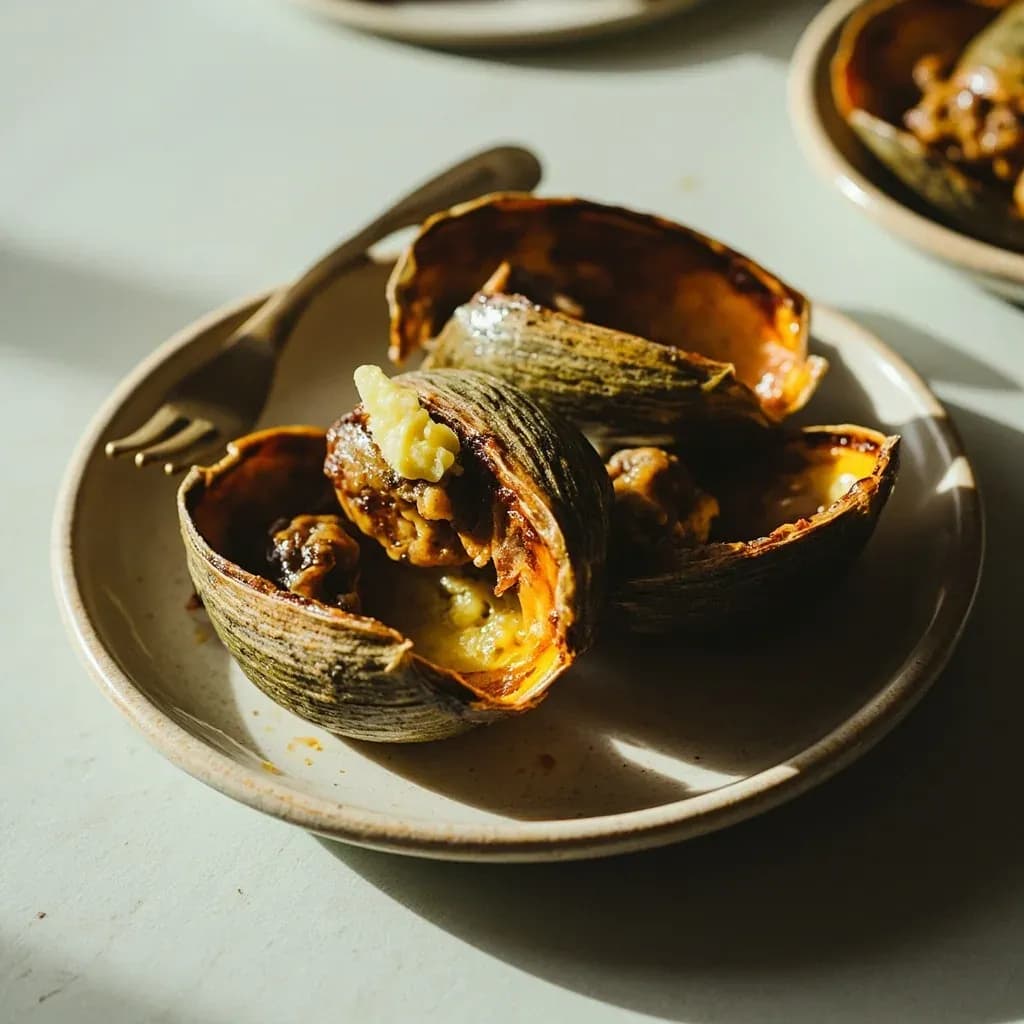
Cone-shelled rock shellfish grilled in their shells with garlic butter in island cuisines.
Limpets are small conical-shelled marine snails that cling to rocks along coastlines. Called lapas in Madeira, the Azores and Canary Islands, they are popularly grilled in their shells and dressed with garlic, butter and lemon. The chewy, briny flesh tastes intensely of the sea.
Limpets are intertidal marine mollusks whose conical shells cling tenaciously to rocky shores worldwide. What is eaten is the powerful muscular foot—the organ that creates the vacuum seal keeping the animal attached to its rock through crashing waves and exposure at low tide. This muscle is dense, sweet, and intensely oceanic when properly prepared, carrying the clean taste of cold seawater and the subtle mineral signature of the substrate rock—basalt, granite, or limestone depending on where the limpet was harvested. Their harvesting is arduous work: collectors must time their gathering to low tide, spot the animal before it clamps down, and prize it loose quickly with a thin blade. This physical difficulty, combined with a perishability window of roughly 24 hours once pried, has kept limpets largely regional delicacies rather than globally traded commodities. In island cuisines—particularly the Azores, Canaries, Madeira, Galicia, and Hawaii—limpets occupy a beloved place as a treat tied to the rhythms of the tides, often prepared simply with garlic butter to honor their briny character. The cooking urgency is high: the foot tightens and turns rubbery within seconds of overcooking, demanding restraint rather than aggression from the cook.
- Measured in
- g
- Storage
- Fridge
Allergens
Types & varieties
The prized Canary Islands species; smaller, sweeter, and more tender than Atlantic relatives. Protected with strict quotas and minimum size limits (3 cm shell diameter).
Northern European species; larger and more robust. Traditional British Isles preparations include pickling and grilling.
Hawaiian limpet; considered sacred. Three varieties—black-foot, yellow-foot, and ribbed—each with subtle flavor distinctions. Much wild stock now protected or sustainably farmed.
Japanese species; prized for exceptional sweetness. Often served raw as sashimi or briefly blanched.
Mediterranean and Atlantic species; common in Portuguese and Galician coastal cuisine.
The Tidal Window: Why Freshness Is Everything
A limpet's tightly clamped shell traps a reservoir of water that sustains the animal when exposed to air between tides. Once pried loose, this survival mechanism fails—the animal begins to deteriorate rapidly. Within 24 hours, enzyme activity degrades the muscle protein, flattening the sweet oceanic character into a flat, fishy off-note. This perishability is why limpets never appear in distant markets and why local preparation is the only reliable path to quality. If you encounter frozen or canned limpets, reserve them for long-cooked applications like stews where their diminished freshness matters less than the cooking time.
Common uses
Tips & pitfalls
- Never cook limpets in their shells over high, dry heat—they toughen instantly. Always introduce fat (butter or oil) and moisture.
- The single most common mistake is overcooking. Limpets need 45–90 seconds of contact with high heat, maximum. They are done when opaque and beginning to firm.
- Scrub the exterior shell under cold running water with a stiff brush before prizing. Then work a thin, sturdy knife or limpet prying tool (called a 'garfio' in Portuguese) under the edge to release the vacuum seal.
- If the limpet resists heavily when prizing, it was almost certainly alive and fresh—a good sign. Limpets that release easily may have been dead already.
- After removal, rinse the foot briefly in cold seawater or lightly salted water to dislodge any grit from the rock surface.
- In the Canary Islands, lapas are traditionally served on a hot stone or metal plate with a small knob of garlic butter that melts over them—the butter is considered as essential as the shellfish itself.
- Commercial frozen or canned limpets exist but lack the sweetness and silky texture of fresh; they are best used in cooked applications like stews where texture matters less.
- When sourcing, inquire about origin and verify legal, sustainable harvesting—Canary Islands lapas and Hawaiian opihi face conservation restrictions.
Nutrition
Nutrition
No USDA FoodData Central match for Limpet (Lapas) yet. We surface a per-100 g profile once a generic whole-food entry is matched and verified.
In the shops
Matched grocery products
No matched grocery products for Limpet (Lapas) yet.
Good to know
- Scientific names
- Patella vulgata (NE Atlantic), Patella candei (Canary Islands), Cellana species (Pacific), Cellana toreuma (Japan)
- Common names
- Limpet (English), Lapas (Spain, Portugal, Azores, Madeira, Canaries), Patelle (France), Orecchiette di mare (Italy), Opihi (Hawaii)
- Edible portion
- The muscular foot; the rest of the animal is discarded
- Flavor profile
- Sweet, clean, intensely briny; seawater-forward with subtle mineral notes from the harvest substrate
- Texture
- Firm and dense when raw; silky and tender when cooked 45–90 seconds; rubbery and tough when overcooked
- Typical size
- 3–8 cm (1–3 in) shell diameter depending on species and harvest location
- Freshness window
- Must be cooked within 24 hours of harvest; deterioration begins immediately once pried from the rock
- Harvest method
- Hand-prized from intertidal rocks at low tide using a thin blade; a heavily resistant limpet indicates freshness
- Peak season
- Autumn through early spring in Northern Hemisphere, though dictated more by tidal cycles than calendar
- Storage
- On ice, in a container with drainage; do not submerge in freshwater or seawater
Substitutes
- Sea snails (escargots) — Close in texture and can be prepared similarly with garlic butter; different flavor but same cooking method and timing urgency apply.
- Small clams — When very fresh and cooked briefly, the sweet briny flavor and firm texture approach limpet qualities; suitable for soups and quick sautéed preparations.
- Periwinkles — Another small intertidal shellfish with similar ocean-forward flavor; slightly different texture but compatible in traditional preparations.
- Thinly sliced abalone — Richer and more buttery in flavor, but the cooking urgency is similar; best as direct substitution in grilled preparations.
Pairs with
Also called
Lapas · Lapa
Appears in these dishes
Related

Egg
The kitchen's everything ingredient — bind, leaven, enrich, or fry

Chicken Breast
Lean, quick-cooking white meat for everyday dinners

Ground Beef
Versatile minced beef for burgers, ragù, tacos, and meatballs

Pork Loin
Lean, tender roasting cut that stays juicy with care

Salmon
Rich, rosy fish that roasts, grills, or cures beautifully

Egg White
Pure protein that whips to airy peaks for meringue and more

Egg Yolk
Rich, golden yolk for custards, mayonnaise, and pasta

Quail Egg
Tiny, speckled eggs for garnishing and elegant bites