
Natural form
A wedge of aged Manchego showing its distinctive zigzag-patterned rind and ivory interior.
Shows the cheese's defining visual markers — the crosshatch rind imprint and pale straw-colored paste — that make Manchego instantly identifiable.
Dairy & Eggs
Manchego Cheese
Firm Spanish sheep's-milk cheese with a nutty, buttery bite, served sliced or with quince.
Manchego is a firm, aged cheese made from the milk of Manchega sheep in Spain's La Mancha region, recognizable by its zigzag-patterned rind. It has a nutty, buttery, slightly piquant flavor that deepens with age, and is classically served in wedges with quince paste or olives. A Mexican cow's-milk cheese also called manchego exists but is a softer, milder melting cheese.
Manchego is Spain's most celebrated cheese, a pressed, uncooked curd wheel made exclusively from the milk of the Manchega breed of sheep native to the arid La Mancha plateau of central Spain. Protected designation of origin status, granted in 1984, governs production: only cheese made within La Mancha from Manchega sheep milk may carry the name. The cheese is produced in a distinctive truncated cone shape that traces back to practical cheesemaking—the form aids whey drainage during pressing—and the natural rind bears a herringbone pattern left by traditional esparto grass molds, which also distinguishes authentic Manchego from inferior imitations.
The wheel ranges from 2–3 kilograms with an ivory-to-pale-yellow paste marked by small, irregular eyes. Flavor evolves dramatically with aging: fresco offers a mild, milky creaminess good for spreading; semicurado brings slight tang and firmer texture after two to three months; curado (three to six months) delivers the classic nutty, buttery profile with herbal undertones that has made this the standard table cheese; and viejo, aged six months to over a year, becomes firm, granular, and sharply piquant—ideal for shaving. The high fat content (6–7%) and low acidity that give Manchego its rich flavor also prevent it from melting smoothly, making it a poor choice for applications requiring smooth, stringy melt but an excellent one for raw finishing.
The canonical presentation in Spain pairs thin slices of curado with a wedge of quince paste (membrillo), a combination so iconic it has entered the global cheese board lexicon. But Manchego's versatility extends far beyond the cheese board: it grates into salads and grain bowls, folds into empanadas, and bakes a la mesa with honey and nuts until softened but not melted. What matters most is selecting the right age for the purpose and treating it as a finished ingredient rather than a melter.
- Measured in
- g
- Storage
- Fridge
Allergens
Types & varieties
Unaged, sold within weeks; creamy, mild, milky; spreads easily on bread
Aged 60 days to 3 months; semi-firm, slightly tangy; best all-purpose choice for slicing and light grating
Aged 3–6 months; the standard table cheese; nutty, buttery, firm but yielding; ideal for cheese boards and thin slicing
Aged 6–12+ months; firm, granular, piquant; excels when shaved raw over dishes
The PDO Distinction
True Manchego carries protected designation of origin, meaning every wheel is made within the La Mancha region from Manchega sheep milk under regulated conditions. Imitation products labeled "Manchego-style" are legally made elsewhere from cow or goat milk. While not unsafe, these lack the character of authentic Manchego—different fat composition, different flavor compounds, different texture. If the label does not state Manchego cheese from La Mancha made with sheep's milk, it is not the real thing. The distinctive herringbone rind and conical shape are visual confirmations of authenticity.
- Look for the PDO seal on imported wheels
- Avoid products labeled only "Manchego-style" or "Manchego type"
- The black wax coating on some export wheels is a shipping protectant, not a quality indicator—remove before serving
Selecting and Buying
Buy the age grade that matches your purpose: fresco for spreading, semicurado for general use, curado for the classic cheese board experience, and viejo for grating and shaving. Prefer whole wedges over pre-cut slices—the cut surface oxidizes and dries rapidly. Inspect before purchasing: avoid wheels with cracked rinds, dried edges near the cut, or any off smell. A quality Manchego should smell clean and milky, never sour or ammonia-like.
- Purchase from specialty retailers with high turnover
- Ask to smell the cut surface before buying
- Request a sample cut if available—Manchego should yield slightly under pressure without crumbling
Common uses
Tips & pitfalls
- Bring refrigerated cheese to room temperature (20–30 minutes) before serving to unlock flavor and texture
- Slice from the center wedge toward the rind using a sharp, thin knife for clean, even cuts
- Store cut cheese tightly wrapped in plastic wrap in the vegetable drawer; never freeze it
- For grating, use the slightly drier portions of viejo—curado will not shred cleanly and melts poorly
- Buy whole wedges rather than pre-cut slices for better quality and longer shelf life
- When substituting for Parmesan in cooked dishes, use semicurado or curado and expect it to remain granular rather than melt smoothly
- If serving with honey, drizzle sparingly—a little lavender or rosemary honey goes far with the cheese's natural richness
- Avoid cheeses with cracked rinds or dried, crumbly edges near the cut surface—these indicate age or improper storage
Nutrition
Energy
1628 kJ · per 100 g
Where the calories come from
Protein
25.6g
51% DV
Carbs
1.6g
1% DV
Fat
31.1g
40% DV
Fiber
0g
0% DV
Sugars
1.6g
of which
Sodium
800mg
35% DV
Source · USDA FoodData Central · approx. Cheese, fontina
View on FDC →In the shops
Matched grocery products
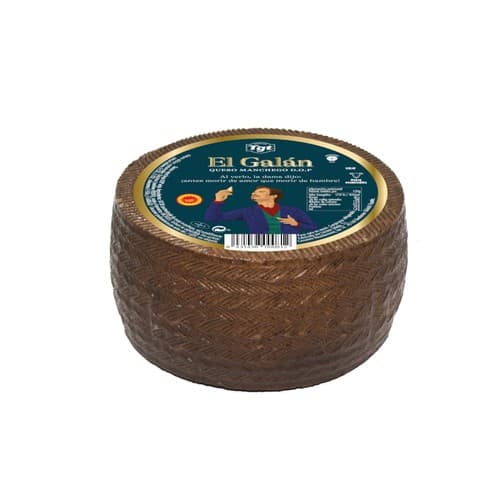 €5.49
€5.49Manchego Cheese DOP Sliced in Portions
EL GALAN · ud · Bonpreu
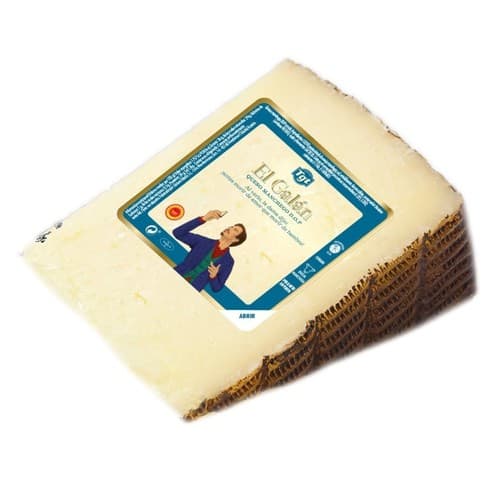 €5.49
€5.49Manchego Sheep Cheese DOP
GALAN · kg · Bonpreu
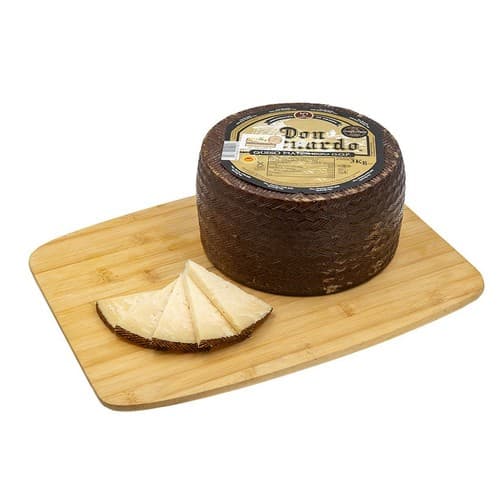 €5.99
€5.99Aged Manchego-Style Sheep Cheese DOP Sliced Portioned
DON BERNARDO · ud · Bonpreu
Good to know
- Origin
- La Mancha region, central Spain; PDO protected since 1984
- Milk
- Exclusively Manchega sheep's milk (6–7% fat)
- Aging Ranges
- Fresco (days); semicurado (60+ days); curado (3–6 months); viejo (6–12+ months)
- Rind
- Natural, rubbed with olive oil; herringbone pattern from esparto grass molds; inedible
- Shape
- Truncated cone wheel, 2–3 kg, 22–26 cm diameter
- Paste Color
- Ivory to pale yellow with small, irregular eyes
- Shelf Life
- Cut cheese: 2–3 weeks refrigerated; whole wheel: several months unopened
- Melting Behavior
- Poor—high fat and low acidity prevent smooth melt
Substitutes
- Idiazábal — Spanish smoked sheep's milk cheese from the Basque Country; similar texture and nutty depth, though distinctly smoked
- Roncal — Navarre sheep's milk cheese, firm and nutty, aged 3–5 months; the closest Spanish substitute in character
- Pecorino Romano — Italian sheep's milk cheese; sharper and saltier; reduce quantity by half when substituting in recipes
- Parmigiano-Reggiano — Cow's milk alternative with similar nutty depth and granular texture for cooking; acceptable for non-Spanish dishes but lacks authenticity
- Mahón — Spanish cow's milk cheese from Menorca; buttery and slightly tangy; different milk source but similar culinary applications
Pairs with
Also called
Queso Manchego · Mexican Manchego · Queso Manchego Mexicano
Related

Whole Milk
Rich, full-fat milk for drinking, coffee, sauces, and baking
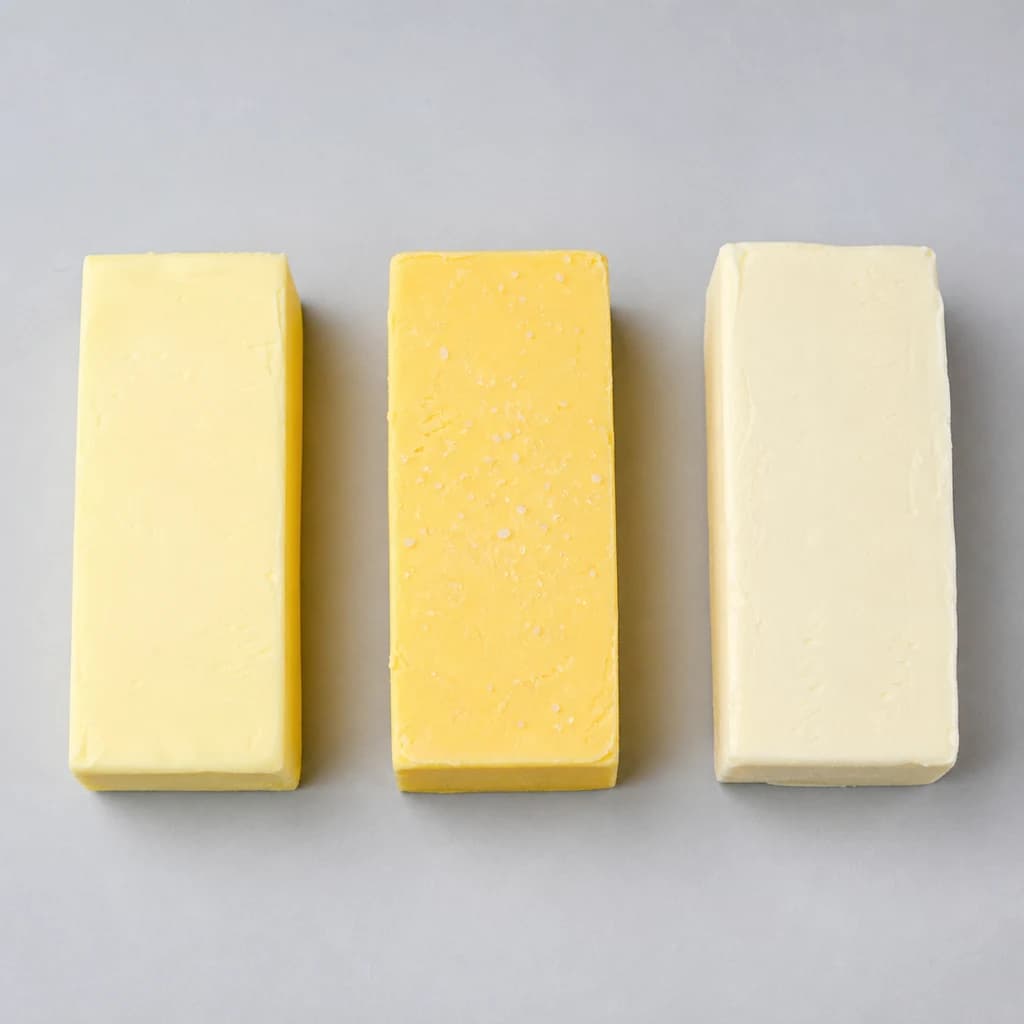
Butter
Golden fat for searing, baking, and finishing a sauce
Yogurt
Tangy, creamy culture for breakfast, sauces, and marinades
Cheddar Cheese
Sharp, melty cheese for sandwiches, gratins, and grating
Skim Milk
Fat-free milk for lighter drinking, coffee, and cooking
Heavy Cream
Rich cream that whips, enriches sauces, and sets ganache

Sour Cream
Tangy, thick cream for dolloping, baking, and dips
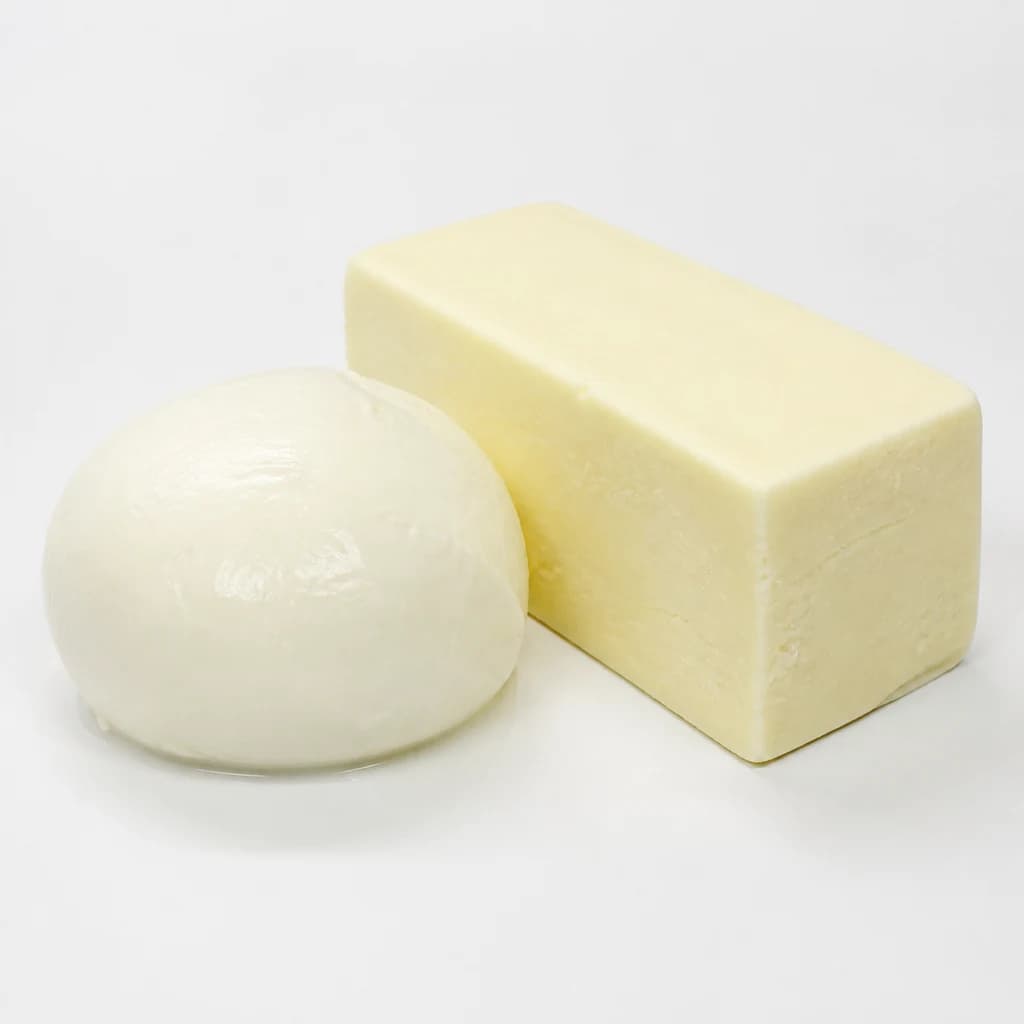
Mozzarella
Soft, milky cheese that melts into stretchy pizza pulls