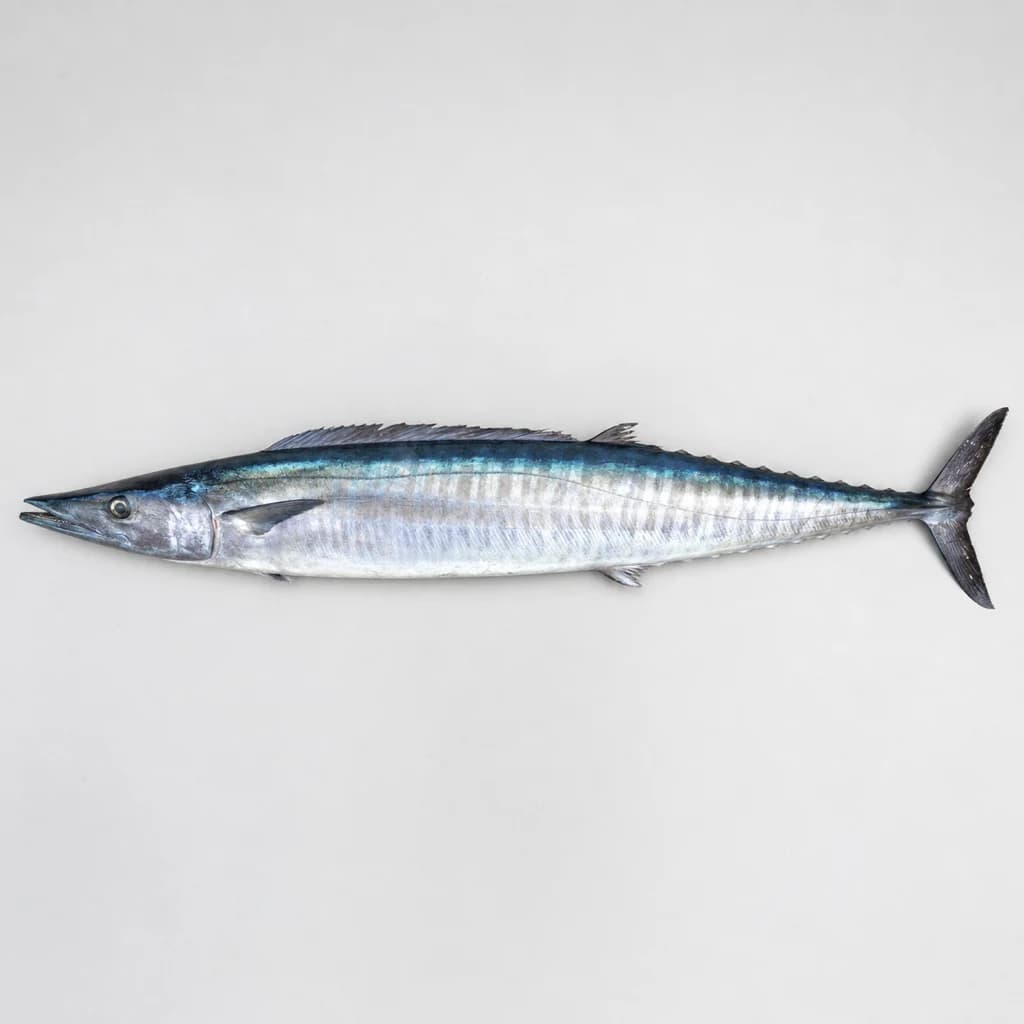
Natural form
Whole wahoo fish showing its elongated, torpedo-shaped body and iridescent blue-green markings.
Teaches readers to recognize the distinctive elongated form, coloration, and size of a whole ono before processing.
Proteins
Ono (Wahoo)
Lean, firm white-fleshed Hawaiian game fish, grilled or seared as steaks.
Ono, known elsewhere as wahoo, is a fast, sleek game fish popular in Hawaiian cuisine. Its lean, firm white flesh flakes into large moist pieces and is best grilled, seared or pan-fried as steaks. The mild, clean flavor pairs well with citrus, soy and ginger.
Ono (Acanthocybium solandri) is a lean, firm-fleshed game fish prized throughout the Pacific, Atlantic, and Indian Oceans, with particular cultural significance in Hawaiian cuisine. Its name comes from the Hawaiian word for "delicious" or "appetizing"—a reputation it earns through a clean, mildly sweet flavor that sits between tuna and mahi-mahi, with denser, more muscular flesh than most white fish. The flesh ranges from white to pale pink with an iridescent sheen when raw, transitioning to opaque white or light beige when cooked. Unlike many firm-fleshed fish, ono holds together beautifully in thick steaks, making it ideal for high-heat cooking methods where structure matters. Its relatively lean profile means it can dry out quickly if overcooked, so careful attention to heat and timing is essential. Sport fishermen consider ono a prized catch, which influences its market availability and price—much of what reaches consumers comes directly from commercial and recreational catches.
- Measured in
- g
- Storage
- Fridge
Allergens
Types & varieties
Smaller Atlantic cousin sometimes considered a distinct species; similar culinary use and behavior
Buying and Storing Ono
Fresh ono should have bright, clear flesh with no brownish discoloration or strong fishy odor. The iridescent sheen and any visible blue vertical bars are indicators of freshness—these fade within hours of capture. Because ono is a highly muscular fish, the flesh can be prone to gaping (separating along the grain) if poorly handled. Purchase from a trusted fishmonger who can confirm the catch date, and plan to cook fresh ono within a day or two. For longer storage, flash-freeze immediately at 0°F or below; properly frozen ono maintains good quality for up to six months. Thaw frozen fish slowly in the refrigerator overnight, never at room temperature.
- Ask for the catch date when purchasing whole fish or steaks
- Look for bright, moist flesh without browning or drying at the edges
- If buying whole, eyes should be clear and bulging, gills bright red
The Question of Fat Content
Though often classified with lean white fish, ono actually contains more intramuscular fat than typical members of that category—closer to the range of salmon or tuna than cod or sole. This fat content contributes to its moistness when cooked properly and gives it better flake and tenderness than a truly lean fish. Do not let this fool you into overcooking, however; the fat does not prevent the flesh from drying if subjected to excessive heat.
- Higher fat than most white fish but still considered lean overall
- Fat distributes unevenly, so some steaks will be more moist than others
- The fat helps it hold up to bold marinades better than truly lean fish
Common uses
Tips & pitfalls
- Bring fish to room temperature 20–30 minutes before cooking to ensure even heat penetration throughout the steak.
- Season simply—ono's delicate, mildly sweet flavor is easily overpowered by heavy seasoning; a light salt-and-pepper or a brief stint in a mild marinade is sufficient.
- Use a hot, heavy pan—cast iron is ideal—or very hot grill grates to sear quickly and prevent sticking. Oil both the fish and the cooking surface.
- Rest thick steaks 3–5 minutes after cooking; carryover heat continues cooking the center, and resting allows juices to redistribute.
- Avoid marinating longer than 30 minutes—the porous flesh absorbs acidic liquids quickly, causing proteins to break down into mushy texture.
- Remove from heat when the center still shows a hint of translucency; the flesh should be opaque at the edges with just a slight translucent core remaining.
- If grilling, cut slots through the skin and any fat deposits to prevent the steaks from curling and warping on the heat.
- If serving raw (sashimi or poke), purchase specifically labeled sushi-grade fish and consume the same day—never use fish meant for cooking in raw preparations.
Nutrition
Nutrition
No USDA FoodData Central match for Ono (Wahoo) yet. We surface a per-100 g profile once a generic whole-food entry is matched and verified.
In the shops
Matched grocery products
No matched grocery products for Ono (Wahoo) yet.
Good to know
- Scientific Name
- Acanthocybium solandri
- Flavor Profile
- Lean, mild, slightly sweet; cleaner and milder than mackerel or kingfish
- Raw Color
- White to pale pink with iridescent sheen; vertical blue bars fade rapidly after capture
- Cooked Color
- Opaque white to light beige
- Texture
- Dense, muscular, firm; can dry out if overcooked
- Dressed Size
- 3 to 30 pounds typical; specimens over 100 pounds uncommon
- Yield
- Approximately 50% of whole weight after filleting and skinning
- Shelf Life
- 1–2 days refrigerated at 32–34°F; up to 6 months frozen at 0°F or below
Substitutes
- Mahi-mahi — Comparable firm texture and mild flavor; slightly sweeter and more moist; cook using identical high-heat methods
- Swordfish — Firmer texture and stronger, meatier flavor; acceptable substitute when ono is unavailable; watch for longer cooking time needed
- Marlin — Traditional Hawaiian substitute with similar density and cooking behavior; slightly richer flavor but compatible
Pairs with
Also called
Wahoo
Appears in these dishes
Related

Egg
The kitchen's everything ingredient — bind, leaven, enrich, or fry

Chicken Breast
Lean, quick-cooking white meat for everyday dinners

Ground Beef
Versatile minced beef for burgers, ragù, tacos, and meatballs

Pork Loin
Lean, tender roasting cut that stays juicy with care

Salmon
Rich, rosy fish that roasts, grills, or cures beautifully

Egg White
Pure protein that whips to airy peaks for meringue and more

Egg Yolk
Rich, golden yolk for custards, mayonnaise, and pasta

Quail Egg
Tiny, speckled eggs for garnishing and elegant bites