Proteins
Polony
Soft, finely ground pink luncheon sausage sliced cold or fried for sandwiches.
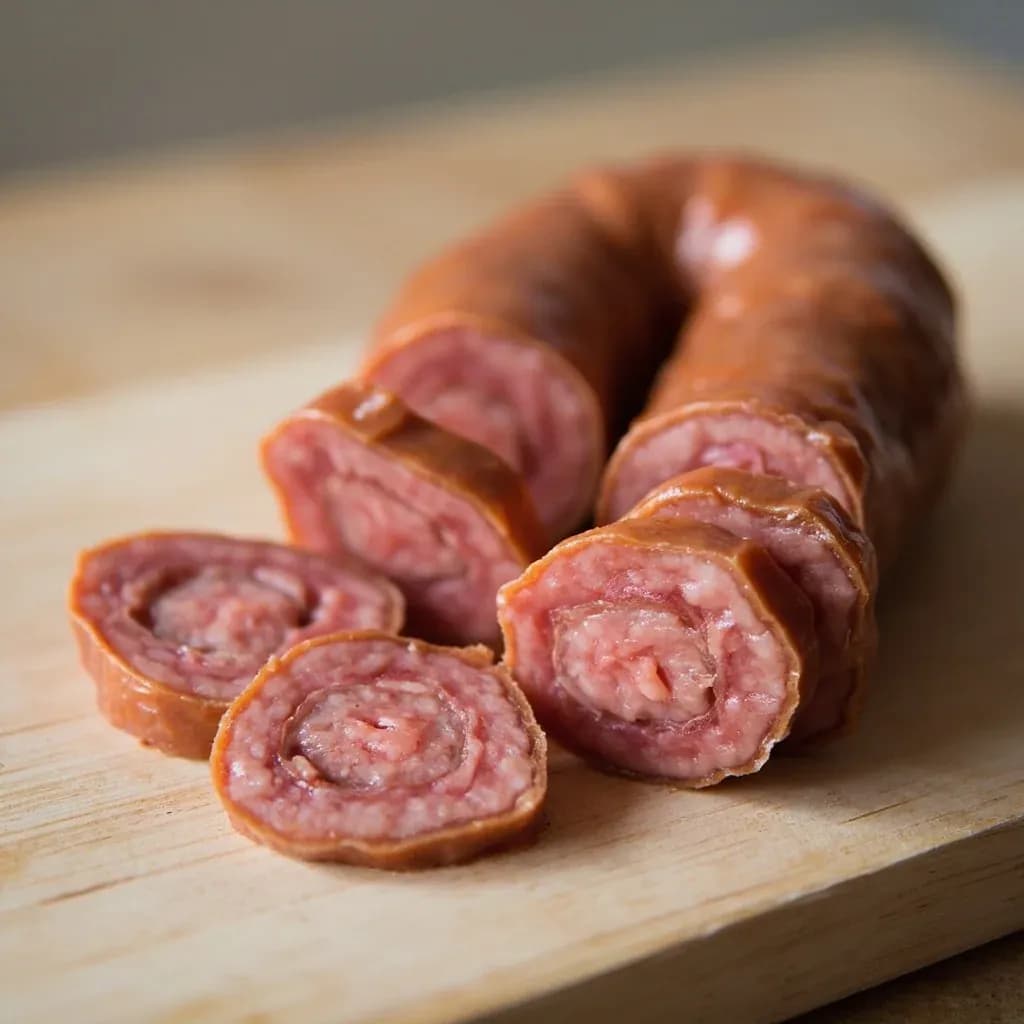
Polony is a smooth, bologna-style emulsified sausage popular in South Africa, the UK and Australia, typically sold in a bright pink or red casing. It is sliced thin for sandwiches, diced into fried rice, or pan-fried as a quick protein. Made from finely ground meat and starch, it has a mild, mildly smoky flavor.
Polony is a fully cooked, emulsified luncheon sausage made from finely ground pork, beef, or a combination, cured with sodium nitrite and nitrate, then smoked for flavor and shelf life extension. The name derives from the Latin "Polonia" (Poland), reflecting its Central and Eastern European heritage. Unlike raw fresh sausage or fully dried salami, polony occupies an intermediate space: it is cooked and smoked but never dried, which means it requires continuous refrigeration and has a finite shelf life measured in weeks rather than months.
The emulsification process creates polony's characteristic smooth, fine-grained texture—a homogenous blend where fat and protein are fully combined into a sliceable matrix. This texture allows the sausage to hold together in thin deli slices while also firming pleasantly when heated. The distinctive pink-to-coral color comes from the curing agents themselves and is a reliable indicator of proper processing; the nitrites also impart a mild metallic-saline undertone that distinguishes polony from plain cooked meats. When fried or grilled, the exterior can develop a light crust while the interior warms through evenly, making it one of the few luncheon meats that genuinely improves with gentle cooking rather than suffering from it.
In American markets, "polony" typically refers to the fine-textured, mildly smoked loaf style, while "bologna" serves as the broader generic term. South African polony is a distinct mildly spiced variety beloved for school lunches. Regardless of regional naming conventions, the defining characteristics remain constant: fully cooked, perishable, and versatile across both cold and heated applications.
- Measured in
- g
- Storage
- Fridge
Allergens
Types & varieties
Traditional smoked Polish polony; darker pink with robust smoke flavor, slightly coarser grind than Western equivalents
Mild, fine-textured; often contains binders like nonfat dry milk; pale pink, extremely mild flavor
German-style; coarser grind than bologna, lightly smoked, firm texture; popular for charcuterie boards and cold cuts
Italian-origin cousin; contains visible white fat cubes, sometimes pistachios in traditional versions; coarser texture than standard polony
Swiss and German; coarser grind, dried and semi-cured; can be sliced thin for deli use or grilled as a thicker cut
Poultry-based versions; lighter color, significantly lower fat content, mild flavor; dominant in institutional and health-conscious markets
Understanding the Emulsion
The smooth, uniform texture of polony comes from the emulsion process, where lean meat and fat are finely ground together with ice and forced through fine plates under extreme pressure. This creates a stable matrix where fat droplets are suspended evenly throughout the protein, preventing the grainy or crumbly texture seen in coarsely ground products. Binders like nonfat dry milk or starches (in American bologna-style products) help stabilize the emulsion and improve sliceability. Understanding this structure helps cooks anticipate behavior: the emulsion holds together when sliced thin, but high heat can break it, causing the casing to split and fat to render out. This is why medium heat produces better fried results than high heat.
- Emulsion breaks at sustained temperatures above 350°F (175°C), causing fat separation and a crumbly interior
- Binders improve sliceability but can make some varieties taste slightly processed; check ingredients if this matters to you
- Thicker cuts (1 cm or more) withstand cooking better than thin deli slices because the exterior has less surface-to-volume ratio
Buying and Storing
Select polony with a consistent pink color throughout—avoid any with gray, brown, or unnaturally bright orange-pink hues, which may indicate quality issues or excessive dyes. The casing should be intact without tears or bulges. When pressed gently, quality polony springs back; it should not feel mushy or excessively soft. Store unopened polony in the original packaging in the refrigerator's coldest section. Once opened, rewrap tightly in plastic wrap or place in an airtight container to prevent moisture loss and odor absorption. For best texture, consume within the recommended 5–7 days after opening, though it remains safe slightly longer if properly stored.
- Reject any package with bulging packaging, off-odor, or sticky surface—these indicate bacterial activity
- Pre-sliced polony oxidizes faster than whole logs; use within 3–4 days of opening
- For the freezer, slice first and layer between sheets of parchment paper to prevent slices from freezing together
Common uses
Tips & pitfalls
- When frying, use medium heat (not high); high heat causes the casing to split and renderings to leak out, creating splatter and a dry, crumbly interior
- Score the casing lengthwise before frying to prevent uneven splitting and to allow even browning
- Bring refrigerated polony to near-room temperature before cooking for more even results throughout the slice
- For clean sandwich slices, chill the log firmly for 30 minutes before slicing; use a long, thin-bladed knife with a gentle sawing motion
- The pink color is stable and expected; avoid varieties with artificially bright or orange-pink hues—check the ingredient list for added dyes
- When grilling, oil the polony lightly and grill over medium coals to prevent sticking and excessive char
- For best texture in fried applications, use thick-cut slices (1–1.5 cm) rather than paper-thin deli slices which overcook instantly
- Avoid microwaving for crispy results—it heats unevenly and produces a rubbery texture rather than a firm, browned exterior
Nutrition
Energy
649 kJ · per 100 g
Where the calories come from
Protein
18.8g
38% DV
Carbs
0.5g
0% DV
Fat
8.1g
10% DV
Fiber
0g
0% DV
Sugars
0g
of which
Sodium
593mg
26% DV
Source · USDA FoodData Central · approx. Sausage, turkey, fresh, raw
View on FDC →In the shops
Matched grocery products
No matched grocery products for Polony yet.
Good to know
- Origin
- Central and Eastern Europe; name derives from the Latin "Polonia" (Poland)
- Type
- Fully cooked, emulsified luncheon sausage; cured and smoked but not dried, requiring refrigeration
- Primary Meats
- Pork, beef, or combination; poultry-based versions also widely available
- Color
- Characteristic pink to coral, from curing agents (sodium nitrite/nitrate) and often paprika
- Texture
- Smooth, fine emulsion when cold; firms nicely when cooked; uniform sliceability across the log
- Form
- Stuffed into casings (50–80 mm diameter links) or larger loaves (100–200 mm); also sold pre-sliced
- Shelf Life
- Unopened: 2–3 weeks refrigerated; opened: 5–7 days; frozen: up to 2 months
- Perishable
- Yes; requires continuous refrigeration below 40°F (4°C)
Substitutes
- Bologna — Most direct substitute; slightly milder flavor but nearly identical texture and cookability; use 1:1 ratio in any application
- Smoked Ham — Slices well cold but lacks the coarse emulsified texture and smoky edge; acceptable for cold sandwiches, poor choice for frying
- Canadian Bacon — Comparable smokiness and pink color but much leaner with less fat; acceptable for low-fat substitutions in cooked dishes, noticeably different mouthfeel
- Frankfurter or Hot Dog — Similar emulsion and flavor profile; typically thinner casing makes it easier to split if fried; acceptable 1:1 swap in most preparations
- Mortadella — Coarser texture with visible fat cubes; works well cold or in cooked dishes but less firm when fried; adds more textural interest
Pairs with
Also called
Polony Sausage · Russian Polony
Related

Egg
The kitchen's everything ingredient — bind, leaven, enrich, or fry

Chicken Breast
Lean, quick-cooking white meat for everyday dinners

Ground Beef
Versatile minced beef for burgers, ragù, tacos, and meatballs

Pork Loin
Lean, tender roasting cut that stays juicy with care

Salmon
Rich, rosy fish that roasts, grills, or cures beautifully

Egg White
Pure protein that whips to airy peaks for meringue and more

Egg Yolk
Rich, golden yolk for custards, mayonnaise, and pasta

Quail Egg
Tiny, speckled eggs for garnishing and elegant bites